Caribbean Focal Points of the Food Safety network INFOSAN were active participants in a recent study undertaken by the IICA Delegation in Canada with the technical support of Dr. Martin Cloutier of the University of Quebec at Montreal as well as the Agricultural Health and Food Safety Department of the Institute. The innovative methodology involved Group Concept Mapping (GCM) and was employed to determine requirements and priorities of the main stakeholders in the monitoring and knowledge management of food safety information in the Caribbean.
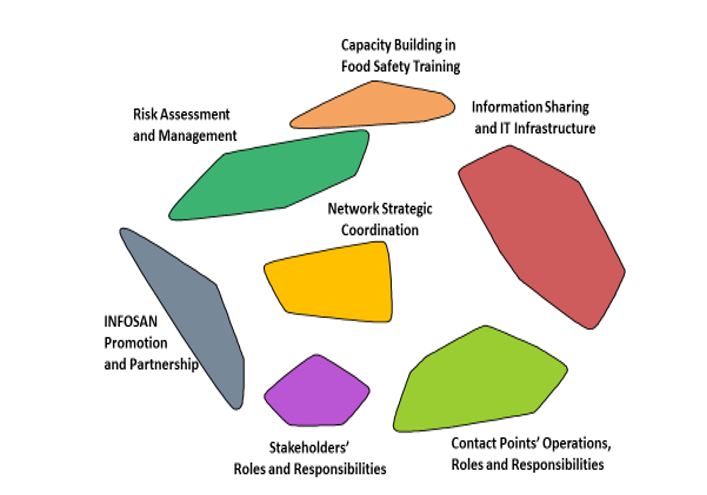
Group Concept Mapping is a proprietary tool which can be used in conducting needs assessment and strategic planning exercises. Utilizing a “bottom-up” participatory approach, GCM is able to produce a visual representation of information and data indicative of participants’ views and priorities.
Information garnered and analyzed will be useful for organizations such as the Caribbean Public Health Agency (CARPHA), The Caribbean Agricultural Health & Food Safety Agency (CAHFSA), and the Caribbean nodes of The International Food Safety Authorities Network (INFOSAN) in planning for enhanced effectiveness and sustainability. Administered by Dr. Cloutier, the GCM required dedicated time and effort on the part of members of the Caribbean food safety network for focussing on, and independently recording areas deemed important for delivering on expectations. Results obtained were both revealing and instructive.
The GCM Map created has internal reliability checks with an acceptable margin of error. It can therefore serve as an objective basis for developing a road map for high performance of the network. Due to the fact that INFOSAN focal points actively contributed to the map, there is overall buy-in and commitment, which should translate into sustained follow-up. This is particularly encouraging since the GCM indicates a central role for network coordination (See Group Concept Map).
The mapping exercise was conducted as a part of the project: Strengthening National Food Safety Regulatory Capacity in CARICOM Countries, supported by the Public Health Agency of Canada.
For more information:
Audia Barnett
audia.barnett@iica.int