
San José, 12 May 2026 (IICA). The Inter-American Institute for Cooperation on Agriculture (IICA) is forging ahead with the planning of the regional project Prevention of Infections through Surveillance at the Source of Transmission in Latin America and the Caribbean (PIVOT), aimed at strengthening the prevention of health risks with epidemic and pandemic potential in Latin America and the Caribbean, adopting the One Health approach that integrates human, animal and environmental health.
The initiative will focus first on strengthening the prevention of, and preparedness for, health risks with an emphasis on avian influenza with zoonotic potential, and then gradually be expanded to include other zoonotic diseases (diseases of animal origin that can be transmitted to humans), such as yellow fever.
The PIVOT project will also support the Amazon-Darién Network, helping to strengthen regional cooperation for the surveillance and early detection of emerging zoonotic diseases in territories considered to be high risk.
The project is being implemented in close coordination with strategic partners such as the Pan American Health Organization (PAHO), the Inter-American Development Bank (IDB), the World Bank Group (WBG), and FAO.
The PIVOT project (Prevention of Infections through Surveillance at the Source of Transmission in Latin America and the Caribbean)is an initiative being financed by the Pandemic Fund, a multilateral mechanism created after the lessons learned from the COVID-19 pandemic to enhance national capabilities for the prevention and early detection of, and preparedness for, future pandemics.
As the regional entity spearheading the project, IICA will be in charge of coordinating the actions and liaise with the partner countries and institutions. It will also ensure that pandemic preparedness is integrated into production systems, especially in rural areas, backyard farming, and livestock chains, where critical risks of zoonotic transmission are concentrated.
This close coordination will make it possible to translate the project’s technical advances into sustainable public policies, effective regional cooperation, and concrete benefits for the countries, while at the same time promoting cross-border and multi-sectoral cooperation to prevent outbreaks with epidemic or pandemic potential.
The WBG, IDB, and FAO will serve as implementing entities of the project, while PAHO’s role will be that of principal implementing partner.

From left to right: Manuel J. Sánchez, Director of PAHO’s Pan American Center for Foot-and-Mouth Disease and Veterinary Public Health (PANAFTOSA); José Urdaz, Manager of IICA’s Agricultural Health and Food Safety and Quality (AHFS) Program; Lloyd Day, Deputy Director General of IICA; Federica Secci, Senior Health Specialist with the World Bank Group’s Health, Nutrition and Population Global Practice; Iván León, Senior Officer of the Programa de Campo para América Latina y el Caribe; and Bruno Jacquet, specialist of the Inter-American Development Bank (IDB).
Regional workshop kicks off the PIVOT project
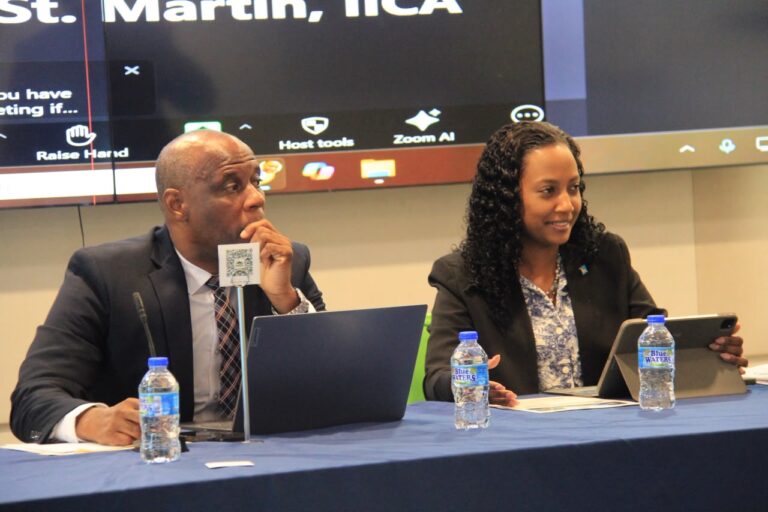
A workshop to prepare for the rolling out of the PIVOT projectwas heldat IICA Headquarters in San José, which brought together the partner entities responsible for its implementation.
The purpose of the meeting was to discuss technical actions, align the legal, administrative and financial frameworks between IICA and the implementing entities, and make progress with the definition of the governance and interagency coordination structure, as well as the project’s monitoring, evaluation, communication, and reporting mechanisms.
The participants also undertook a comprehensive technical review of the project, with a detailed analysis of the activities, budget, and overall schedule for each of the strategic areas involved. In parallel, specific sessions were held on procurement, legal aspects, and financial management.
After the working sessions, the discussions turned to the operation of the project, addressing key issues such as the management of environmental and social risks, and monitoring, evaluation, and learning mechanisms, including the indicators and reports required for the Pandemic Fund and the implementing entities.
José Urdaz, Manager of IICA’s Agricultural Health and Food Safety and Quality (AHFS) Program, stressed that the PIVOT project proposes a change of model: from reacting to crises to anticipating them, and from working in a fragmented way to doing so in a coordinated manner, integrating agriculture, public health, and the environment under the One Health approach.
Federica Secci, Senior Health Specialist with the World Bank Group’s Health, Nutrition and Population Global Practice, emphasized that the PIVOT project is not just a technical project, but a key development initiative. Pandemics have profound social and economic consequences, which is why preparedness, prevention, and multisectoral collaboration—across the human, animal, and environmental sectors—are at the heart of the World Bank’s priorities.
Iván León, Senior Officer of the Programa de Campo para América Latina y el Caribe, said that the PIVOT projectrepresents a concrete way to address the complexity of current health challenges, integrating technical capabilities and strengthening national health protection systems, while at the same time undergirding the process with the necessary regional coordination. León also underlined the innovative nature of the project, inasmuch as it integrates all the strengths of the organizations involved and places them at the disposal of the beneficiary countries.
In this regard, Bruno Jacquet, a specialist at the Inter-American Development Bank (IDB), noted that one of the PIVOT project’s strengths is the more active leadership of the agricultural sector, particularly with the participation of IICA, FAO, and PANAFTOSA, thus making it possible to strengthen the focus of health and veterinary services.
Manuel J. Sánchez, Director of the Pan American Center for Foot-and-Mouth Disease and Veterinary Public Health (PANAFTOSA) of the Pan American Health Organization (PAHO), noted that one of the project’s great challenges is to ensure the sustainability of the efforts by strengthening risk analysis, surveillance, laboratory capacity, emergency response, and the development of public policies that guarantee resources and continuity over time. “Inter-agency cooperation is key to achieving this,” he concluded.
In the same vein,Priya Basu, Executive Director of the Pandemic Fund, said that the PIVOT project reflects a fundamental change: from reacting to outbreaks to preventing them at source.

José Urdaz, Manager of IICA’s Agricultural Health and Food Safety and Quality (AHFS) Program.
“Backed by nearly USD 40 million from the Pandemic Fund and more than USD 388 million in co-financing and co-investment, the project will help strengthen multi-sectoral coordination between human, animal, and environmental health systems, enabling earlier detection and more effective responses to zoonotic threats. It also demonstrates how large-scale catalytic financing can bring partners together to build lasting resilience against future pandemics,” Basu concluded.
The workshop concluded with the definition of agreements, pending tasks, and the next steps, aimed at ensuring an effective and coordinated implementation of the PIVOT project.
The main outcomes of the meeting included the operational validation of the inter-institutional agreements, the definition of common technical and administrative guidelines, the identification of preparatory tasks prior to the formal start of activities, and the establishment of a shared roadmap for the implementation of the project in the region.
More information:
Institutional Communication Division.
comunicacion.institucional@iica.int