The training sought to improve market access through compliance with Europe’s sanitary and phytosanitary measures
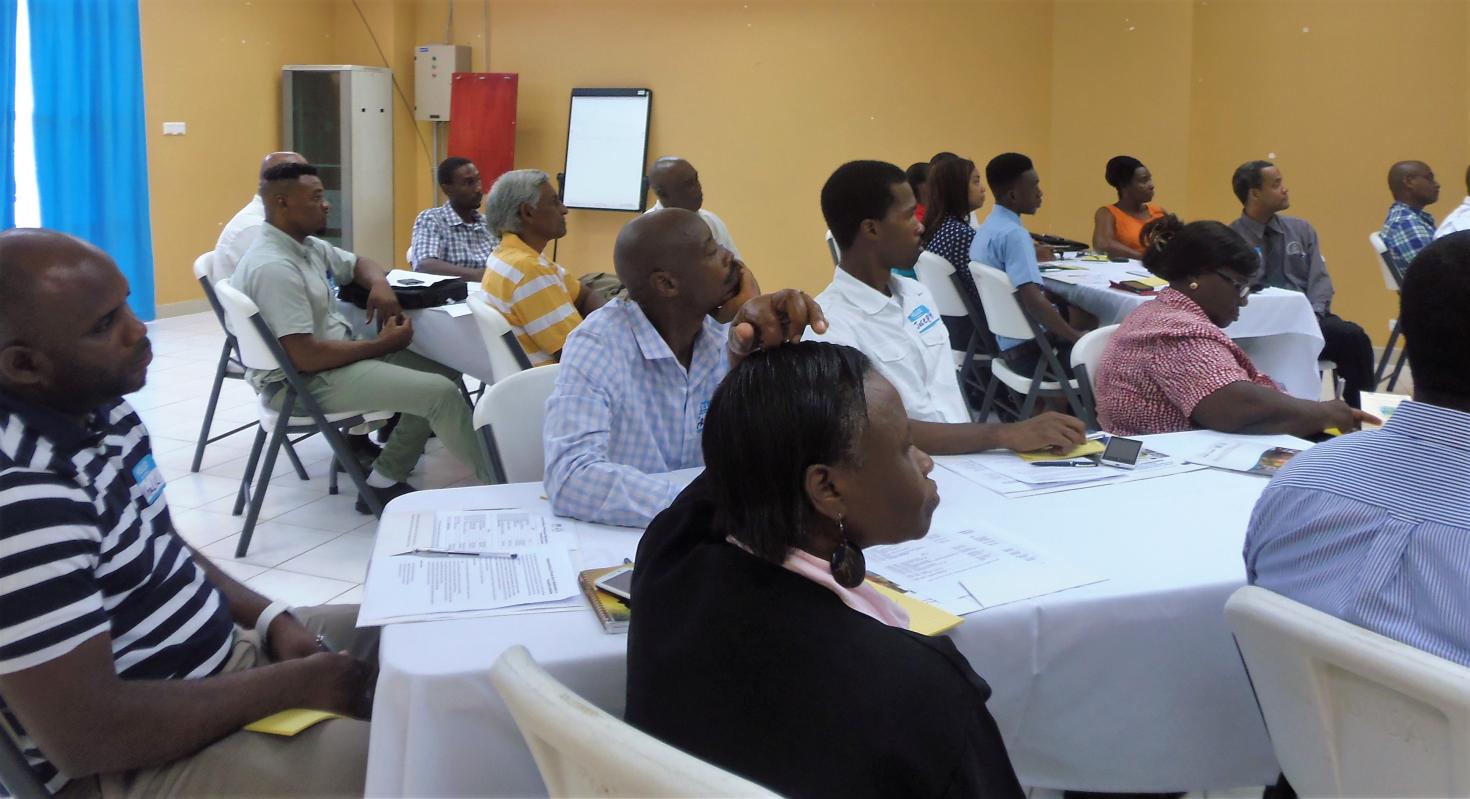
Grenada. Twenty-eight (28) persons from the private sector in Grenada increased their capacities in food traceability systems, in an effort to support the implementation of sanitary and phytosanitary measures and contribute to increased trade opportunities in CARIFORUM countries.
This was achieved through a 2-day capacity building workshop where participants learned the basic principles of traceability that can be applied on the farms in terms of Good Agricultural Practices (GAP), or at the processing operations with respect to Hazard Analysis and Critical Control Points (HACCP).
The training (held on October 18th – 19th) was facilitated by the Institute of Food Technologists – Global Food Traceability Center (IFT-GFTC) in the USA, under the 10th EDF Sanitary and Phytosanitary (SPS) measures project that is being implemented with support from the Inter-American Institute for Cooperation on Agriculture (IICA).
The specific objective of the SPS project is to assist CARIFORUM States to gain and improve market access by complying with Europe’s SPS measures, and to strengthen regionally harmonized SPS measures. It also aims to increase production and trade in agriculture and fisheries to meet international standards while protecting plant, animal and human health, as well as the environment.
During the opening ceremony of the workshop, the Permanent Secretary in the Ministry of Agriculture and the Chief Environmental Officer in the Ministry of Health alluded to the importance of legislation in relation to traceability, and by extension food safety, and to the development and maintenance of food standards so that Grenada will be compliant whenever an audit of compliance in food safety is carried out, whether by internal or third party auditors.
The participants, who represented various businesses throughout Grenada, were encouraged to embrace traceability systems, according to the advice given by a private sector professional based on his experience in a pilot traceability project that was conducted among three small- and medium-sized companies in Grenada by IICA and the Food and Agriculture Organization of the United Nations (FAO).
This capacity building action has increased the number of industry personnel in Grenada who have been trained in traceability systems, and who will therefore be better able to incorporate this element of food safety into their food safety management systems such as HACCP and Global-GAP throughout the food supply chain.
More information: derek.charles@iica.int