
Mexico City, June 24, 2026 (IICA) – Representatives of national New World screwworm (NWS) control programs, residue monitoring systems for foods of animal origin, and the production sector from seven countries met in Mexico to analyze the use of veterinary medicines associated with the control of this disease and strengthen joint actions aimed at protecting animal health, food safety and the sustainability of livestock production in the region.
The exchange took place during the Regional Meeting on the Use of Veterinary Medicines in NWS Control and Residue Monitoring in Milk and Meat, organized in Mexico City by the Inter-American Institute for Cooperation on Agriculture (IICA), the Central American Dairy Federation (FECALAC) and the Executive Secretariat of the Central American Agricultural Council (SECAC).
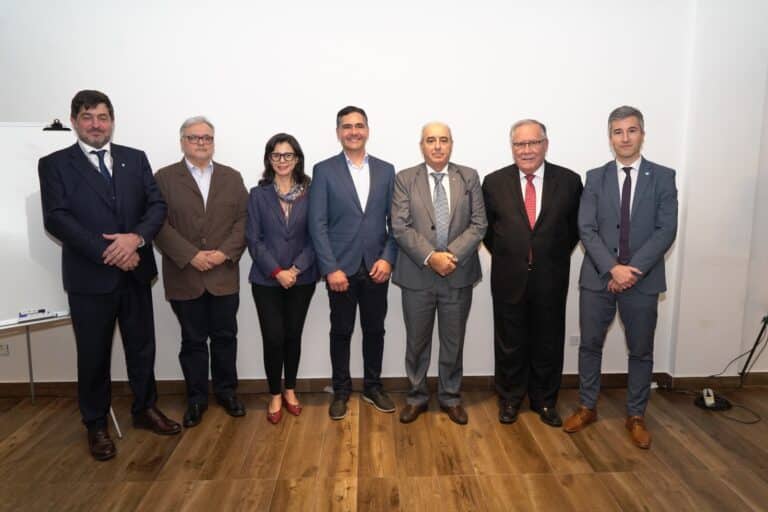
The three-day event brought together 36 representatives from Belize, Costa Rica, El Salvador, Guatemala, Honduras, Mexico, and Panama, including coordinators of NWS control programs, residue monitoring officials, technicians from the Panama–United States Commission for the Eradication and Prevention of New World Screwworm (COPEG), animal health and food safety experts, health authorities and representatives of the production sector.
The meeting served as a pioneering regional dialogue platform by bringing together, for the first time, stakeholders responsible for programs that traditionally operate independently but face increasingly interconnected challenges.
NWS is a pest caused by a fly whose larvae primarily affect cattle, but also other domestic and wild animal species and even humans. Its re-emergence in the region has increased the use of veterinary medicines for the treatment of myiasis (a parasitic infection caused by fly larvae that feed on living tissue) and wound care in animals, creating a need to strengthen coordination between animal health control programs and residue surveillance systems for milk and meat.
Countries shared experiences regarding the epidemiological situation of NWS, veterinary treatments currently being used, regulatory challenges and national capacities for monitoring residues in foods of animal origin. Discussions identified opportunities to strengthen risk management, improve information exchange, and promote evidence-based surveillance approaches.

One of the main points of consensus reached was that prevention remains the most effective tool for reducing the impact of NWS. Early detection and treatment of wounds, together with the adoption of Good Livestock Practices, were recognized as essential measures to reduce disease incidence, decrease the need for veterinary treatments and contribute to the production of safe food.
Participants also agreed that the current epidemiological situation represents an opportunity to strengthen coordination among NWS control programs, residue monitoring systems, authorities responsible for the registration of veterinary medicines, official laboratories and the production sector.
“For IICA, it is essential to address this type of animal health emergency through a regional approach. Bringing producers, technical specialists, researchers, program managers and authorities together in the same space makes it possible to build more comprehensive and sustainable solutions to confront the pest and protect livestock production in the region,” said José Luis Ayala, Technical Coordinator of IICA Mexico.
Oswaldo Segura, SECAC Regional Specialist in Agricultural Competitiveness, highlighted the importance of strengthening regional coordination to address shared animal health challenges.
“We need to continue building cooperation mechanisms among countries and institutions. Coordination in the agriculture, health, food safety, and production sectors is essential to respond effectively to the challenges posed by the New World Screwworm,” he said.
Participants also identified several lines of action to strengthen the regional response, including promoting the responsible use of veterinary medicines, developing a regional guide on Good Livestock Practices, strengthening risk-based residue monitoring programs, enhancing cooperation among laboratories, generating technical evidence, and establishing permanent information-sharing mechanisms.

Partnerships for a comprehensive response
In Mexico City, representatives of the production sector emphasized that residue prevention and effective NWS control require shared responsibility among producers, producer organizations, the veterinary industry, veterinary medicine distributors, academia and sanitary authorities. They also highlighted the importance of public-private partnerships as a mechanism for expanding the reach of prevention, training, and risk management actions.
“The main objective is to establish joint lines of action. As the private sector, we are committed to supporting them, contributing technical and financial resources, and analyzing and identifying the gaps we have as a region regarding contaminants and residues in milk and meat in the context of the NWS challenge,” said Ramiro Pérez, representative of FECALAC.
“These exchanges allow us to learn from the experiences of other countries and strengthen our prevention efforts. The objective is to advance toward containment and ultimately eradication of the pest through a coordinated regional effort,” said Octavio Hernández, General Director of the Mexican Association of Milk Producers (AMLAC).
Juan Ramón González, representative of Mexico’s National Confederation of Livestock Organizations (CNOG), stressed that regional cooperation is indispensable for addressing the spread of the disease. “We are facing an emergency that requires solidarity and coordination. Countries are joining efforts and sharing experiences because we understand that this is a common challenge and that we can only address it by working together,” he said.
At the close of the meeting, participants agreed that the sustainable control of NWS and the prevention of risks associated with residues in foods of animal origin require integrated approaches that bring together the capacities of official veterinary services, surveillance programs, laboratories, and the production sector.
“Animal health, food safety, and public health are closely intertwined. This meeting demonstrated that the exchange of experiences and regional cooperation are fundamental for strengthening countries’ response capacities and protecting consumer confidence in the food we produce,” concluded Alejandra Díaz, IICA Technical Specialist in Agricultural Health, Food Safety, and Food Quality.
As part of the meeting, participants conducted a technical visit to the Residue Laboratory of Mexico’s National Service for Agrifood Health, Safety, and Quality (SENASICA) to learn about the analytical capacities available and the experiences developed by the country in monitoring residues in foods of animal origin.

More information:
Alejandra Díaz, Technical Specialist in Agricultural Health, Food Safety, and Food Quality at IICA.
alejandra.diaz@iica.int