The importance of partnerships is central to the Institute’s Medium Term Plan 2014 – 2018 and IICA Delegation in Canada is continually forging alliances as well as engaging in collaborations.

Ottawa, ON. As the challenges facing agriculture and food are multidimensional and require joint action and contributions, the Delegation in Canada is continually forging alliances as well as engaging in collaborations for mutual gains in IICA member states.
Recent technical cooperation requests from Bahamas, Panama, Honduras, Suriname and Guatemala reflected a changing paradigm in that over half were initiated by country missions located in Canada. This is a signal that IICA Delegation in Canada is increasingly being recognized as an effective facilitator. Requests received were shared with “socios” in Government, Academia and industry, who all exhibited genuine interest to assist.
Of note is the request from the IICA Delegation in Bahamas for Canadian support and guidance in establishing the country’s regulatory framework for Veterinarian Medicine Control in Food Producing Animals. Supported by the Rapid Response Action platform, a workshop was organized to accommodate the active participation of 2 technical professionals from Health Canada. In addition to information shared on topics relating to the Canadian approach to human health risk assessment, and assessing quality, safety and efficacy of new veterinary drugs, Caribbean participants also learned about the Canadian Codex Programme and activities. The state of play regarding the associated regulatory framework in Bahamas was subject to much discussion and in the context of the fledgling industry locally, several recommendations were proposed. The 2-day workshop was deemed to be useful by Bahamian (and other Caribbean delegates). Indirect long term benefits of adopting the Canadian approach are also envisaged.
The level of engagement by local participants was described as “outstanding” by the Canadian professionals, who indicated their willingness to avail themselves for further guidance. The Delegation in Canada is exploring options for “twinning” Bahamian and Canadian counterparts to aid in next steps.
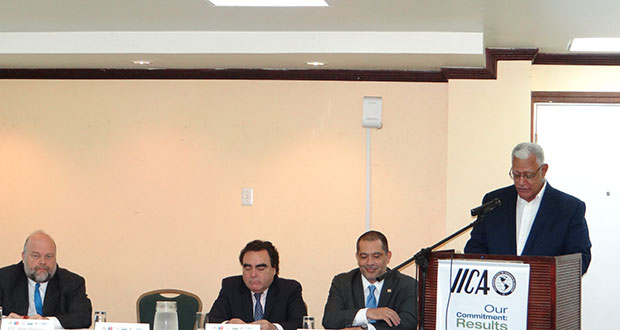
for Veterinary Medicine Control in Food Producing Animals”.