Specialists from Chile’s SAG, the WOAH, OIRSA, APHIS-USDA and the Southern Cone Standing Veterinary Committee described the situation in the region in depth and urged governments to strengthen surveillance and rapid response systems for dealing with health emergencies.
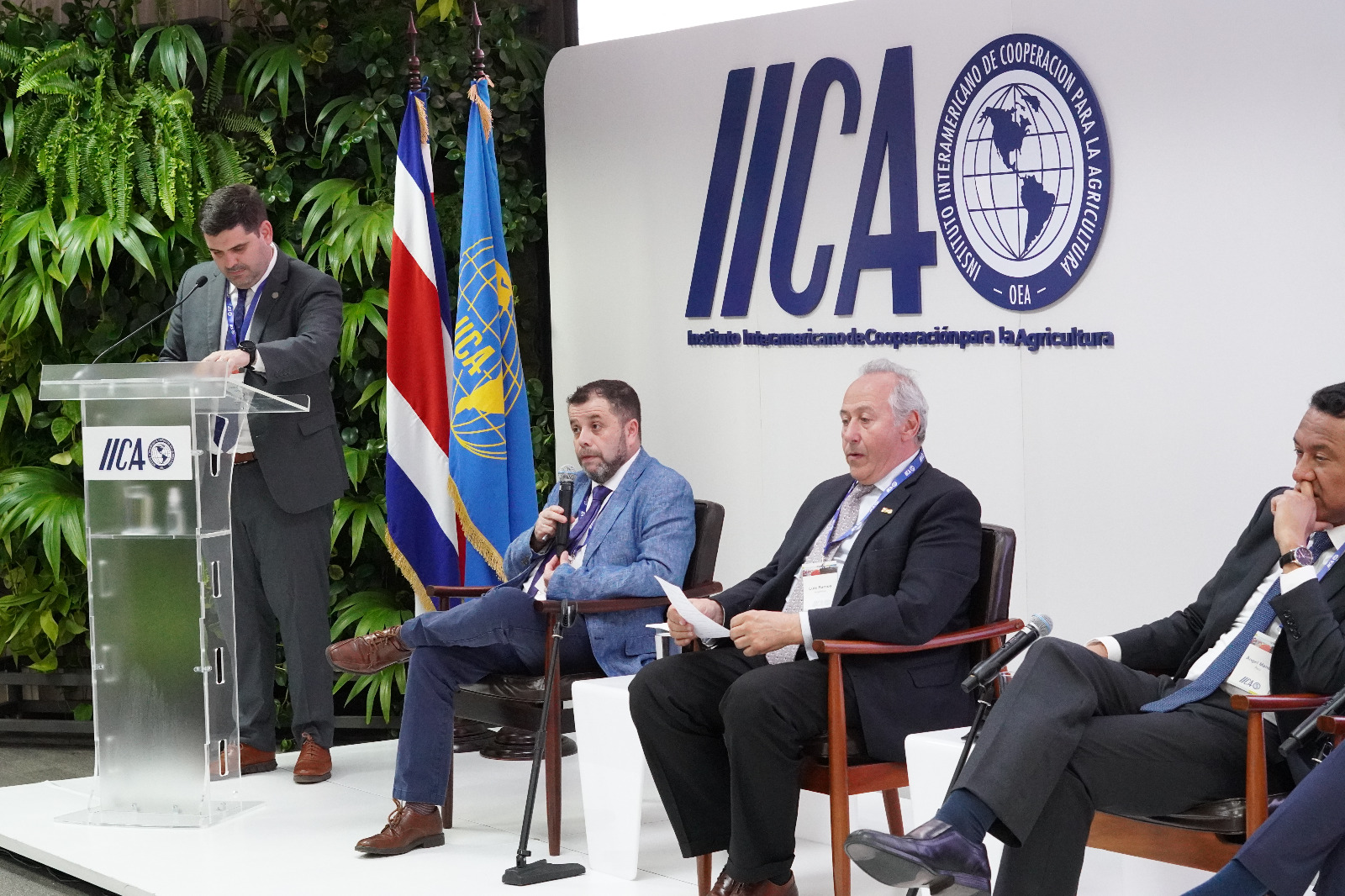
San José, 24 July 2024 (IICA). Experts from the national and regional animal health services of the countries of the Americas underscored the crucial importance of preventive actions to halt the advance of animal diseases that could affect food security in the region.
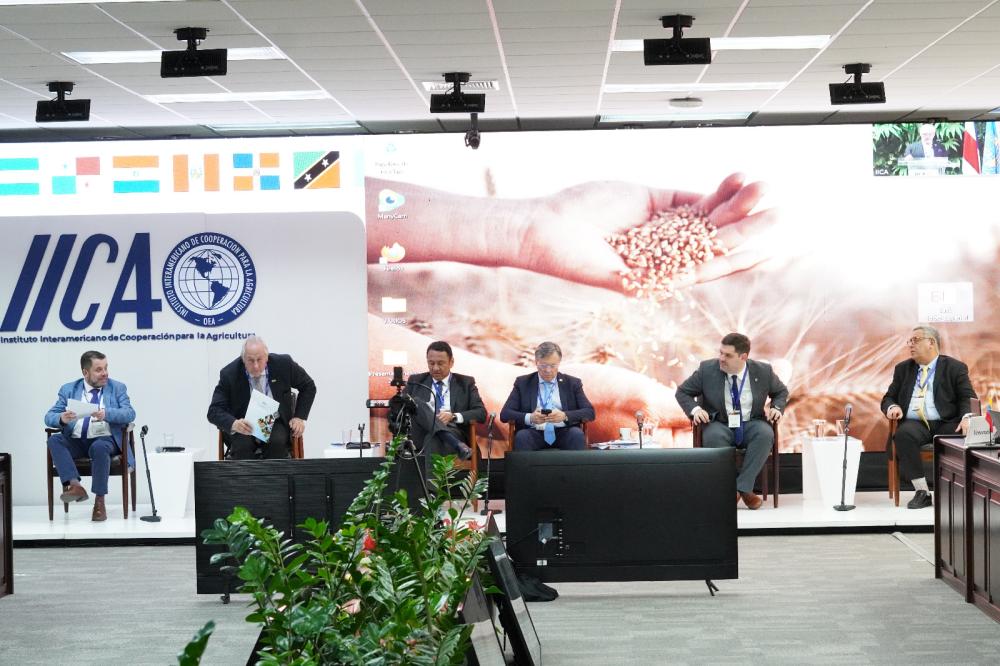
Animal health specialists met within the framework of the annual session of the Executive Committee of the Inter-American Institute for Cooperation on Agriculture (IICA). The participants included Carlos Orellana Vaquero, Chief of Livestock Protection at Chile’s Agricultural and Livestock Service (SAG) and President pro tempore of the Southern Cone Standing Veterinary Committee (CVP); Luis Barcos, the Regional Representative for the Americas of the World Organization for Animal Health (WOAH); Abelardo De Gracia, Regional Director of Environmental Health at the International Regional Organization for Agricultural Health (OIRSA); and Eric Coleman, Director of Emergency Programs with the Animal and Plant Health Inspection Service (APHIS) of the United States Department of Agriculture (USDA).
The specialists discussed the strategies and policies needed to strengthen animal health services in the region, and were agreed that the prevention and control of such diseases not only protects public health, but is essential to maintain the stability of food systems and guarantee access to safe and nutritious food for the population.
Orellana, who spoke about avian influenza, said that effective control of animal diseases opens up the possibility of working closely together as a team. He also pointed out that it is vital to prepare in times of peace to build rapid response capabilities and raise awareness among political actors.
“The main threat that the region faces as far as the prevention of these diseases is concerned is the budget allocated to the animal health authorities, limiting their actions,” adding that, “Every effort must be made to foster effective coordination between the public and private sectors.”
The WOAH’s Luis Barcos, who gave details of the outbreak of African swine fever currently affecting Haiti and the Dominican Republic, explained that at this point efforts need to focus on preventing the spread of the disease, which is why countries in the region should promote sustainable interaction between the private and public sectors, so that each is clear about its role.
He added that, given the threat posed by the disease, the competent authorities should be in constant dialogue and devise plans for responding to any further spread of the virus.
Erick Coleman (who participated virtually) also referred to African swine fever, acknowledging the importance of work with communities to help build surveillance and disease control capabilities.
“IICA has been a valuable partner in the work and activities aimed at preventing the advance of this disease. It plays a key role in organizing meetings between Caribbean countries and agriculture ministers to bridge gaps in the needs of veterinary services,” affirmed the Director of Emergency Programs at the USDA’s Animal and Plant Health Inspection Service (APHIS).
Abelardo De Gracia highlighted the impact on animal and human health of the presence of screwworm in Panama, Costa Rica and Nicaragua. He mentioned the current focus on containment, aimed at preventing the disease from advancing further north, and emphasized the importance of similar efforts that may be required in other countries that could be affected.
“We are defining a protection zone where passive and active surveillance play a vital role. We believe that the support and response of institutions like IICA will make a difference in terms of support for training, both in prevention and mitigation,” De Gracia said.
Support from the authorities
Other panel members who contributed to the discussion included Laura Suazo, Secretary of Agriculture and Livestock of Honduras; Fernando Mattos, Minister of Livestock, Agriculture and Fisheries of Uruguay and Chair of the Inter-American Board of Agriculture (IABA), IICA’s highest governing body; and Manuel Otero, the Institute’s Director General, who emphasized the importance of government agencies’ involvement in halting the advance of animal diseases that put food security and human health at risk in the Americas.
Suazo stressed the vital importance of information technology, so that countries in the region have the latest news about these issues. She also suggested that a regional strategy could be created to prevent the spread of cross-border diseases.
“In Honduras, we launched a prevention and training program for farmers, targeting all those who engage in livestock activities. This could be replicated in other Central American nations. A strong regional alert needs to go out on this issue, a call to save our budgets for the continuous emergency that cross-border diseases represent,” Suazo emphasized.
Fernando Mattos stressed that animal diseases are the cause of big economic losses across the region, which is a major setback as far as health is concerned.
“It is necessary to collaborate, contribute, cooperate and generate all the necessary resources to reverse this situation. We must learn from our mistakes and correct them. At IICA and in Uruguay, the work is difficult, but we are committed to halting the spread of animal diseases that ultimately also affect humans,” Mattos said.
IICA Director General Manuel Otero highlighted the international nature of the problem, which meant that a joint response was called for, with efforts from all the countries of the Americas.
“Concerted action by all international organizations is required, working together with a clearly regional approach. We need to invest energy and resources in solutions in the short term, to tackle the issue with the seriousness it deserves” he concluded.
More information:
Institutional Communication Division.
comunicacion.institucional@iica.int