The banana disease poses a threat to global food security and to the incomes of millions of small farmers around the world.
Panama City, 19 September 2024 (IICA). The Global Alliance against Fusarium TR4, a grouping of the key actors in the banana sector whose objective is to halt the advance of a disease that threatens the survival of the crop, has received strong support from the World Bank, one of the most important sources of project funding in developing countries.
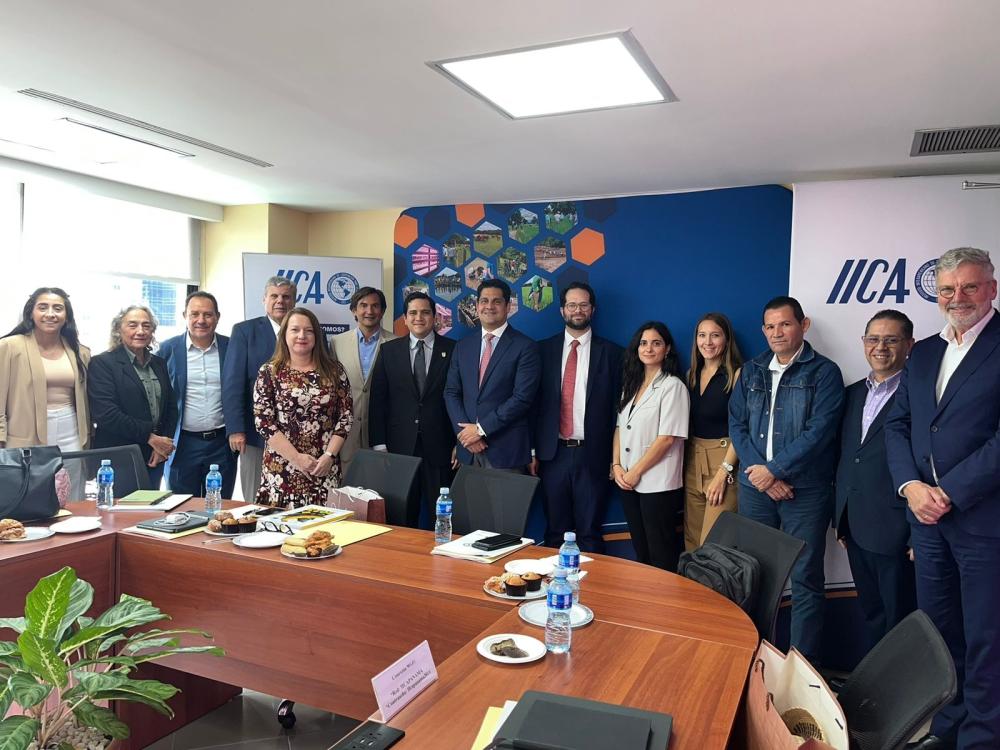
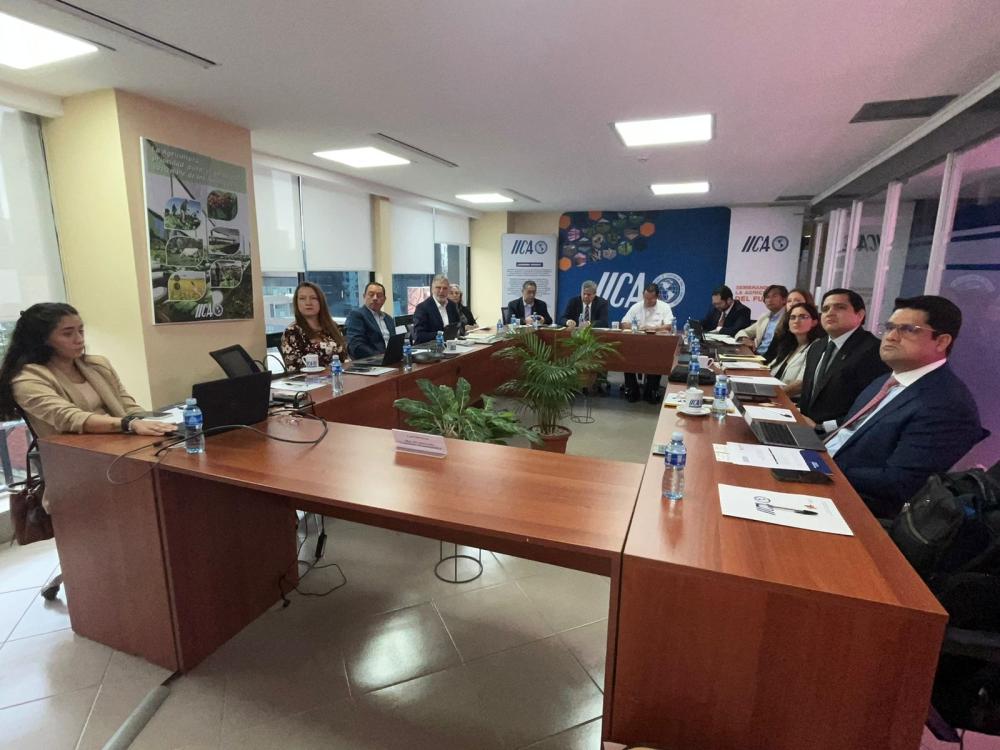
The Alliance’s Executive Committee engaged in wide-ranging discussions with delegates from the World Bank and the International Finance Corporation (IFC) in a working meeting that also included members of producer associations, companies representing the entire banana chain, researchers, and senior officials from the Inter-American Institute for Cooperation on Agriculture (IICA).
Officials from the two multilateral institutions were given detailed information about the disease’s spread across the globe, learned about the ongoing joint efforts of the members of the Alliance, and suggested different ways in which they could support the work.
The banana disease poses a threat to global food security and to the incomes of millions of small farmers around the world.
The Tropical Race 4 (TR4) strain of the Fusarium fungus, which causes a disease for which no treatment currently exists, poses the biggest threat in more than half a century to a crop that is especially important for vulnerable populations, who obtain up to a quarter of their daily calory intake from bananas.
TR4 originated in Asia but has been moving westwards and has already been detected in three Latin American countries: Colombia, Peru and Venezuela.
The meeting took place at IICA’s offices in Panama and was attended, in person or online, by representatives of several companies, including Bayer and Fyffes, the International Institute of Tropical Agriculture (IITA), the National Banana Corporation (CORBANA) of Costa Rica, the Association of Banana Exporters of Ecuador (AEBE), the Association of Banana Growers of Colombia (AUGURA), the University of Queensland (Australia) and Wageningen University (The Netherlands).
In a message of support for the Alliance’s work that was read out during the opening session, Panama’s Minister of Agricultural Development, Roberto Linares, stressed the economic and social importance of banana growing for his country and its neighbors.
Pilot project
IICA established the Global Alliance against Fusarium TR4 in 2021 and serves as its Technical Secretariat. The Institute’s Director General, Manuel Otero, and the Executive Secretary of the Alliance, Gabriel Rodríguez, took part in the meeting on IICA’s behalf. Rodríguez later announced that the results were highly satisfactory and that the Executive Committee would now be deciding how best to proceed.
According to Rodríguez, there is every possibility that the World Bank will be supporting the Alliance’s work, and it is now a question of deciding the form that that support should take. “The idea,” he explained, “is to start with a pilot project in Ecuador, the world’s leading banana exporter. The focus will be on the development of varieties that are still being tested, training and support for small farmers, the design of biosecurity systems for production units, plant health studies, and the involvement of the Alliance with governments.”
“The World Bank’s readiness to help demonstrates the confidence that exists in the Alliance’s work, in which all the major actors in the banana sector are involved,” Rodriguez said.
“We are fully aware that the disease is a serious threat to the viability of the banana industry. The situation calls for collective action; otherwise the fungus will continue to spread because it is extremely resistant. The future of millions of small farmers is at stake,” Otero emphasized.
Referring to the possibilities of financial support for the Global Alliance against Fusarium TR4, Christopher Ian Brett, Lead Agribusiness Specialist at the World Bank, pointed out that in 2023 the institution’s portfolio of investments in the sector included 247 projects costing USD 4 billion.
He explained that the World Bank had directly supported small farmers and cooperatives in Honduras and Jamaica, promoted the production of public goods and services in the agri-food sector in Argentina, and provided assistance for the design of public policies in Brazil.
Results
During the meeting, the Alliance presented the results it has achieved so far through four lines of action: prevention and training, cultivation and genetics of resistant varieties, methods of control, and policies and support. All the information gathered by each member of the Alliance is shared with the rest.
Details were given of the progress made with the discovery of the genes that provide resistance to TR4, the design of innovative production methods including the use of soil fertilization and fungicides, and the efforts to improve biosecurity on farms.
Some 300 farmers were trained in prevention in Paraguay, Ecuador and Colombia, and more than 500 took part in online training.
Gert Kema, Professor of Tropical Phytopathology and Head of the Phytopathology Laboratory at Wageningen University in the Netherlands, participated in the meeting and explained the scientific progress that has been made.
More information:
Institutional Communication Division.
comunicacion.institucional@iica.int