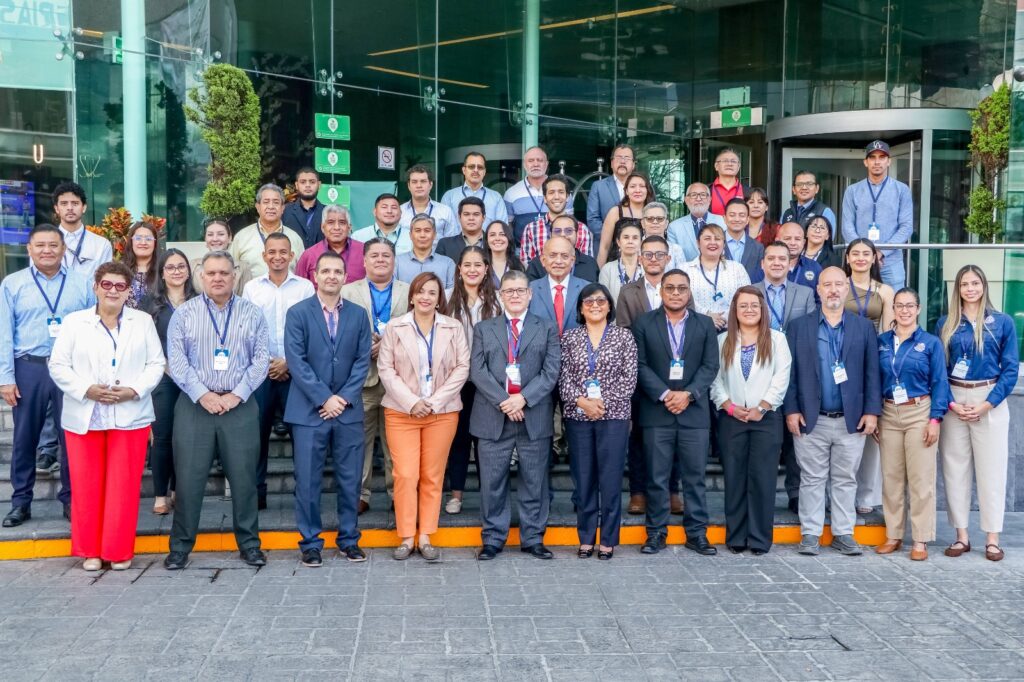
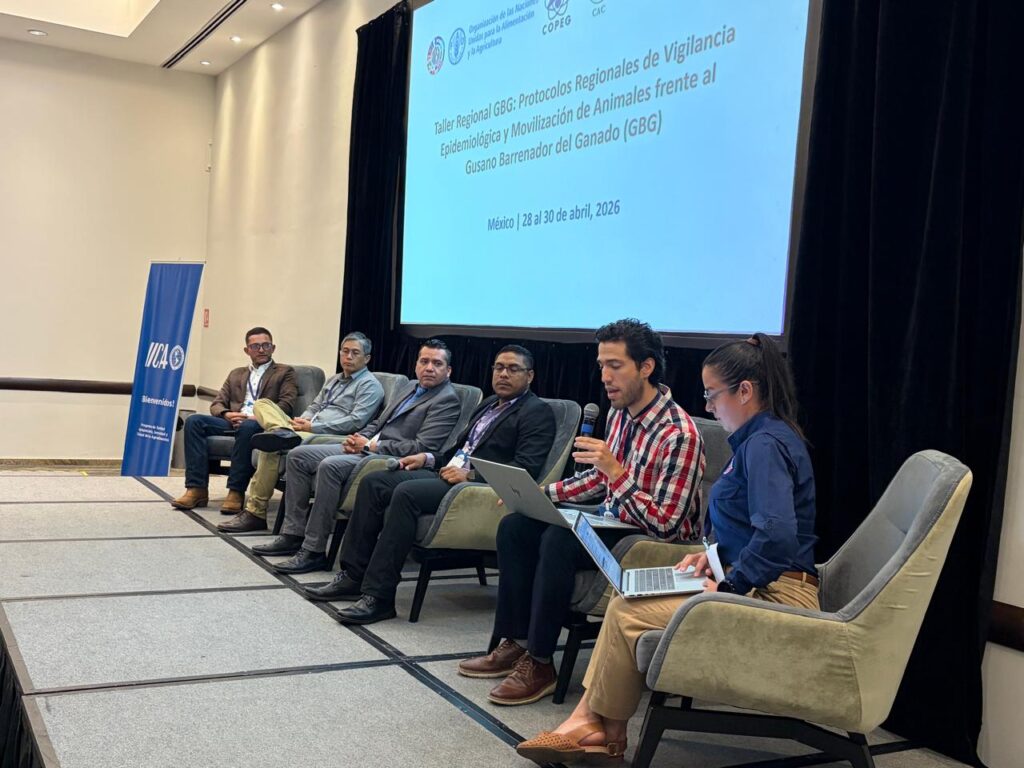
Mexico City, 20 May 2026 (IICA). Representatives of the Official Veterinary Services of Belize, Costa Rica, El Salvador, Guatemala, Honduras, Mexico, and Panama, together with international organizations and private sector stakeholders linked to animal health, advanced the review of regional epidemiological surveillance and animal movement protocols aimed at strengthening the region’s prevention, control, and response capacity against the New World Screwworm (NWS), with a view toward its eventual eradication.
They did so during a workshop organized in Mexico by the Inter-American Institute for Cooperation on Agriculture (IICA), through the Agricultural Health, Safety and Agrifood Quality Program (AHFS) and the Institute’s Delegation in that country, in collaboration with the Animal and Plant Health Inspection Service of the United States Department of Agriculture (USDA-APHIS).
The three-day event brought together 48 participants, including representatives from the International Regional Organization for Plant and Animal Health (OIRSA), the Panama–United States Commission for the Eradication and Prevention of the New World Screwworm (COPEG), the Executive Secretariat of the Central American Agricultural Council (SECAC), Mexico’s Ministry of Environment and Natural Resources (SEMARNAT), the National Confederation of Livestock Organizations of Mexico (CNOG), and IICA technical specialists.
NWS is a pest caused by a fly whose larvae primarily affect cattle, but also other domestic and wild species and even humans. Its reappearance, after more than two decades of having been eradicated from the region, is once again generating significant health, economic, and social impacts.
For this reason, participants highlighted the importance of strengthening regional cooperation, underscoring the value of joint work among countries and institutions to reinforce technical and operational capacities in the region, and advancing toward harmonized mechanisms to improve epidemiological surveillance, information exchange, and animal movement control against NWS. In addition, actions were identified to facilitate implementation of the protocols in the countries.
The first of these protocols establishes epidemiological surveillance mechanisms to facilitate early detection, timely reporting, and the application of sanitary measures in response to infestation cases, while the second defines criteria for the safe movement of susceptible animals in order to reduce the risk of introduction and spread of the parasite and strengthen regional coordination in control and eradication actions.
“These meetings are highly relevant. The idea is to continue working on controlling the pest in the countries, and the original objective of the United States Department of Agriculture remains the same: eradication of the pest,” said Marco González during the opening of the meeting.
“We are collaborating in the development of this type of harmonized product. These documents or guidelines will ultimately have to remain flexible instruments, with adjustments as the dynamics of the pest evolve. For now, we are focusing on refining them, and we also need to strengthen our national veterinary services if we want to achieve eradication,” added Alejandra Díaz, Technical Specialist in AHFS at IICA.
Regional cooperation and tools to strengthen the response
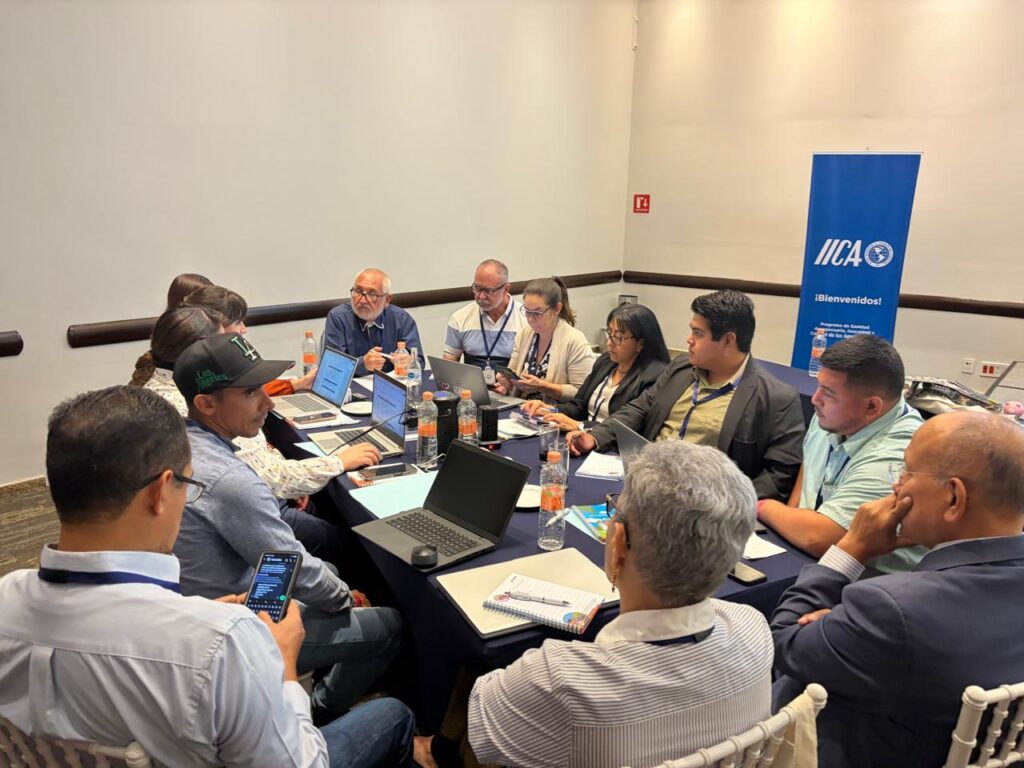
During the workshop, a detailed technical review of both protocols was carried out. The discussions made it possible to analyze their operational applicability, identify opportunities for improvement, and promote more harmonized criteria among countries. The technical exchange also helped strengthen a common understanding of the procedures, responsibilities, and needs for the future implementation of these instruments.
The meeting included practical exercises, epidemiological data analysis, and working sessions on digital tools and artificial intelligence applied to sanitary management.
In addition, the countries shared experiences and worked with real NWS case information to strengthen monitoring and decision-making.
“We share a common good: working for the region with a view to improving sanitary, zoosanitary, and phytosanitary status. These events are a great opportunity to work as a team and think not only about this pest, but also about others on which we could work together to improve our region and the economy,” said Edgar Lujano, Animal Health Officer at OIRSA, Mexico.
Oswaldo Segura, from SECAC, mentioned that the main challenge now will be implementing the protocols in the countries and strengthening coordination among institutions and partner organizations. “The challenge ahead is implementation, which is operationally and financially significant. I call for us to unite more and work together to avoid duplicating efforts,” he said.
“Epidemiological surveillance and movement control are fundamental. Each country has different conditions, but the exchange of experiences will help us achieve better results. We have protocols, canine units, technology, and artificial intelligence. We must take advantage of them and strengthen communication among all stakeholders,” added Gerardo Guerrero, General Director of Phytosanitary and Animal Health Inspection of Mexico’s National Service for Agrifood Health, Safety and Quality (SENASICA).
Meanwhile, José Abrego, Surveillance Operations Manager at COPEG, highlighted progress in the production of sterile insects, the main tool used to combat the pest, and the work carried out by Mexico in prevention and control. “We are working on the mass production of sterile flies and conducting tests to ensure they are high quality and functional. Mexico has provided significant support and has succeeded in slowing the spread of this pest,” he explained.
Juan Ramón González, Animal Movement Director of CNOG emphasized the importance of involving the productive sector in the sanitary response and also recalled the economic impact that the presence of NWS can generate.
“We are part of the solution and must make a joint effort with the authorities of all countries. This pest affects trade. In Mexico, we stopped exporting more than one million animals per year because of this situation,” he noted.
As part of the workshop activities, participants visited the Emergency Health Operations Center (COES) and the Canine School, where they learned about experiences applied to sanitary control and field response.
Among the recommendations that emerged from the meeting were strengthening national capacities for the analysis and use of epidemiological information, promoting digital tools and artificial intelligence applied to sanitary management, and fostering regional exchange of experiences and best practices against NWS.
More information:
Alejandra Díaz, Technical Specialist in Agricultural Health, Safety and Agrifood Quality at IICA.
alejandra.diaz@iica.int