A meeting held with Ms. Celina Caesar-Chavannes, the Parliamentary Secretary for the Ministry, was quite encouraging.
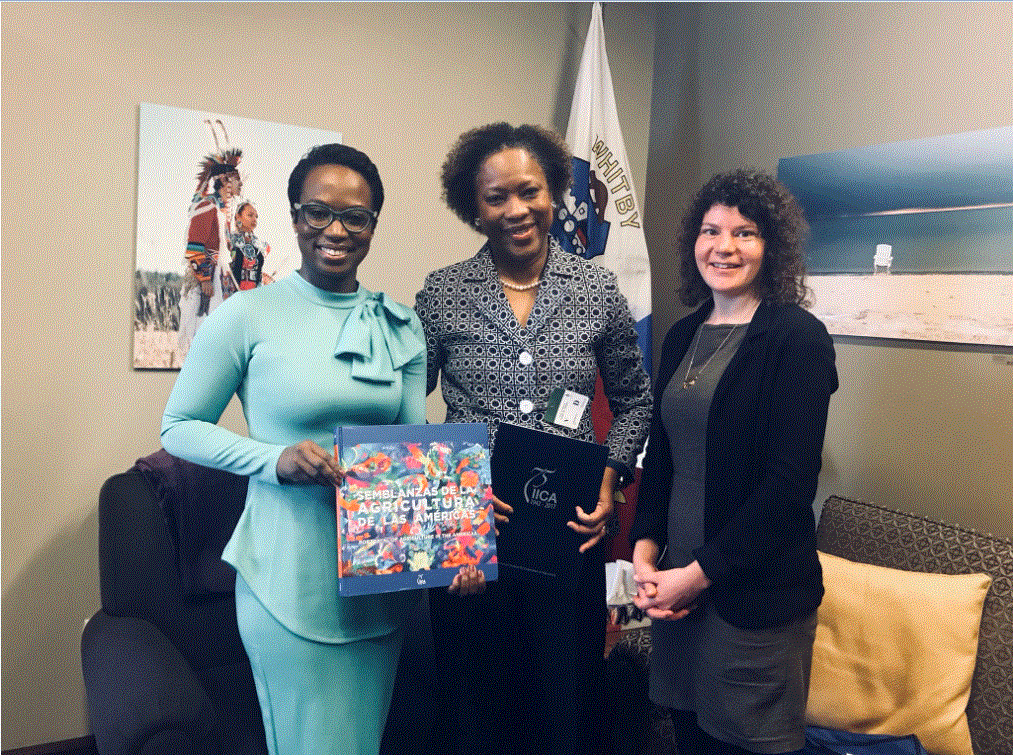
to the Minister of International Development, Dr. Audia
Barnett, IICA Canada Representative and Ms. Lindsay
Vyvey, Technical Cooperation Specialist, IICA
Global Affairs Canada (GAC) is a powerhouse in the Canadian Federal Government – having three resident Ministers with portfolios: Foreign Affairs, International Development and La Francophonie and International Trade. Among GAC’s priorities are the strengthening of Canada’s contribution to a more just, inclusive and sustainable world as well as increasing and diversifying international trade, and foreign direct investment. Although IICA’s programs reflect aspects of each of the three Ministries, the Ministry with portfolio responsibility for IICA (OAS and other such organizations) is the Ministry of Foreign Affairs. However, noting the relevance of the new Feminist International Assistance Policy (FIAP) launched by the Ministry of International Development and La Francophonie, the Delegation initiated contact to introduce the scope of IICA’s mandate and work in the Americas.
A meeting held with Ms. Celina Caesar-Chavannes, the Parliamentary Secretary for the Ministry, was quite encouraging. Joined by representatives from Agriculture and Agri-Food Canada (AAFC) and Global Affairs Canada, discussions centered around the synergies between the FIAP and IICA’s activities in Latin American and Caribbean countries. Ms. Caesar-Chavannes was particularly concerned about climate resilience in the Caribbean, as well as engaging youth in agriculture to achieve long term sustainability of the agricultural sector. She was also enthusiastic about prospects for replicating a project recently concluded by the IICA Canada Delegation: “Value-Added Opportunities for Small-Scale Cacao Producers”, as it epitomized the values that are being promoted by her Ministry – namely economic empowerment of women and environmental sustainability, as well as strengthening value-added opportunities for smallholder farmers.
The Representative and Technical Cooperation Specialist were pleased with the interaction and anticipate further engagement with this dynamic portfolio.
For more information:
Dr. Audia Barnett
audia.barnett@iica.int