Six South American countries prepare a regional strategy and national surveillance plans to prevent and control antimicrobial resistance in food animals.

San Jose, 30 June 2017 (IICA). Officials from national animal health and food safety services of the six countries that are members of the Southern Cone Standing Veterinary Committee (CVP) met in Bolivia to develop a regional strategy aimed at reducing the impact of antimicrobial resistance (AMR) in food-producing animals.
The meeting took place within the framework of a technical cooperation agreement between the Inter-American Institute for Cooperation on Agriculture (IICA) and the CVP. Government officials, IICA specialists, researchers and academics worked together to develop strategies to promote good practices in the use of antimicrobial products in animals.
Countries represented on the CVP are major agricultural producers and agro exporters, and AMR is an important issue for them. Antimicrobials are often necessary to protect human, animal and plant health, but their incorrect use can pose a threat to the public health of both exporting and importing countries. AMR develops when microorganisms such as bacteria, fungi and viruses develop resistance to medicines that previously were effective in eliminating them (e.g., antibiotics, fungicides and antivirals).

“Increased AMR means higher animal health management and treatment costs, which impacts the economic and agricultural development of countries, hence the need to prioritize work on prevention and control,” explained IICA agricultural health specialist Ericka Calderón.
The United Nations Food and Agriculture Organization (FAO), the World Organization for Animal Health (OIE), the Pan-American Foot-and-Mouth Disease Center (PANAFTOSA) of the Pan-American Health Organization (PAHO), the Cooperative Program for Agrifood and Agroindustrial Technology Development in the Southern Cone (PROCISUR) and Ohio State University provided support and participated in the activity.
At the meeting, the participants also identified national capacities and strategies to accelerate their progress toward establishing and improving national surveillance plans and identified the need to integrate the efforts of ministries of health and agriculture, the private sector, and other stakeholders.
Calderón pointed out that, as part of the follow-up actions, IICA will assist the countries in establishing national commissions and preparing pilot epidemiological surveillance projects.
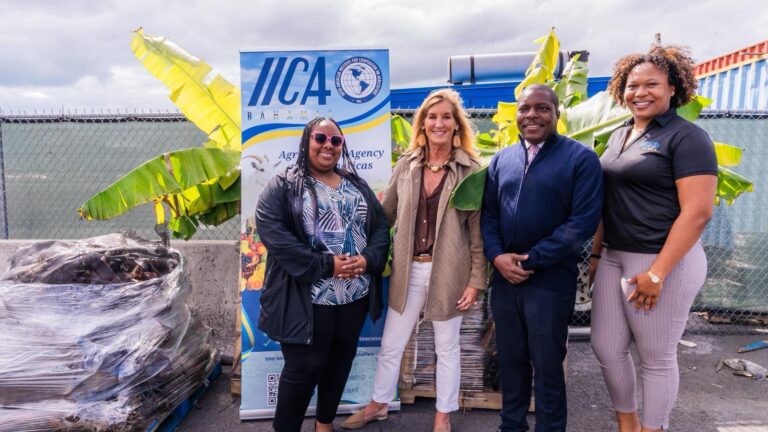
IICA Multi-crate Handover
More information: