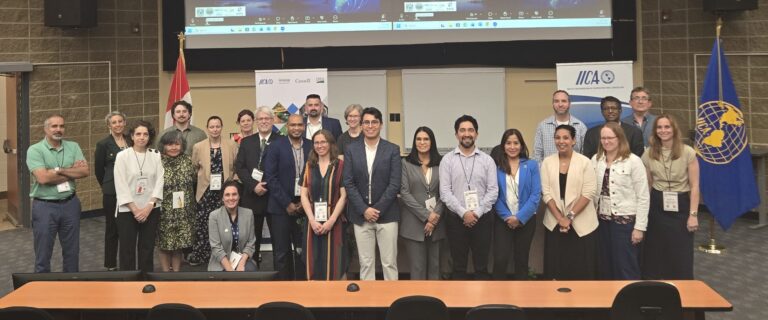
The IICA Delegation in Canada was pleased to co-host two international workshops to strengthen capacity of countries for participating in the international standard setting body for food, Codex Alimentarius.
The Codex Alimentarius (Latin for “Food Code”) is a collection of internationally recognized standards, codes of practice, guidelines, and other recommendations relating to foods, food production, and food safety. During the week of June 12, 2017, international delegates gathered in Ottawa to participate in a high-level Canadian focused training session and an inter-regional Codex colloquium of delegates to the Codex Alimentarius Commission (CAC).
For the first two days, authorities from the Canadian Codex office (Health Canada) and other relevant Canadian agencies provided technical training to CAC delegates from CARICOM (Caribbean community) countries on strategies and approaches towards improving organizational structures, operating frameworks and national governance for CODEX Codex national offices. Funding for this workshop was provided to IICA by the Public Health Agency of Canada (PHAC) under the International Health Grants Program (IHGP).
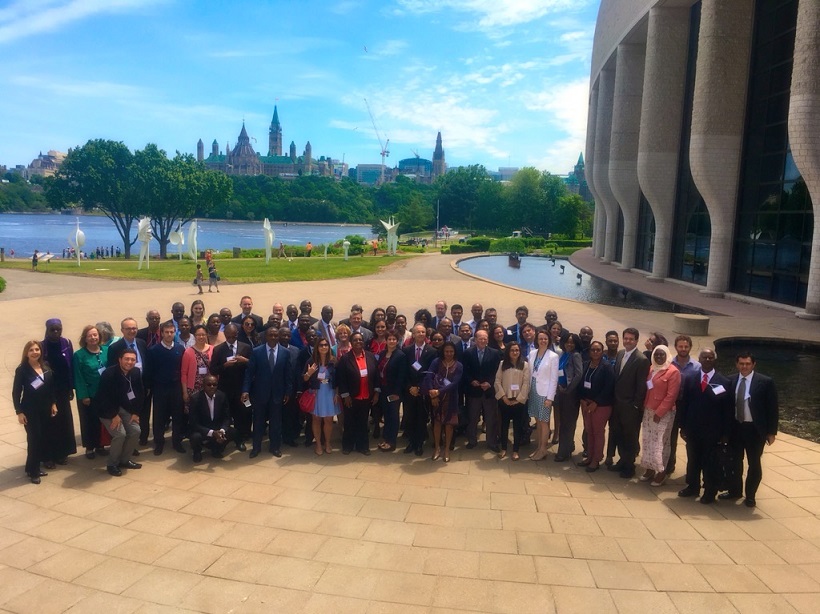
Following the training session, delegates from the CARICOM countries then participated in a 2 day inter-regional Codex colloquium that included all countries from the Americas (the Latin American and Caribbean region – CCLAC) and selected countries from Africa. In total, the event attracted approximately 80 participants. This unique gathering allowed delegates an unparalleled opportunity to interact with a large, diverse cadre of Codex professionals, learn best practices for effective participation in international standard setting bodies, and prepare for the upcoming Codex Alimentarius Commission (CAC).
Delegates had the opportunity to informally discuss country positions, identify areas of shared interest and/or divergence, and work to clarify questions and understanding around differing positions, in order to reach consensus and strengthen regulatory alignment. Without a doubt, delegates agreed that their time in Ottawa was well spent. In addition to the working sessions, delegates enjoyed the city’s picturesque environs and Canada’s ideal seasonal climate. A reception hosted by the Government of Canada was a highlight, with entertainment by Canadian indigenous peoples.
In addition to the support provided by Canada, the colloquium was organized and financially supported by IICA’s Agricultural Health and Food Safety Unit, the United States Codex Office and the United States Department of Agriculture (USDA) Foreign Agriculture Service (FAS).