The Americas can contribute effectively to feed the expected 9 billion people and contribute to the needed 70 percent increase in global food production. Public and private investments in research, development and innovation are key to increase agricultural productivity.
The Americas can contribute effectively to feed the expected 9 billion people and contribute to the needed 70 percent increase in global food production. Public and private investments in research, development and innovation are key to increase agricultural productivity.
Canada and the US have been models for public investment in agricultural research with well-funded institutions and strong private sector investment.
In the US alone, the Department of Agriculture has invested $19 billion in research since 2009, resulting in 1,151 new inventions disclosures in a wide range of topics. The investment pays off. Studies show that every dollar invested in agricultural research returns $20 to the US economy.
In Latin America and the Caribbean (LAC), Brazil, Argentina and México account for 80 percent of growth in public investment in agricultural research, with very effective research institutes and universities. Agricultural researchers in Brazil and Mexico are by far the most highly qualified among LAC countries. In 2013, close to three-quarters of Brazil’s and half of Mexico’s researchers were trained to the PhD level.
However, the Central American and Caribbean countries are lagging behind, allocating, on average, less than 0.5 percent of the agricultural gross domestic product to research, well below the 1 percent recommended by the United Nations. Several national agricultural research systems employ too few PhD-qualified researchers for agricultural research to have a substantial impact on agricultural growth.
A minimum number of PhD-qualified scientists is considered necessary for effectively conceiving, managing, and executing high-quality research, and increasing an institute’s chances of securing competitive funding.
This state of affairs has prompted the Forum of the Americas on Agricultural Research and Technology Development (FORAGRO) to realign itself and be more effective at promoting investments in R&D. FORAGRO is aiming at communicating better with policymakers, donors, and other stakeholders, both locally and through regional and international forums.
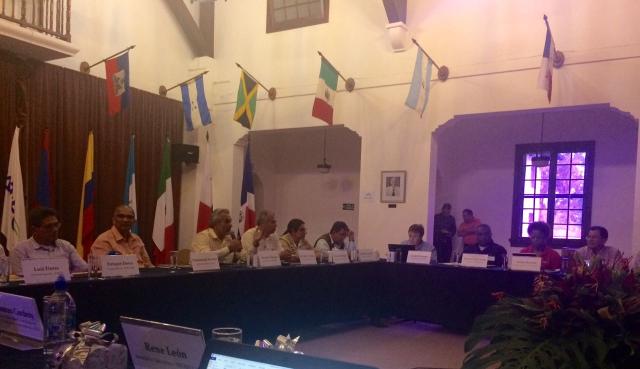
At its XVI annual meeting, FORAGRO members concurred that sensitize, informs and advocate for political, technical, and financial support for innovation in agriculture is a crucial role for the Forum. As FORAGRO’s Technical Secretariat, the Inter-American Institute for Cooperation on Agriculture (IICA) supports the restructuring of this mechanism in alignment with the national, regional and global context of agriculture.
FORAGRO represents organizations working in agricultural research, advisory services, rural extension and higher education. It also comprises farmers’ and civil society organizations, including rural women and the youth. International and regional research centers are also members.
Since its inception twenty years ago, FORAGRO has generated relevant information and knowledge about research, development and innovation to contribute to decision making. For example, it produced a seminal report on family agriculture that highlighted its relevance for local food security renovating public interest to support small farmers.
The agri-food systems of the Americas, although very heterogeneous face similar challenges. Key among them are the degraded farmlands, high resource costs of industrial agriculture and excessive food waste that prevail in most countries. And increasingly the urbanized public is becoming more disconnected from farming.
This is a crucial moment to act indicated Amadeo Nicora, FORAGRO’s President and head of the Argentinian national agricultural research institute. Our constituents bring to the task diverse experiences, capacities, and perspectives to support agri-food research and innovation that positively impact agriculture and rural wellbeing.
FORAGRO is opening membership to encompass all innovators to make possible that agricultural science, knowledge and technology transform the agricultural sector and the lives of thousands in the hemisphere.
More information about FORAGRO: priscila.henriquez@iica.int and maria.rodriguez@iica.int
*The opinions expressed in this newsletter are those of the authors and they do not reflect the position of the Institute on the topics presented.
*This post appears in the IICA Delegation in the USA Newsletter – September – December 2016