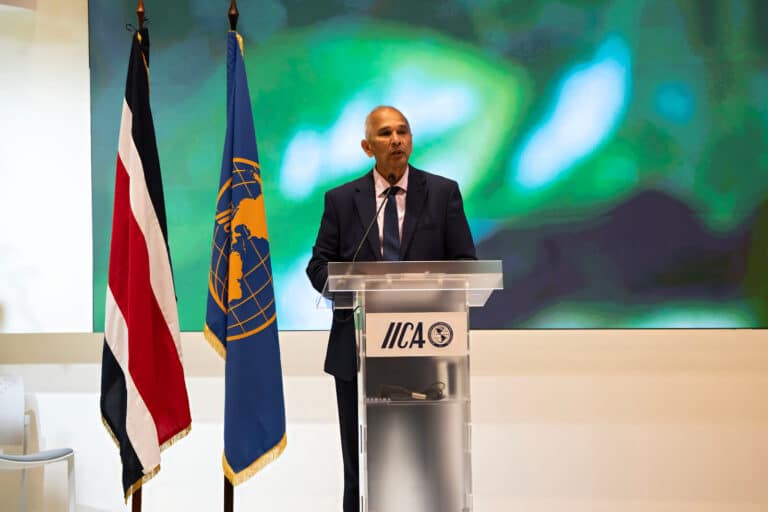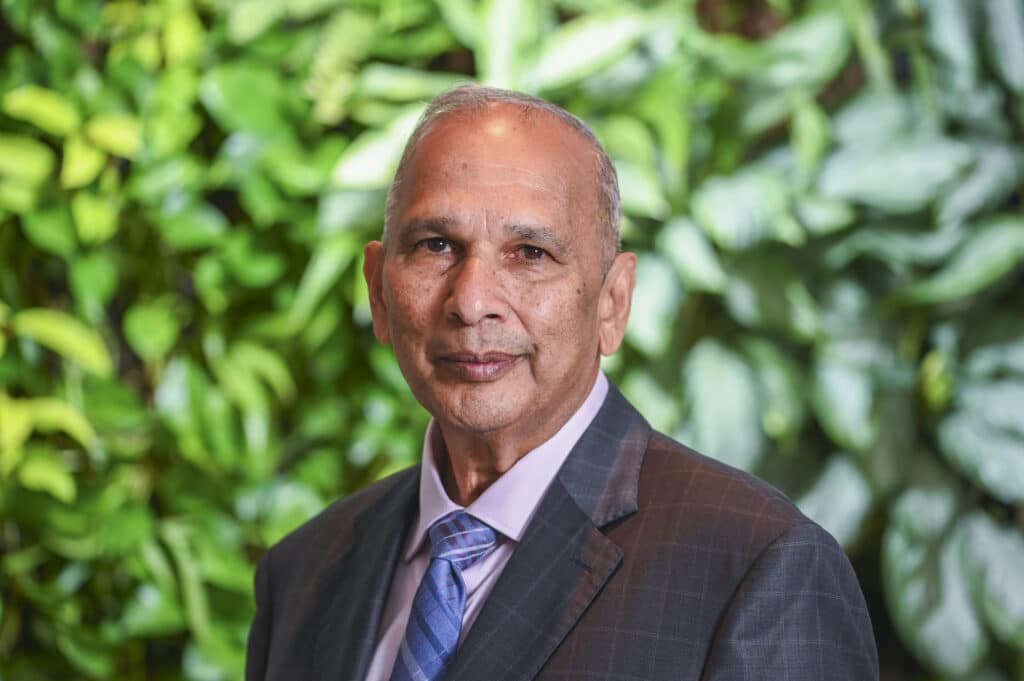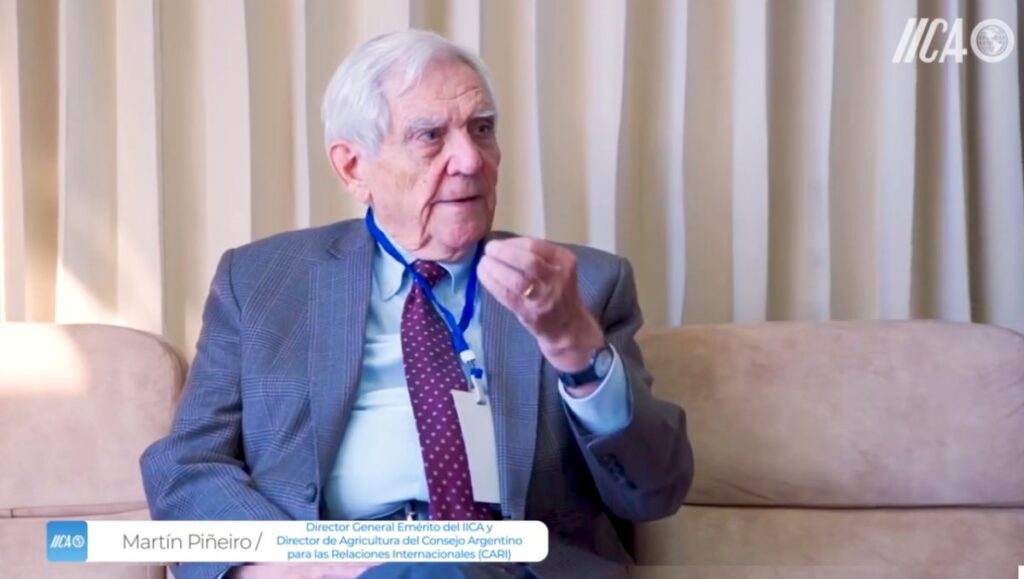
IICA’s Director General Dr. Victor Villalobos attended the 12th World Economic Forum in Latin America in Buenos Aires, Argentina.
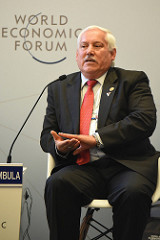
Photo Source: World Economic Forum / Marcelo Bartolomé
IICA’s Director General (DG) Dr. Victor Villalobos was one of the key speakers at the 12th World Economic Forum (WEF) Latin America in Buenos Aires, Argentina on 5 – 6 April 2017.
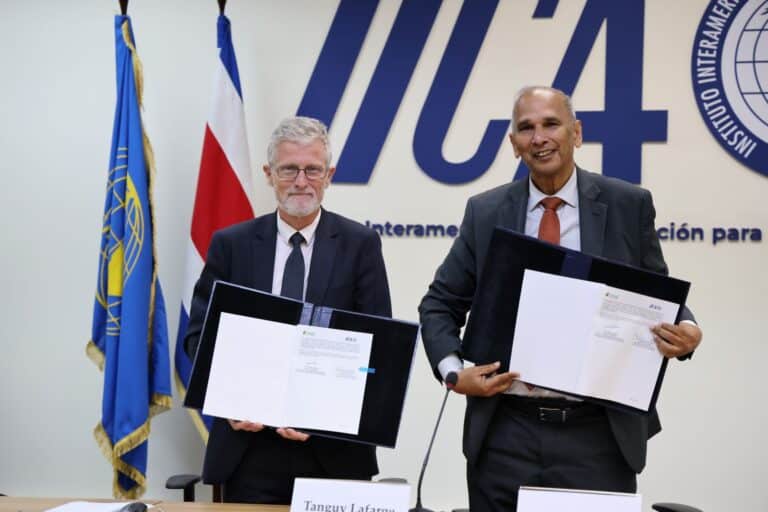
The World Economic Forum’s New Vision for Agriculture (NVA) was first launched in 2009. Over the years, IICA has supported this initiative, particularly at the WEF Latin America meetings conducted in Mexico in 2015 and in Colombia in 2016. Together with partners such as CIAT, IDB, IFPRI and the Nature Conservancy, this working group has helped WEF to align efforts and explore opportunities to implement NVA initiatives in the American Hemisphere. Their work has centered on promoting dialogue and sharing knowledge to continue moving the discussion towards concrete action at the country level. Additionally, these organizations are working to identify gaps in the public private partnerships to achieve various levels of competitiveness in agri-food chains and to link farmers to markets.
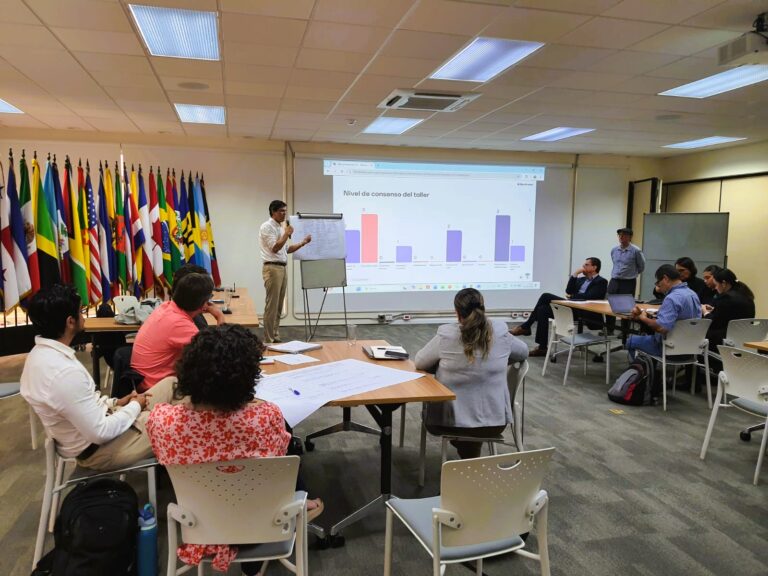
Dr. Villalobos participated as a guest at the World Economic Forum: “New Vision for Agriculture High – Level Meeting”. Over 100 global and regional leaders attended the forum where discussions centered on opportunities to promote sustainable and inclusive agriculture-sector growth in Latin America. Dr. Villalobos commented on the conclusions of the forum, on the proposed actions for Latin America and on upgrading agricultural value chains.
IICA’s DG Dr. Villalobos also participated in the XXXIII Ordinary Meeting of the Southern Agricultural Council (CAS) where he shared the main results of the five strategic themes addressed by IICA. He stated, “Investing in the development of human capital in the face of the great challenges is fundamental. We managed to train more than 54,000 officials, farmers, in different disciplines associated with agriculture, through ICTs”.
- More information about New Vision for Agriculture (NVA) Initiative in Latin America
- WEF Latin America Press Release: Leaders Call for Action to Make Latin America ‘Breadbasket of the World’
- CNN Interview with IICA’s Director General Dr. Victor Villalobos: Sustainable agriculture: it is not just about knowing how to sow the soil
More information: miguel.garcia@iica.int
*The opinions expressed in this newsletter are those of the authors and they do not reflect the position of the Institute on the topics presented.
*This post appears in the IICA Delegation in the USA Newsletter – March – April 2017