A virtual meeting hosted by IICA and CCLAC brought together specialists from over 20 countries in Latin America and the Caribbean.
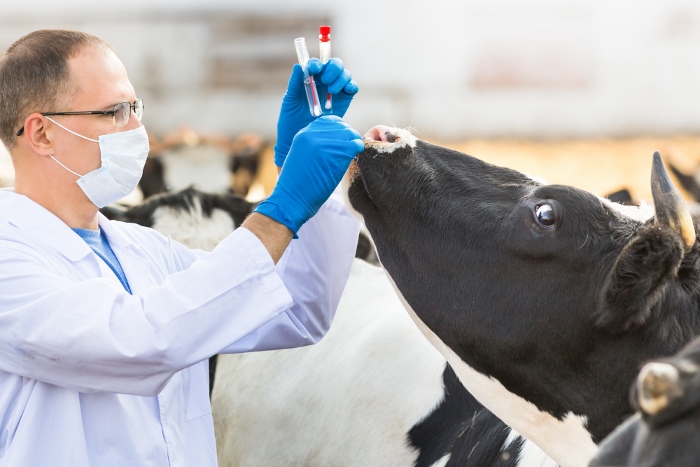
San Jose. With a view to strengthening technical capacities in the Codex Committees on Veterinary Drugs in Latin American and Caribbean countries, the Inter-American Institute for Cooperation on Agriculture (IICA) and the Codex Alimentarius Coordinating Committee for Latin America and the Caribbean (CCLAC) brought together technicians from animal health services in many of those countries to share their experiences on important topics for the proposal of future standards.
“Authorities must become aware of the implications of food standards in achieving a regional approach and an effective stance at the international level regarding the creation of new standards,” stated Laura Carina Sbordi, from the National Service for Agrifood Quality and Health of Argentina and Coordinator of the Technical Subcommittee on Veterinary Drug Residues of that country.
Kevin Greenless, from the Center for Veterinary Medicine of the United States Food and Drug Administration (FDA) gave a presentation on the extrapolation and extension of maximum residue limits (MRLs), explaining the processes, the differences between them, and the progress that has been made in those areas over the past few years.
“Regarding the extrapolation of MRLs, there should be reasonable expectation that species that produce food for human consumption will be physiologically related, in the same way a ruminant is to another ruminant, and will also exhibit a similar pattern of metabolism of veterinary drugs, making extrapolation viable. This topic is closely linked to existing data, which allow for anticipating that the other species is very similar to the one that was analyzed; in this way, we can use scientific bibliography to back-up the information of the MRL to be extrapolated,” he explained.
Natalia Osorio, from the Agriculture and Livestock Service (SAG) of Chile, gave a presentation on Chile’s experience with withdrawal periods for risk management; and Javiera Cornejo, from the Department of Animal Preventive Medicine of the School of Veterinary and Animal Sciences of the University of Chile, spoke about the contamination of veterinary drug residues in animal by-products.
Constanza Vergara, from the Chilean Agency for Food Safety and Quality, attending in the capacity of CCLAC representative for her country, also participated in the meeting, which brought together representatives in this field of study from Argentina, Chile, Guyana, Canada, Costa Rica, the Bahamas, the United States, Trinidad and Tobago, Bolivia, Uruguay, Panama, Venezuela, Honduras, Guatemala, Colombia, Mexico, Brazil and Ecuador.
More information: