The training, organized by IICA, was well received by the practitioners who will return to their respective workplaces and make a difference.
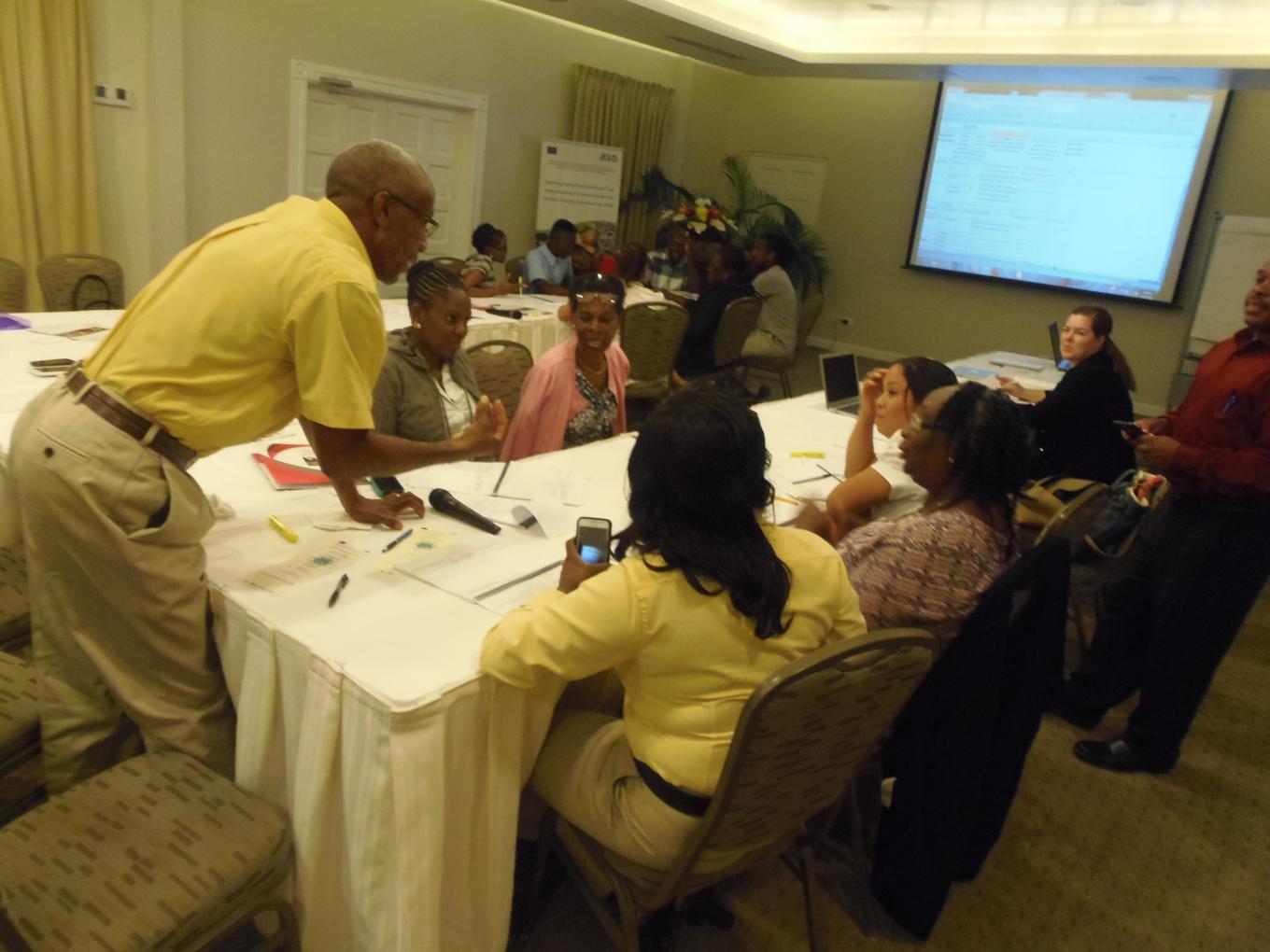
Grenada. A two-day workshop on Hazard Analysis and Critical Control Points (HACCP) allowed representatives of the private sector of four Caribbean states to receive face-to-face training on this topic to enable them to replicate what they have learnt in their respective workplaces.
The workshop which was held in Grenada from August 11-12, 2016, was attended by business practitioners from Antigua and Barbuda, St Kitts and Nevis, Dominica and Grenada.
It was organised by the Inter-American Institute for Cooperation on Agriculture (IICA), and supported under the 10th EDF SPS Project: Support to the Caribbean forum of ACP states in the implementation of commitments undertaken under the economic partnership agreement (EPA): Sanitary and Phytosanitary Measures.
This sub-regional workshop was a continuation of Phase 1: Train-the-Trainer Programme where thirty persons were identified in the CARIFORUM countries and trained in HACCP.
The lead trainer for the Workshop was Melinda Hayman from Grocery Manufacturers Association – Science and Education Foundation (GMA SEF) who was ably supported by two Grenadians and one Dominican who were successfully trained in Phase 1.
“This training therefore, will contribute to the practitioners’ portfolio of structured training in food safety to improve their capacity in doing their jobs better”, stated Derek Charles, National Specialist at the IICA Delegation in Grenada.
The Grenada Minister of Agriculture, Yolande Bain-Horsford; the Chief Environmental Health Officer, Andre Worme, and the President of the Grenada Chamber of Industry and Commerce, Ruel Edwards, encouraged the participants to make optimum use of the HACCP training as food safety is an important aspect in building the credibility of their businesses locally and in the export markets.
The Grenadians who benefited were from the Southern Fisherman Association Inc., Andall and Associates Inc., Calabash Hotel, TA Marryshow Community College, Grenada Cooperative Nutmeg Association, Belmont Estate, Grenada Cocoa Association and Summer Juice.
“You the practitioners have come from varying food processing and manufacturing practices, the only thing that is unique about the different food processing units where you work is that the food is predisposed to some level of hazard and the best way of dealing with such hazard is taking preventative measures by adopting the HACCP system”, Charles said.
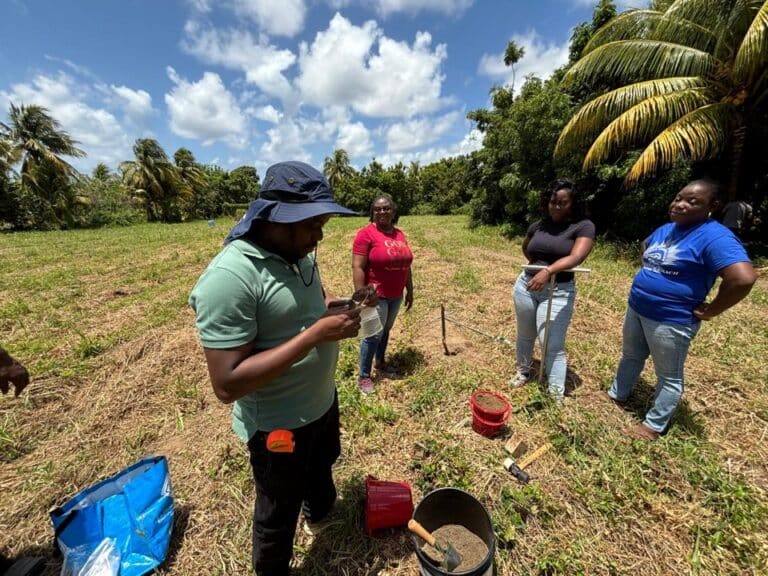
The training was very interactive and was well received by the practitioners, who will return to their respective workplaces and make a difference.
More information: derek.charles@iica.int