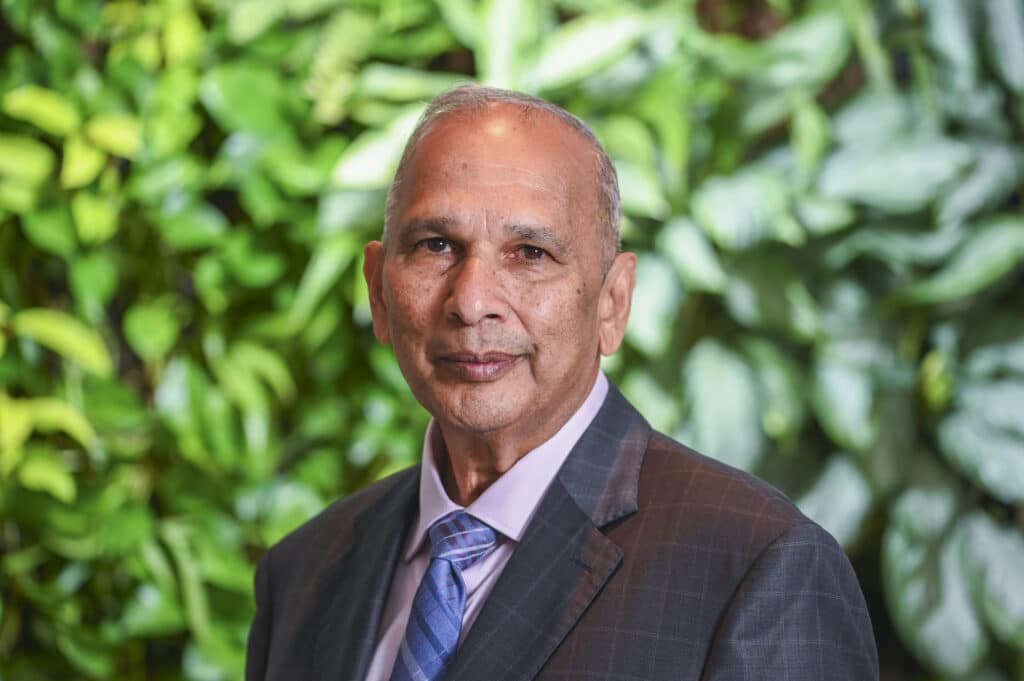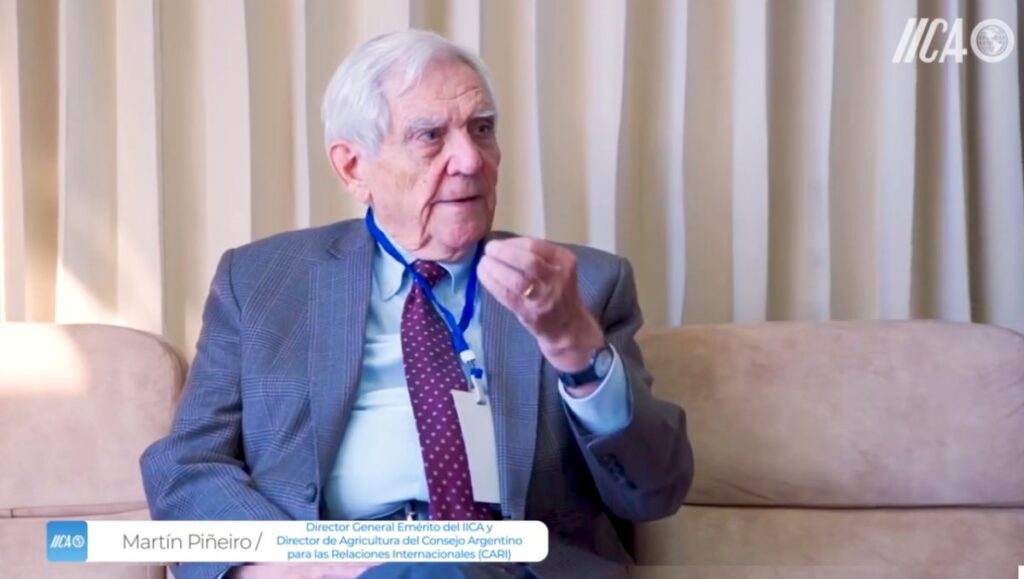
The agreement was signed in Buenos Aires by Ricardo Negri, President of SENASA, and Manuel Otero, Director General of the Inter-American Institute for Cooperation on Agriculture. It will contribute to strengthening agricultural health and the quality and safety of agrifood products, enhancing the capacities and services offered by SENASA.

Buenos Aires, 1 March 2019 (IICA). An agreement signed between Argentina’s National Service of Agrifood Health and Quality (SENASA) and the Inter-American Institute for Cooperation on Agriculture (IICA) will facilitate the implementation of new actions for continuous improvement of services in the country, in relation to agricultural health and agrifood safety.
The agreement, which was signed in Buenos Aires by Ricardo Negri, President of SENASA, and Manuel Otero, Director General of the Inter-American Institute for Cooperation on Agriculture, will also encourage experience-sharing between public and private institutions involved in the provision of agricultural health and agrifood safety services in the American hemisphere.
It will also identify and develop projects and activities aimed at strengthening agricultural health and the quality and safety of agrifood products, enhancing SENASA’s capacities and the level of services it offers.
The Argentinian official remarked that, “This agreement will help to modernize SENASA and boost its capacities in preventing disease and pests in various areas in our country”.
Negri also maintained that, “Our joint actions are improving our institutional structure. SENASA considers IICA to be a very important organization, for two reasons. It can expose us the experiences of other countries, thus improving our management of much of what we do, and also because of the Institute’s role as the Coordinating Secretariat of the work of the Southern Agricultural Council (CAS) and of all the other entities that depend on CAS, in terms of convergence, regulations, and solving problems on animal and plant health and safety”.
In his remarks, the Director General of IICA explained that he assigns “high expectations to IICA’s agreement with SENASA, which is an organization that not only regulates health, but also food quality and safety”.
Otero also remarked that, “SENASA is undergoing an irreversible modernization process, providing transparency and eliminating a series of procedures – something that is extremely important for external trade and for supplying safe, cheaper food, that reaches the tables of consumers in a more timely manner. The issues that have been identified will enable the strengthening of relations and the execution of joint actions at the national and regional levels.”
Also attending the signing of the agreement by Negri and Otero at SENASA’s headquarters in Buenos Aires were IICA officials—Jorge Werthein, Special Advisor to the Director General; Edith Obschatko, Policy Specialist; and Tomas Krotsch, Agricultural Health Specialist—, as well as SENASA’s Coordinator of International Relations, Miguel Donatelli and its Vice-President, Guillermo Rossi.
More information:
Institutional Communication Division
comunicación.institucional@iica.int