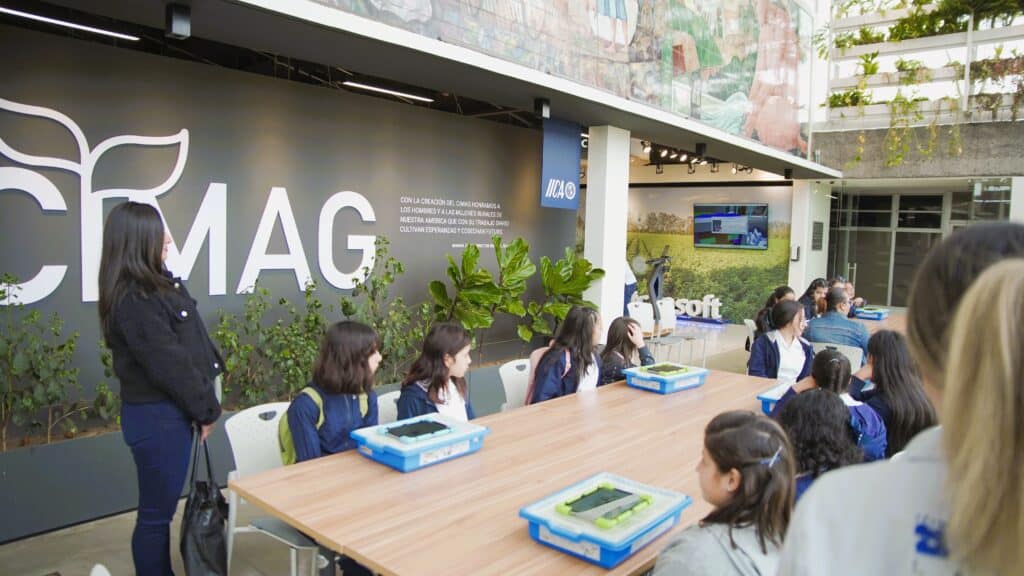
It is for this reason, that the IICA funded and organised a poultry industry stakeholder consultation for Avian Influenza (AI) preparedness and outbreak management at the Sugarcane Feeds Centre in Longdenville
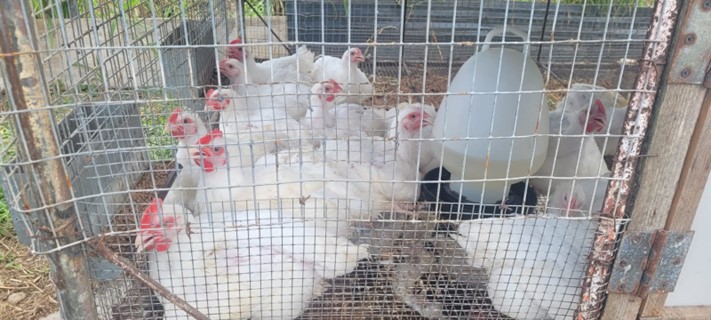
Globally, there is a rise in biothreats impacting sustainable agriculture contributing to food and farm income insecurities. These biothreats include exotic diseases, emerging and re-emerging pathogens that decrease livestock and crop yields and cause biodiversity loss. In livestock production systems, biosecurity protocols and strategies are essential to safeguard food systems from intentional or accidental biothreats.
The ongoing highly pathogenic Avian Influenza (HPAI) H5N1 clade 2.3.4.4b epizootic, or ‘bird flu’ that began in 2020 continues to have a devastating global impact on poultry production and wildlife populations. In July 2023, the World Health Organisation (WHO) reported that 67 countries in five continents notified H5N1 high pathogenicity avian influenza outbreaks in poultry and wild birds to the World Organisation for Animal Health (WOAH), with more than 131 million domestic poultry lost due to death or depopulation strategies in an attempt to eradicate the virus. In early April 2024, media reports in the United States confirmed the detection of HPAI H5N1 in dairy herds in four states, including Texas. The outbreak is believed to have been introduced into the dairy herds by wild birds. The US Center for Disease Control and Prevention (CDC) has confirmed this as the first instance of bird flu spill over to dairy cattle within the country.
The current HPAI H5N1 epizootic continues to move across geographical boundaries at a rapid rate with the virus spread by migratory wild birds especially the waterfowl. In late 2022, the virus moved south and was detected in Central and South America resulting in deaths in domestic poultry, shore birds and marine mammals. In the Caribbean, there were reported cases in flamingos at a zoo in Cuba. In addition to being an animal health and food security threat, a major concern is the zoonotic potential of HPAI and its ability to change, adapt and infect humans. Globally, human cases have been sporadic and reported cases have been in persons with direct contact with infected birds combined with poor hygiene standards and lack of personnel protective equipment. These human cases encompassed high-risk groups such as the elderly, the young and immunocompromised persons. Bird flu is NOT associated with the consumption of poultry products that are adequately prepared and cooked.
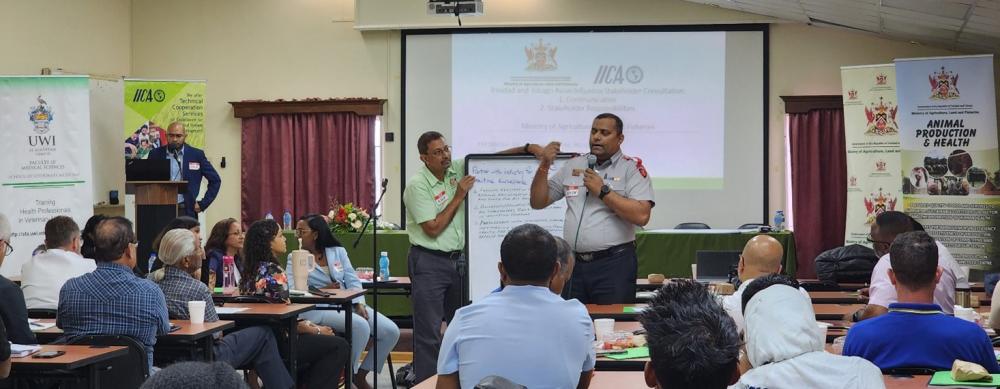
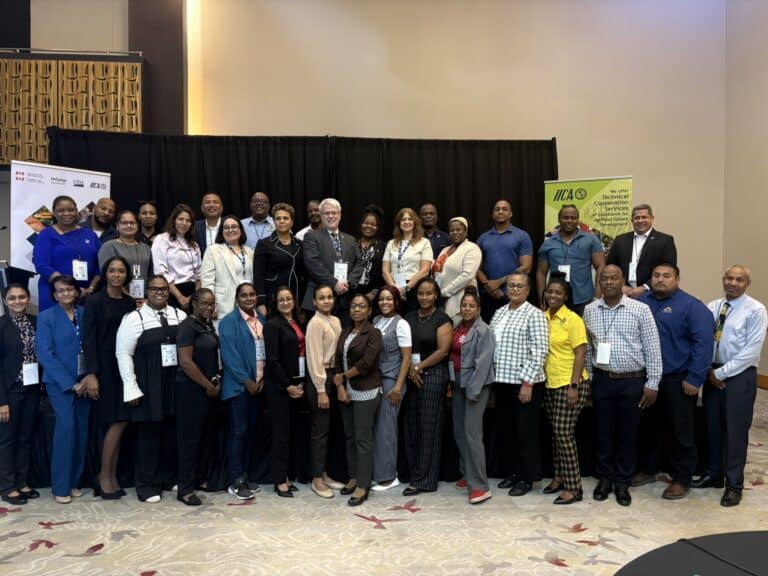
As stated by Diana Francis, IICA Representative in Trinidad and Tobago, ‘the Covid-19 pandemic gave us all a rude awakening about the deadly and rapid transmission powers of contagions, and the need for being prepared, through a functional rapid response capacity to biothreats.’ It is for this reason, that the Inter-American Institute for Cooperation on Agriculture (IICA) funded and organised a poultry industry stakeholder consultation for Avian Influenza (AI) preparedness and outbreak management at the Sugarcane Feeds Centre in Longdenville on 26 March 2024. This consultation was done in partnership with the Ministry of Agriculture, Land and Fisheries (MALF), the UWI School of Veterinary Medicine (SVM), the Poultry Association of Trinidad and Tobago (PATT), and the Caribbean Public Health Agency (CARPHA). The consultation involved over 60 stakeholders, ranging from MALF officials and private veterinarians to protective and emergency services, including the Coast Guard, Customs, Fire, and Port, and importantly poultry farmers and service providers.
The local poultry sector in Trinidad and Tobago significantly contributes to food security and produces an average of forty-two (42) million broiler chickens annually and approximately 4500 metric tonnes of table eggs. Given the potential severity of HPAI H5N1, stakeholders in the poultry industry in Trinidad and Tobago are being warned to be on the alert. HPAI can wipe out an entire poultry industry due to its rapid transmission. Trinidad and Tobago is not unfamiliar with issues related to the bird flu threat and preparatory work has been underway for some time. As a preventive measure, MALF developed an Avian Influenza Contingency Plan (AICP) in 2007, which was revised in 2014. There was unanimous agreement on the need for vigilance, agreement to update protective measures and systems, and for collective action to prevent introduction of the dreaded bird flu into the local poultry industry.
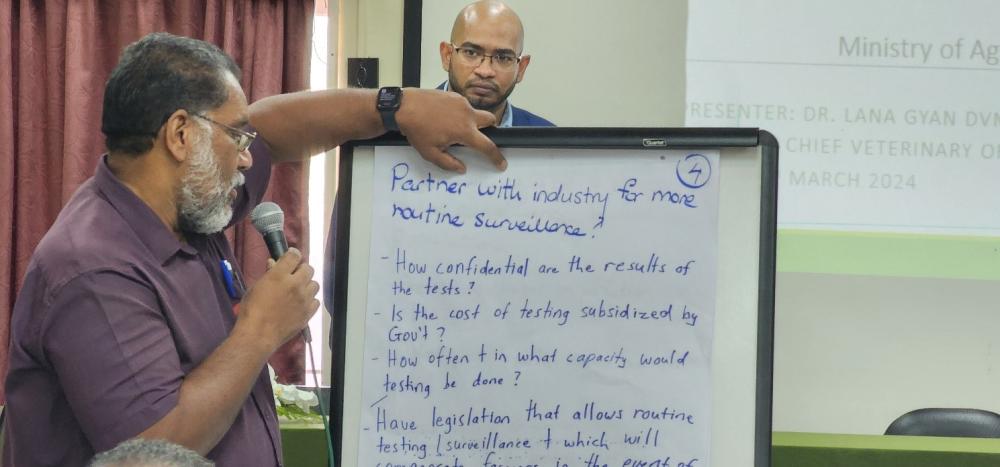
Among the critical preparatory actions to be supported by the IICA project include updating the AICP and running a table-based simulation to test the response readiness in the event of bird flu detection. As key partner of the IICA-MALF AI preparedness initiative, Dr. Karla Georges Director of the UWI SVM confirmed that the SVM ‘has the capacity to coordinate these tasks, including importantly, undertaking the PCR testing of the virus, as the SVM was the major lab doing the PCR testing during the initial Covid-19’outbreak. Dr. Desmond Ali, President of PATT and well known for his work in the poultry industry throughout the Caribbean extended his thanks on behalf of the members of PATT and thanked IICA-MALF, noting that this initial session “was a very special, well organised exchange of ideas and discussions from all stakeholders on this matter of vital significance to our poultry sector. Our congratulations and thanks to all for your attendance and active participation.”
In defining the way forward, Dr. Lana Gyan, MALF Chief Veterinary Officer confirmed that “this stakeholder consultation was the first step in a critical multi-agency collaboration to prepare for avian influenza. This collaboration is very timely as the epidemiology of this disease is changing before our eyes. MALF, IICA and our partner agencies will be working very closely in the coming months in order to prepare and test an updated contingency plan which will mark a significant step in our preparedness efforts with the ultimate goal of securing the local poultry sector.” The next step in updating the contingency plan is the table-based simulation that will take place on June 4 and 5, 2024.
Fore more information contact lisa.harrynanan@iica.int