Study maintains that improvements in port infrastructure will foster smooth and secure trade flow of food products as well as the development of small farmers in the region.
San José, 31 October 2018 (IICA). The Business Development Thematic Group (BDTG), chaired by the Inter-American Institute for Cooperation on Agriculture (IICA), with support from Caribbean Community (CARICOM) member countries, presented the region’s Ministers of Agriculture with findings and recommendations of a study that analyzed the weaknesses and opportunities in intraregional food trade and transportation.
The study also proposed actions to improve the regional transportation system and logistics environment, in a bid to enhance production development in these countries.
During the presentation, the Bahamian Minister of Agriculture and Marine Resources, Michael Pintard, acknowledged that, “Logistics for transportation and trade of fresh produce along trade routes is of vital importance to the region and taking action in this regard is a matter of urgency”.
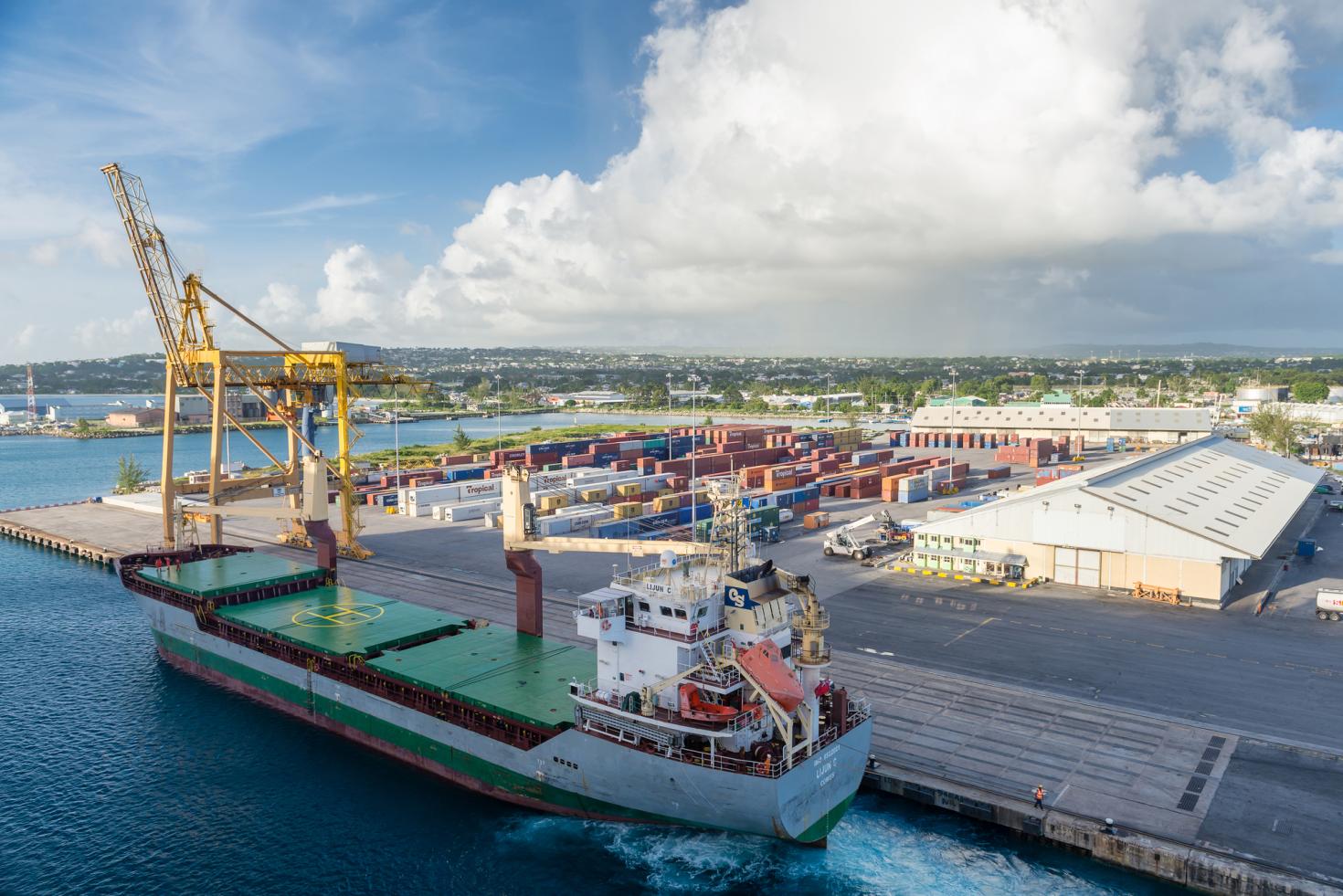
The study pinpointed successful cases worth emulating, such as the Container Examination Station at Point Lisas Industrial Port Development Corporation in Trinidad and Tobago and the in-port cold storage facility operated by Barbados Ice Company (BICO)
However, these cases must now be replicated in other countries in the region and reforms undertaken to streamline transactions at Customs and other border agencies. There is also a need to harmonize customs procedures throughout the region.
The presentation was made by Nigel Durrant, Agribusiness Specialist in the CARICOM Secretariat, who stressed the needs of small producers and exporters, who transport much of the fresh produce in the region, particularly in the Eastern Caribbean, which often has limited refrigeration facilities and infrastructure for loading operations and storage.
Durrant went on to explain that the study had identified three logistics routes for the Southern, Eastern and Northern Caribbean, and had indicated the types of investments that would be needed to improve the integration of these routes.
The presentation also spoke to work being undertaken by the Caribbean Catastrophe Risk Insurance Facility (CCRIF) in the area of agricultural insurance; the development of agricultural trade ties throughout the region by the Caribbean Export Development Agency; and the creation of investment profiles by the Caribbean Agribusiness Association and the Institute.
More information:
Allister Glean, International Specialist in Agribusiness and Value Chains, IICA St. Lucia.
allister.glean@iica.int