This was the agreement reached by the region’s ministers during a meeting of the Central American Agricultural Council. The authorities requested IICA’s technical support to develop the plan.
San Jose, 2 July 2020 (IICA). Central America will implement a regional action plan to address the immediate needs of the agriculture sector amidst the Covid-19 pandemic, with a view to guaranteeing food production and supply, as well as continued intraregional trade in agricultural products.
The Ministers and Secretaries of Agriculture of the region agreed to request the development of the plan during a virtual meeting of the Central American Agricultural Council (CAC), which included the participation of Manuel Otero, Director General of the Inter-American Institute for Cooperation on Agriculture (IICA).
The Central American agricultural authorities requested that the Executive Secretariat of CAC oversee the development of the plan with technical support from IICA and the Food and Agriculture Organization of the United Nations (FAO). The objective is to complete the plan within 45 days.
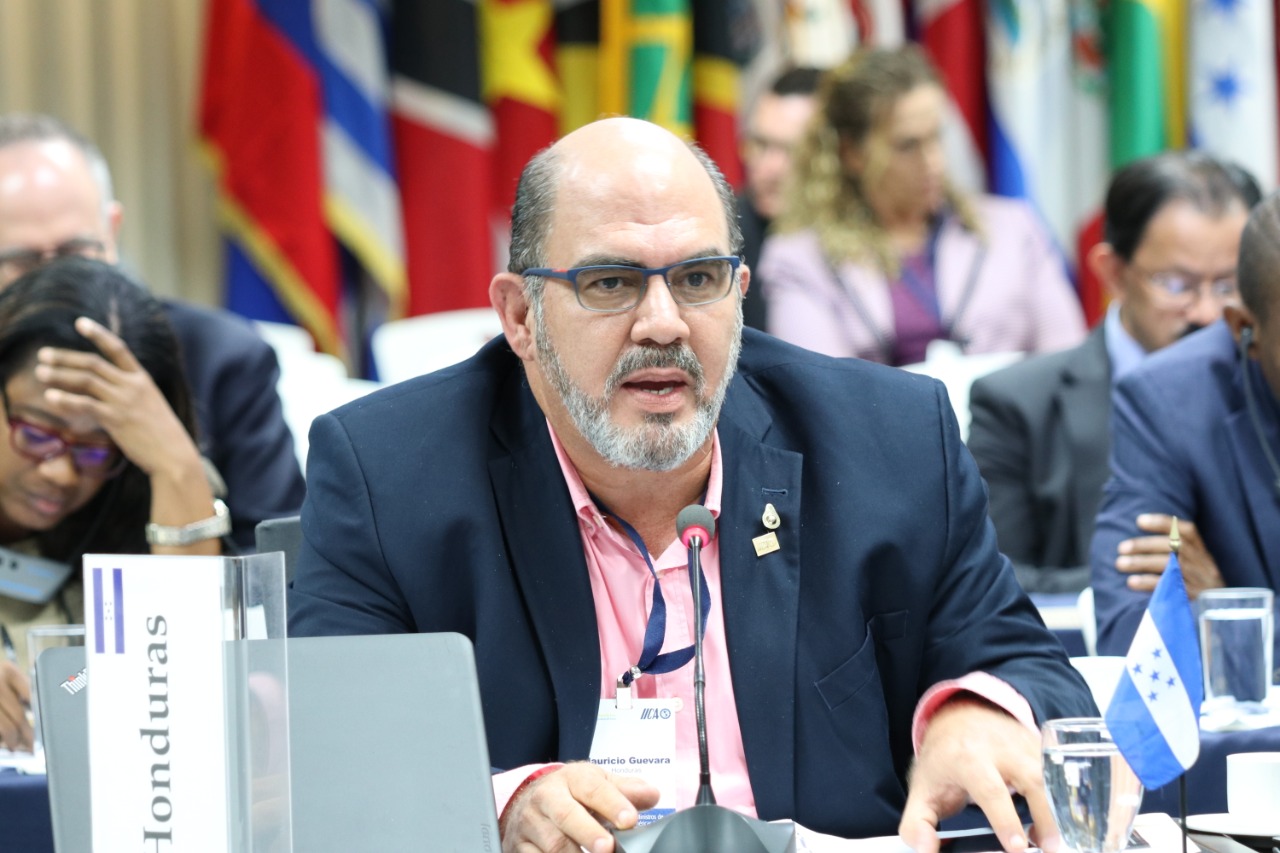
“We must generate new strategies to be implemented during and after the pandemic; reinvent ourselves to maintain food production in the countryside and ensure that it reaches cities; as well as prevent value chains from breaking and intraregional trade from coming to a standstill, so that food can reach our tables”, explained Mauricio Guevara, Secretary of Agriculture and Livestock of Honduras.
“It is time for us to join efforts, minimize the impact on the region, and adopt a resilient approach. We must thank organizations like IICA, which are working side by side with us to overcome this difficult situation and ensure that agriculture can continue to operate and become a sector that generates employment and wealth”, remarked Augusto Valderrama, Minister of Agricultural Development of Panama.
During the meeting, the Minister of Agriculture of Nicaragua, Edward Centeno, highlighted the crucial importance of agriculture for economic recovery in countries throughout the region, as well as for food security. Therefore, he underscored the need to “promptly define” the plan’s actions, which must be aligned with the Central American region’s Agricultural Policy and “adapted to the current context and needs of the sector”.
During the virtual meeting, Manuel Otero, Director General of IICA, reiterated the commitment of the hemispheric organization specializing in agriculture and rural development to assist the ministers in developing the action plan to urgently address the agrifood sector’s needs during the pandemic, as well as in launching the initiatives required to strengthen agriculture in the region.
“We have supported CAC for almost 30 years and will continue to do so by adopting an increasingly pragmatic, more short-term approach. We stand ready to collaborate as needed in this emergency plan and to provide assistance in overcoming the consequences of Covid-19. We are committed to supporting rural development in Central America, and are eager to work closely with ministers and producers during these exceptional circumstances”, explained Otero.
During the videoconference, the Director General also informed the ministers of various tools that IICA is implementing to address the current health emergency, including an application for exclusive use by ministers of agriculture, that enables them to track surpluses of agricultural products in real time; an application on good practices to protect rural workers; and self-directed virtual training sessions on prevention measures during the pandemic.
More information:
Institutional Communication Division of IICA.
comunicion.institucional@iica.int