Involving developers, agricultural producers and governments in advancing universal access to digital solutions will arm rural communities with the new technologies and improve their quality of life.
San Jose, 24 February 2021 (IICA) – Training rural dwellers, empowering them to develop their own solutions, facilitating data capture and dissemination to allow for better decision-making, while implementing modern and inclusive regulatory frameworks, are some of the core actions that stand to have the greatest impact on accelerating development in rural areas.
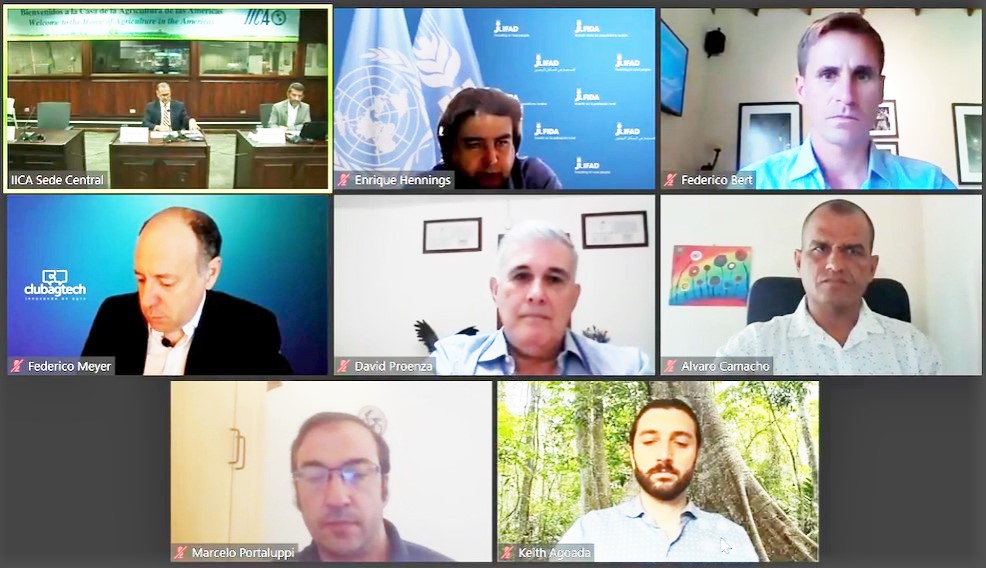
This was the view taken by international experts during “Experiences in Digital Agriculture” – the third session of the hemispheric forum on “Bridging the Digital Divide in Rural Areas of Latin America and the Caribbean: Towards a Digital Agriculture Revolution”, organized by the Inter-American Institute for Cooperation on Agriculture (IICA).
The panelists agreed that substantial and accelerated digitalization is occurring in all sectors at this time, yet rural dwellers have been left out of these advances and their benefits, in some cases, due to a lack of the requisite knowledge, in others because of inadequate infrastructure and because they simply cannot afford to incorporate these new technologies into their activities.
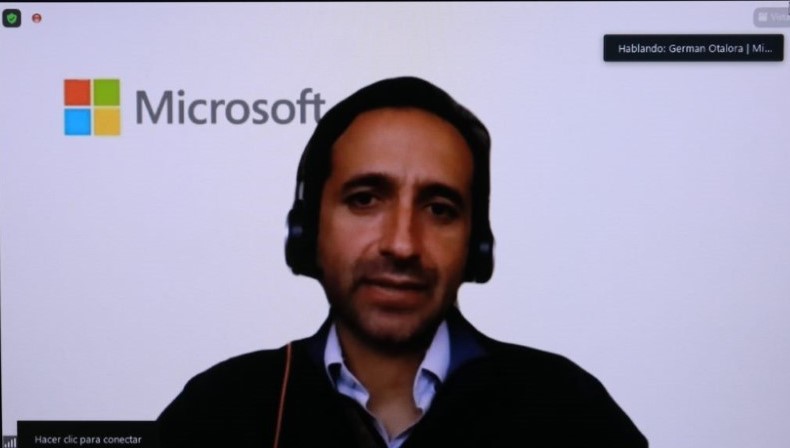
“Technology facilitates access to rural extension and technical assistance services, and thus the more accessible we make it to producers, the greater their productivity will be”, said Germán Otálora, Manager of the Microsoft Airband Initiative for Latin America.
He pointed out that, “Producers often believe that the best solution is one that has worked elsewhere, but the best solution is one that allows them to be part of devising the solution”.
Deputy Director General of IICA, Lloyd Day, remarked that, “incorporating farmers into the digital revolution is not just a moral obligation, but something that will benefit us all. If we can send a man to the Moon and a vehicle to Mars, we can definitely achieve much more here on Earth”.
According to the experts, developing new technologies, more complex applications or machines that facilitate agricultural work is not enough. Closing the digital divide implies, first of all, making a mental shift in how we incorporate technology into not just the work but the lives of producers; in how we place technology in the hands of users; in what they can do with it and in recognizing its transformative power.
Federico Meyer, Club AgTech founder and Executive Director argued that, “If we give an encyclopedia to someone who cannot read, that person will not be able to do much with it. Thus, we need to build technological capacities in rural areas so that they can take advantage of its benefits. The 77 million rural dwellers in the Americas represent 77 million opportunities to solve the challenges that are facing us”.
“Rural Connectivity in Latin America and the Caribbean: A Bridge to Sustainable Development During a Pandemic”, a recently published research study by IICA, the Inter-American Development Bank (IDB) and Microsoft, reveals that at least 77 million rural inhabitants in Latin America and the Caribbean do not have access to connectivity services at the necessary minimal standards of quality.
The panelists concurred that the main challenge is recognizing that this new world demands a new culture – one in which we do things differently and manage activities with a view to generating data and transforming it using digital tools, in order to obtain the greatest benefit.
According to Enrique Hennings, Lead Technical Specialist in Rural Markets and Enterprises at the International Fund for Agricultural Development (IFAD), the strategy to bridge the digital divide consists of the adoption of solutions, strengthening of strategic partnerships, improving knowledge management and exchange, while building awareness, capacity and leadership within organizations with respect to information and communication technologies.
“A digital agricultural revolution implies the use of electronic commercial applications, the mapping of solutions, assistance in preparing digital business plans, the digitalization of community banks and digital mapping of available technology and services”, said Hennings.
Agriculture as a sustainable business
During the panel discussion the experts stated that the agriculture sector is facing daunting challenges; some are pressed to produce more and better, while others are fighting for survival.
For Keith Agoada, Co-founder and Executive Director of Producers Market, part of the problem stems from the fact that, “Farmers have no access to business education, and they don’t see agriculture as a business but as a means of livelihood. As technology begins to create more of a decisive impact and to connect food producers with consumer desires, we feel there will be an unprecedented moment that will create a new level of prosperity in rural areas”.
Successful experiences in incorporating digital technologies in rural areas were also shared during the forum.
Federico Bert, expert and IICA consultant, presented a platform where producers and technicians can share information on pests, production techniques and fertilization. Álvaro Camacho, Regional Coordinator of the Cacao Móvil app, provided details on this application that enables producers to find specific information about this crop. On the other hand, Marcelo Portaluppi, Regional Coordinator of the Dairy Cooperative Program at the Paraguayan Federation of Production Cooperatives, spoke about how technical assistance can be provided through the use of technology, focusing on the value chain.
IICA shared its efforts to take technology to rural areas, with a particular emphasis on women and youth.
In its digital Fab Lab, it has developed solutions specifically for agriculture, such as a low-cost weather station, hydroponic crops grown under artificial light, mobile applications, tools for the use of global positioning systems and 3D printing tools, among others.
For more information about the Hemispheric Forum series or to tune in to the February 25 closing session—“Elements for a Joint Roadmap”—you may access the following links:
More information
Emmanuel Picado, Manager of the Information and Communication Technologies and Digital Agriculture Division, IICA.