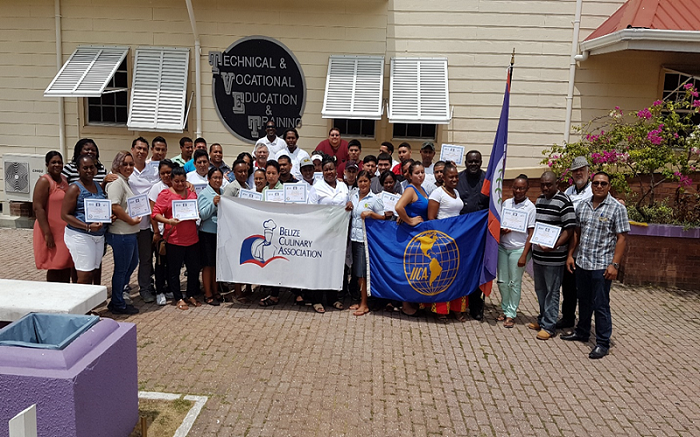
Chefs from across the country took part in twenty hours of intense training spread across five days, to learn professional standards of food handling, as well as the importance of food safety in the domestic and tourism industries. The workshop concluded on May 31, 2019 at the ITVET in Belize City. The Inter-American Institute for Cooperation on Agriculture in collaboration with The Belize Culinary Association, and Chefs Helping Chefs, Organized the five day training for a group of professional chefs working at various resorts and restaurants across the country. During the five days have seen them participating in a number of sessions, including practical cooking classes where they are evaluated by a team of world-class chefs.
Chef Karim Mejia, President of the Belize Culinary Association expressed “This is a wealth of knowledge in regards to providing food safety for our communities, our families and our businesses. And in regards to impact, you’re looking whereby to give training in regards to how to prepare food safely, how to handle your food safely, how to address and also identify risks that can also be prevented, from you making food that is bad. So it is an education for every key stakeholder. We’re in a service industry whereby tourism is key in a sense, it’s a great part of our GDP, but if one mistake was made in regards to food poisoning or the poisoning of food, it cripples us.”
While IICA Belize Technical Coordinator mentioned that “Last year, a training called linking farmers and chefs was carried out and it was in the culinary industry and IICA got a request from the association that they wanted to further their skills, specifically with regards to operational standards and food safety. One of our mandates is agricultural health and food safety in IICA, it’s in our medium term plan to assist our member countries to achieve overall sustainable development in agricultural health and food security. So we came here with two certified chefs that are providing services from Global Food Handlers Certificate to the industry and this is very, very important since the demand for safe food and quality food is critical to public health. So by educating the food handlers, we safeguard ourselves from whatever food-borne illness or outbreak that might occur in the industry.”
More information: