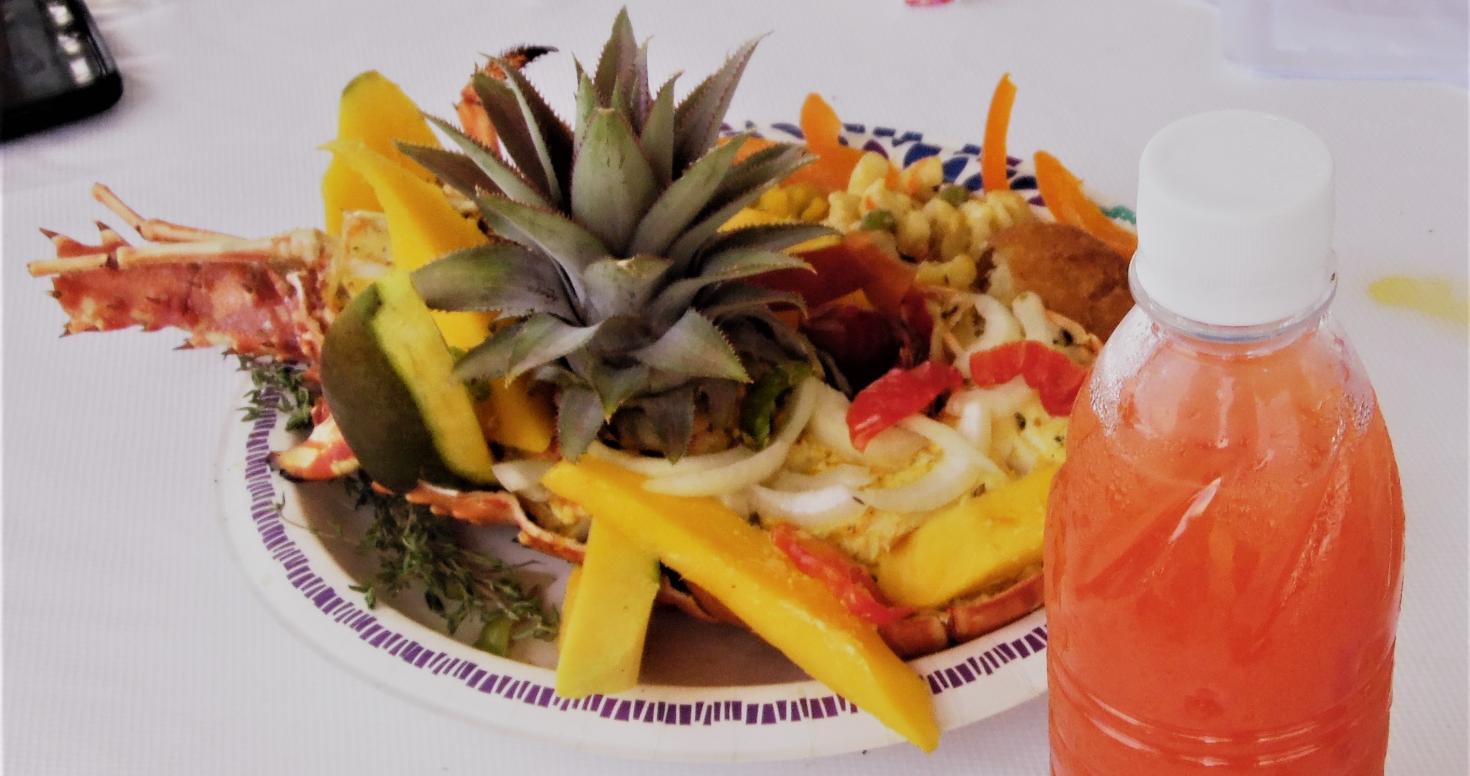
With support from IICA, the development of innovative products made from mango and pineapple was fostered, in order to demonstrate the potential for growth of the region’s agriculture sector.
 St. John, 18 September 2019 (IICA) – The Inter-American Institute for Cooperation on Agriculture (IICA) and the Ministry of Agriculture of Antigua and Barbuda organized PiAngo Fest 2019, a competition among agro-processors aimed at driving rural production and value-adding in the country’s agrifood sector.
The objective of PiAngo Fest was to foster entrepreneurship, innovation, family farming, competitiveness, food safety, nutrition and employment in the local agroindustry, by rewarding individuals who make outstanding contributions to agriculture by processing fruits and vegetables. The competition also sought to generate greater income to bolster rural development.
Contestants were required to apply innovative techniques and utilize local raw materials, primarily mango and pineapple, to develop new products, expand a business or provide a new service that made valuable contributions to food safety, employment generation and the development of new markets.
Over 40 products derived from mango and pineapple were created and submitted into the competition by fifteen agro-processors. The competition was divided into six categories: jams and jellies, sauces and salad dressings, wines, juices, smoothies and ice creams; chutneys and achars (a type of spicy sauce), pastries and dried fruits and vegetables.
Craig M. Thomas, IICA Specialist in Antigua and Barbuda, stated that “the competition provided an opportunity to foster, in a collective and transparent manner, the agro-processing industry, which has great potential for growth in Antigua and Barbuda and the rest of the region.”
Participants were judged on the creativity, presentation and flavor of their products, as well as on their use of local fruits and vegetables.
Dean Jonas, Minister of Agriculture of Antigua and Barbuda, expressed his satisfaction with the overwhelming support from both vendors and the public. He also stated that he would be taking steps to ensure that this type of production is carried out on a broader scale.
More information:
Craig Thomas, IICA Specialist in Antigua and Barbuda.