The new lab is an initiative spearheaded by Ministry of Science, Technology and Telecommunications (MICITT) of Costa Rica and the Inter-American Institute for Cooperation for Agriculture (IICA). The initiative may be replicated in other Latin American and Caribbean countries.
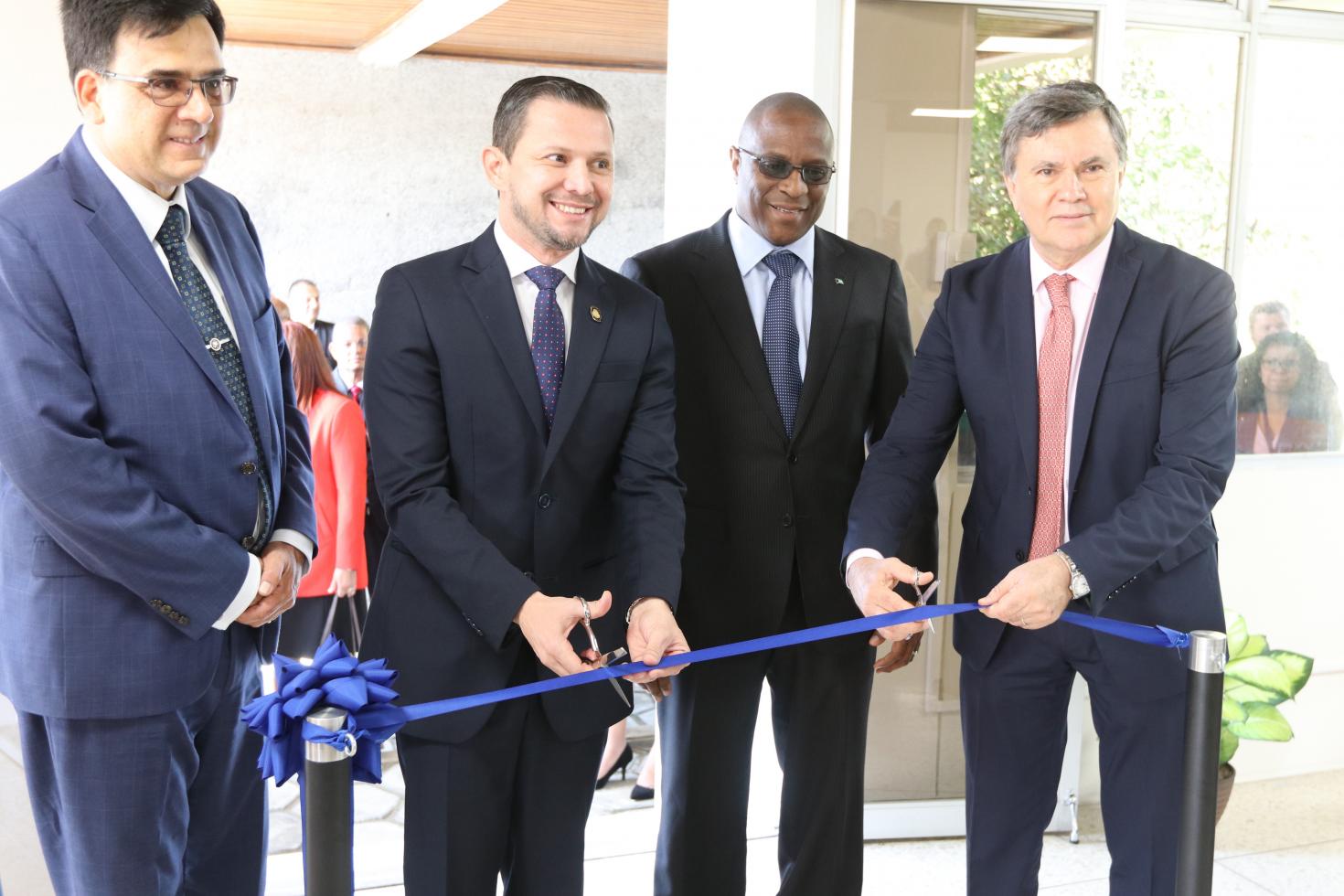
San José, Wednesday, 17 July 2019. Costa Rica’s first Fab Lab, specializing in management and technological innovation for the agriculture sector, was officially launched on Wednesday at the San José Headquarters of the Inter-American Institute for Cooperation on Agriculture (IICA).
The purpose of the Fab Lab is to reduce the rural digital divide and increase the development of technological solutions in service to Costa Rican agriculture. For over a year, the Ministry of Science, Technology and Telecommunications (MICITT) and IICA worked together to develop the lab, in collaboration with key partners such as the Superintendency of Telecommunications (SUTEL) and the National Telecommunications Fund (FONATEL).
The new 225 square-meter facility was officially declared open by the Minister of MICITT, Luis Adrián Salazar Solís, and the Institute’s Director General, Manuel Otero, on the occasion of IICA’s Executive Committee Meeting.
The Minister of Science, Technology and Telecommunications, Luis Adrián Salazar Solís, revealed that, “In the Digital Transformation Strategy towards the Costa Rica of Bicentenary 4.0”, there is a chapter that directs us to spur the transformation of agriculture in our country. The intention is that, by establishing associations with multilateral organizations such as the Inter-American Institute for Cooperation on Agriculture, we can develop capacities in the use of disruptive technologies in agriculture. In doing so, we will ensure that no sector is overlooked in processes of digital transformation within the Fourth Industrial Revolution”.
Manuel Otero, Director General of IICA, emphasized that: “New agriculture has to be smart agriculture – from a production, environmental, nutritional and digital perspective. We must convert rural areas into areas of progress and new technologies and the creation of facilities such as the Fab Lab provide us with this opportunity. We hope to replicate this initiative in other places and to benefit more rural communities, with the firm intention that no one will be left behind”.
The co-creation space, established by MICITT and IICA, has been outfitted with computer equipment that enables producers, including youth and women in rural areas, as well as persons involved in agriculture, to create technological innovations and develop prototypes that provide solutions to address real needs in Costa Rica’s agriculture sector.
A Fab Lab is a digital fabrication lab, with state-of-the-art technology, where Internet of Things (IoT) equipment is produced, for a specific use, in this case, agricultural. These centers inspire creativity and promote education and continuous learning.
The Fab Lab will also facilitate learning on the use and application of modern technologies in agriculture in the country.
Emmanuel Picado, Manager of IICA’s Information/ Communication Technologies and Digital Agriculture Division, explained that specialists from the Institute will provide support for users of the lab to develop their projects.
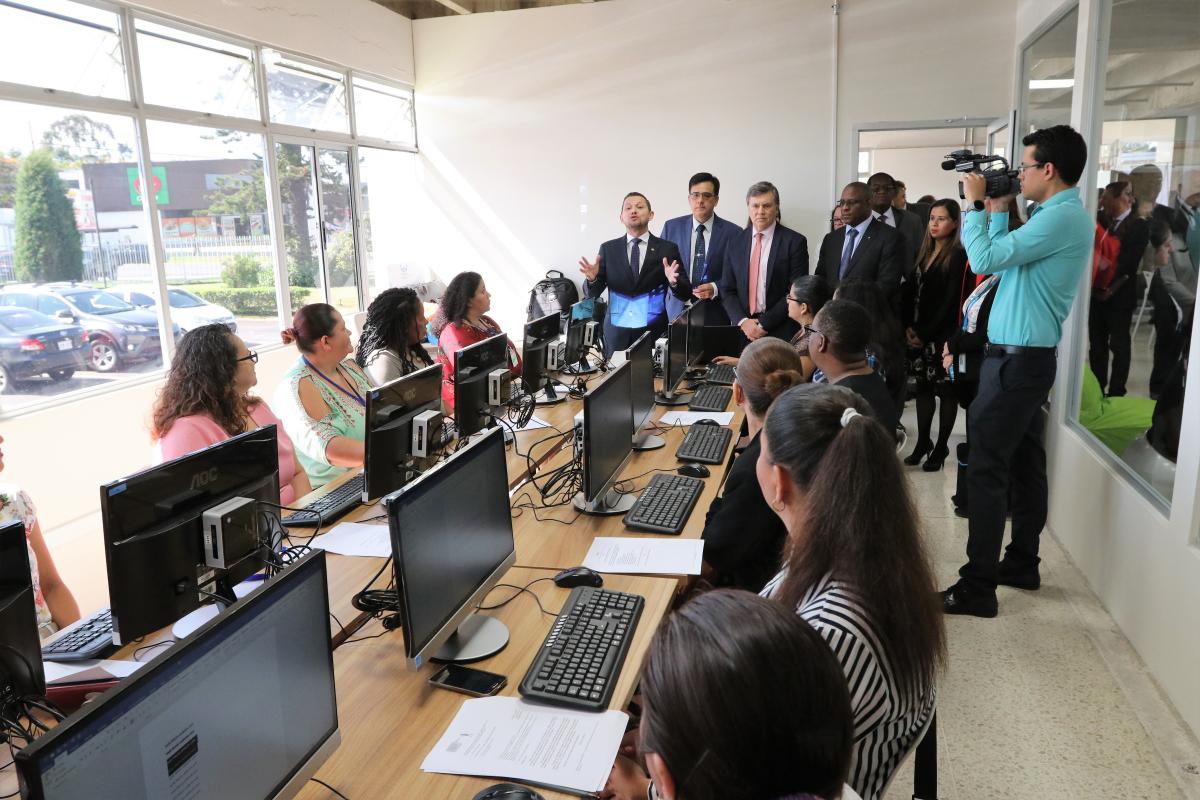
In the initial stages, the center will be equipped with internet-enabled equipment. Later, 3D printers, laser cutting tables, drones and devices used to build IoT equipment will be added.
With the latter, users will be able to develop prototypes, for example, environmental monitoring sensors (temperature, precipitation, relative moisture, etc.), components for protected environments (greenhouses), precision irrigation systems and equipment for the sustainable and responsible application of agrochemicals, among other solutions.
The Fab Lab will be managed by the IICA Costa Rica Delegation. Representative of the Delegation, Miguel Ángel Arvelo, remarked that, “We want to inspire all sectors to take advantage of this facility and to jointly develop initiatives that respond to the needs of agriculture in the future, with the active engagement of rural youth and women”.
The intention is to replicate this lab experience in Costa Rica’s rural areas and to establish the model in other IICA member countries.
More information:
Emmanuel Picado, Manager of IICA’s Information/ Communication Technologies and Digital Agriculture Division.
emmanuel.picado@iica.int
Miguel Ángel Arvelo, IICA Representative in Costa Rica.
Fiorella Alvarado – Antonieta Corrales, MICITT.
Phones: (+506) 2211-1248 / 2539-2232 / 8351-4305 / 8774-7474.
E-mail: fiorella.alvarado@micit.go.cr / antonieta.corrales@micitt.go.cr