Argentina’s Ministry of Social Development and the Inter-American Institute for Cooperation on Agriculture (IICA) will work together to strengthen the food security and well-being of rural communities in the South American country.
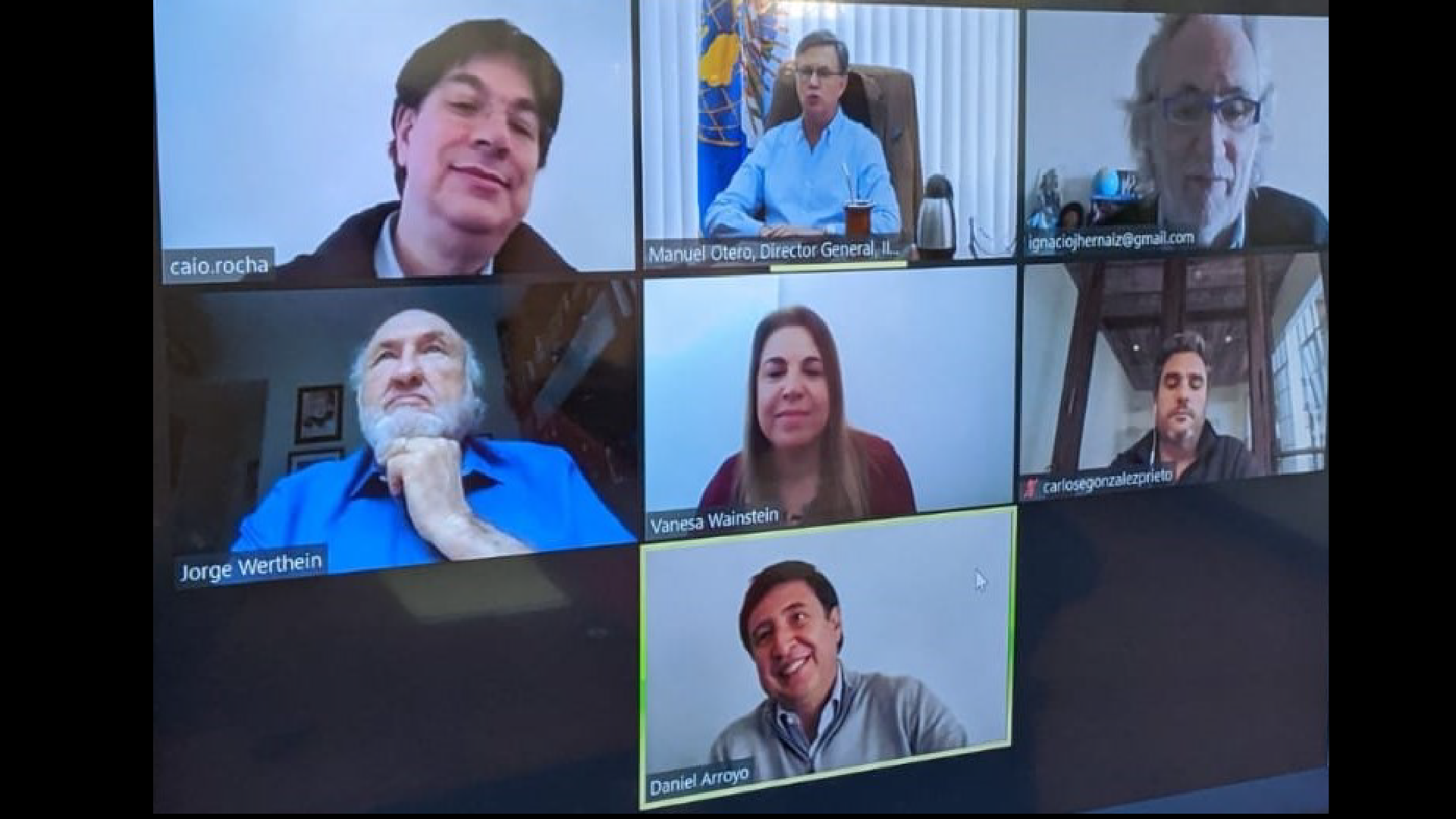
San Jose, 19 June 2020 (IICA) – The Director General of the Inter-American Institute for Cooperation on Agriculture (IICA), Manuel Otero, held a virtual meeting with the Minister of Social Development of Argentina, Daniel Arroyo, in which they agreed that the international agency specializing in agricultural and rural development would participate actively in the “Argentina contra el Hambre” (“Argentina Against Hunger”) and the “Potenciar trabajo” (“Boosting Employment”) programs.
The agency of the Inter-American System also made a donation to the Republic of Argentina for the purchase of seeds to be used by the Pro-Huerta program, a public policy program that fosters agro-ecological production practices to increase food self-sufficiency and food education, as well as promote alternative fairs and markets that drive the inclusion of farming families.
The program “Potenciar trabajo”, implemented by the Ministry of Social Development, seeks to support the work of professionals involved in construction, the textile industry, recycling and food production. IICA will cooperate with the latter sector.
Regarding food production, Minister Arroyo noted that President Alberto Fernández’s government “is working to address three specific challenges: strengthening food production within the popular economy, bolstering the Pro-Huerta program and creating a new rurality through the Volver program.
The Volver government program is geared towards reducing the rural exodus towards cities and, instead, increasing migration from large cities to production areas.
“As discussed with Minister Arroyo, IICA stands ready to assist Argentina in strengthening food production through family farming and the Pro-Huerta program and, most importantly, in building a new rurality”, explained the Director General of IICA, Manuel Otero.
To build the new rurality, he added, “it is very important to facilitate access to digital technology in order to offer better and more effective rural extension services that improve productivity and, in turn, increase income for family farmers”.
IICA’s international experience and extensive management platform, as well as the capacities of its technical teams, will also be made available to the Ministry.
More information:
Institutional Communication Division
comunicacion.institucional@iica.int