A high-level forum, which was held during the 38th Regular Meeting of the Executive Committee of the Institute, enabled multinational executives, public authorities and business leaders to share experiences.
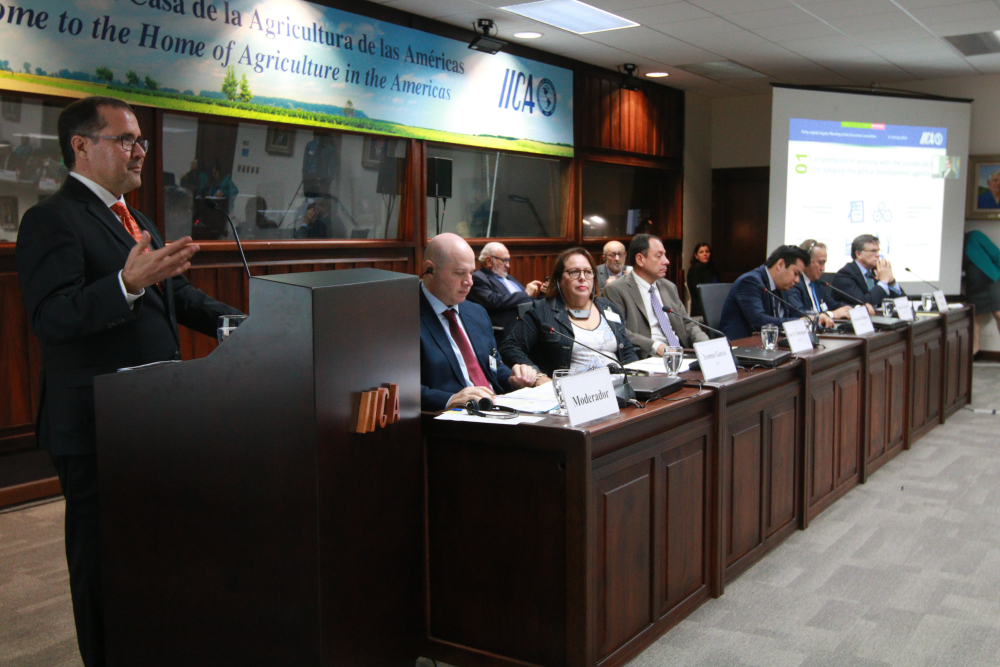
San Jose, 19 July 2018 (IICA). Representatives of Bayer AG, Microsoft, the Dominican Agribusiness Board (JAD) and the Competitiveness Center for the Western Region (CECOMRO) of Panama participated in a public-private discussion forum organized by the Inter-American Institute for Cooperation on Agriculture (IICA).
The meeting provided an opportunity for direct dialogue between the private sector, which is a key stakeholder in agricultural and rural development, and delegates of 17 countries in the Americas who attended the Regular Meeting of the Executive Committee of IICA, one of the Institute’s governing bodies.
“The transformation of agriculture and rural areas is a problem that concerns us all,” stated the Director General of IICA, Manuel Otero, during his opening remarks. José Manuel Domínguez, Marketing Crop Manager at Bayer AG; Armando Blanco, Specialist in Internet of Things (IoT) at Microsoft; Ivonne García, Deputy Director of the Dominican Agribusiness Board (JAD); and Felipe Rodríguez, President of the Competitiveness Center for the Western Region (CECOMRO) of Panama, participated in the forum.
Domínguez informed the participants that Bayer’s efforts sought to improve health and food safety as well as foster greater productivity, and that the company’s focus is on crop protection and the promotion of good agricultural practices (GAP).
“We have achieved progress in matters related to the food value chain. We have developed global programs through which we help producers to improve their basic production conditions and waste management in a sustainable manner,” he explained.
He added that Bayer also supports producers’ associations that apply GAP in their efforts to export their products to the United States and the European Union. The company developed a platform that enables producers to contact importers who are interested in purchasing their products.
In the case of Microsoft, Blanco stated that the corporation seeks to increase productivity and reduce production costs in the agriculture sector through the use of different technologies such as drones and sensors, the implementation of precision agriculture, big data, Internet of Things and artificial intelligence.
“Through the use of drones, we can take pictures of fields to determine the existence of low production levels, droughts or pests. The sensors allow for identifying changes in temperature, moisture and other crop data. The information that is generated facilitates the development of efficient production models, which, in turn, allow for saving water, reducing food losses and offering higher-quality products,” stated the specialist.
Blanco also mentioned that Microsoft has programs to support small-scale producers who lack the necessary capital to invest in technology and, in this way, boost their productivity.
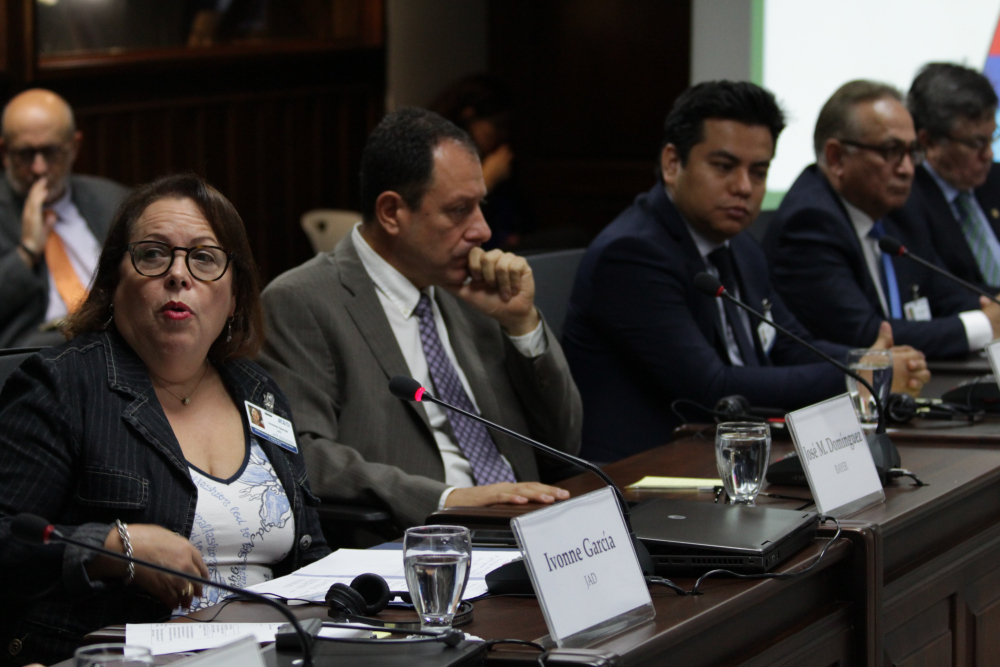
Ivonne García highlighted the fact that JAD, the main agricultural organization of the Dominican Republic, has 30 years of experience supporting agricultural development. She added that the organization currently benefits 160 thousand members through 78 ongoing projects.
“Agricultural producers become members of JAD because they know that we respond with solutions to their problems. We assist them in designing organizations, managing their finances, implementing good agricultural practices, and achieving environmental, economic and social sustainability. We also promote the inclusion of youth and women in agriculture,” stated García.
Rodríguez described CECOMRO’s promotion of the Master Plan for the Agriculture Sector of the Western Region, which seeks to assist 15 thousand Panamanian agricultural producers in accessing international markets and guaranteeing food security in that Central American country.
“This initiative emerged from the private sector, which has worked together with the government to reposition, modernize and increase the productivity of Panama’s agriculture sector. IICA supports this initiative and plays an important role in bringing together the public and private sectors for greater success,” stated the president of CECOMRO.
The representatives of the private sector addressed queries from public authorities present at the meeting, during which they approved the 2018-2022 Medium-term Plan of IICA as well as the Institute’s budget for 2019.
“We are bringing the public and private sectors closer together through the involvement of various companies. The Institute has clear duties in this regard. It can assist in scaling up these technologies, products and processes, making them accessible to all. It can also conduct further work to foster technical-political dialogue with the private sector,” concluded Otero at the end of the forum.
More information:
José Alfredo Alpízar, Press and Outreach Coordinator at IICA