Argentina’s SENASA and IICA are already engaged in a number of cooperation actions, focused, among other things, on institution building, the modernization of processes and systems, training and education, the promotion and use of bioinputs, the elaboration of regulatory frameworks, and territorial development.
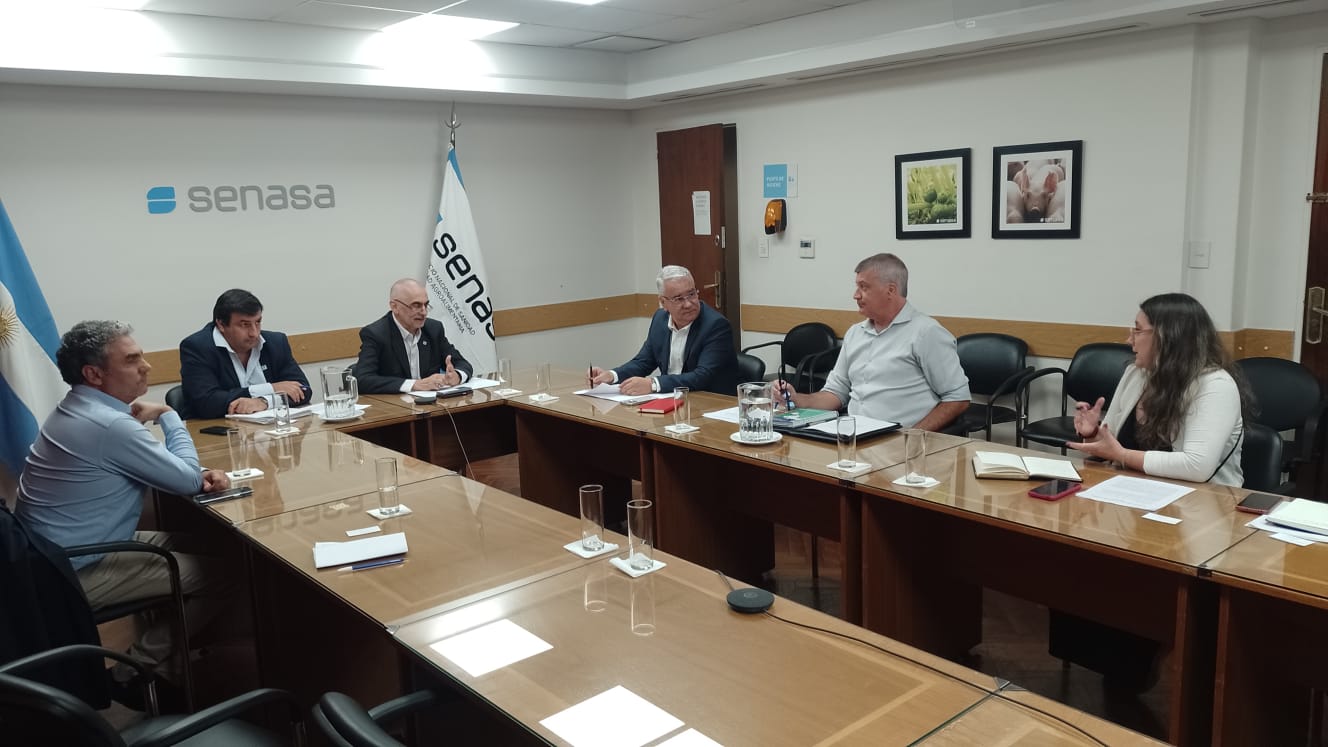
Buenos Aires, February 8, 2024 (IICA). The National Agrifood Health and Quality Service (SENASA) of Argentina and the Inter-American Institute for Cooperation on Agriculture (IICA) are to strengthen their partnership and continue working together to further consolidate agricultural health and agrifood safety services in this country and throughout the region.
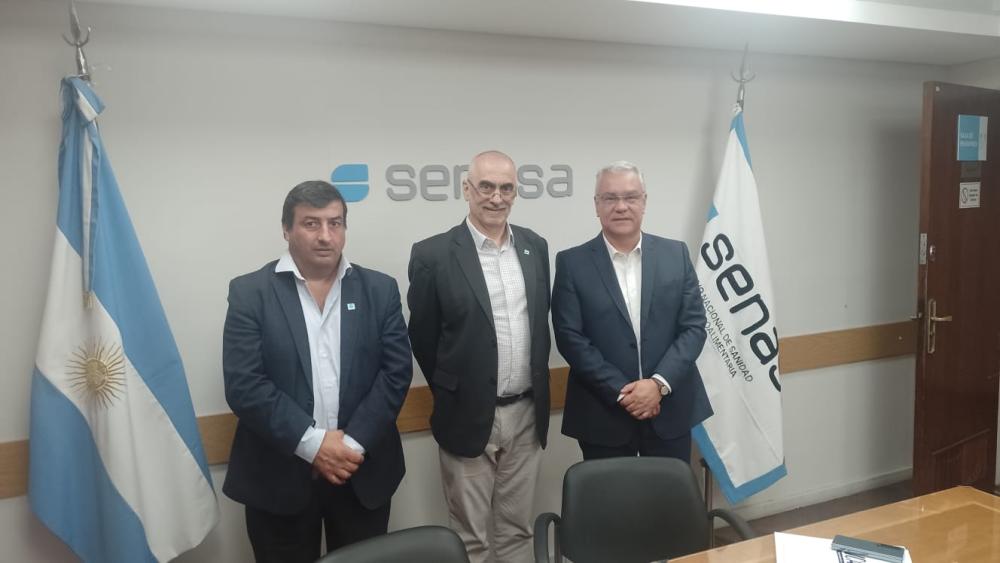
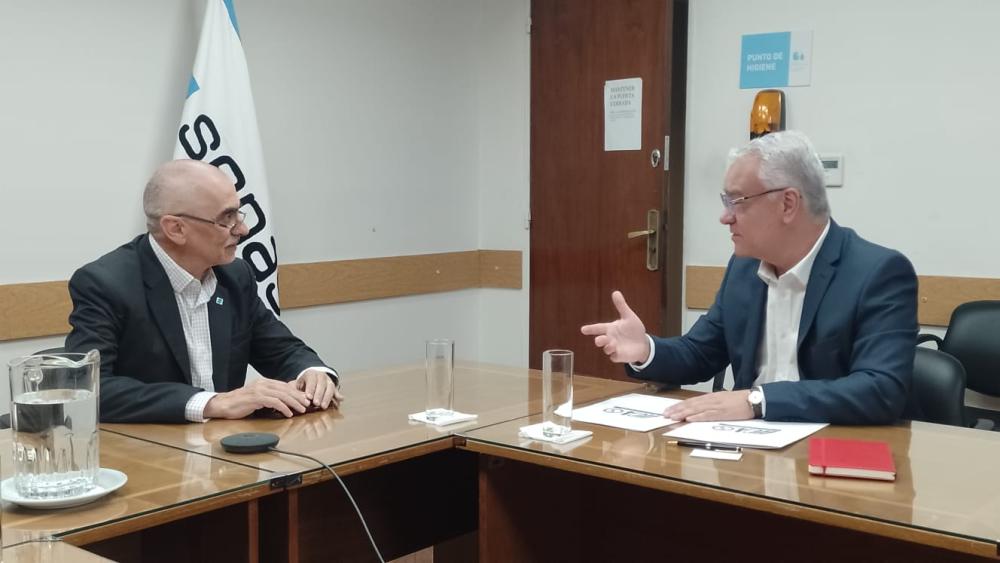
The President and Vice President of SENASA, Pablo Cortese and Sergio Robert, and the IICA Representative in Argentina, Fernando Camargo, agreed to step up cooperation between the two institutions during a meeting held in Buenos Aires.
During the meeting, Cortese, an agronomist with more than 25 years’ experience with the organization, thanked IICA for its unwavering commitment to providing technical cooperation to SENASA, one of the agencies spearheading the implementation of food safety and quality and agricultural health processes, and the transfer of experiences to the other countries, in the Southern Cone.
Ongoing actions
SENASA and IICA are already engaged in a number of cooperation actions, focused, among other things, on institution building, the modernization of processes and systems, training and education, the promotion and use of bioinputs, the elaboration of regulatory frameworks, and territorial development.
Cortese explained that SENASA has 1600 inspection points throughout Argentina, ranging from meat processing plants to ports and border crossings, which are key to the prevention and control of the spread of pests and diseases in the region.
At the domestic level, over the past year the organization has had to respond to outbreaks of avian influenza and equine encephalomyelitis, putting the health defense system to the test and making the continuous modernization and fine-tuning of alert and surveillance systems a matter of urgency.
In Argentina, the type of work that SENASA does has been necessary since the late the 19th century, when it involved guaranteeing the safety of exports of raw materials. Nowadays, a variety of tasks are involved, including specific actions with family farmers, tailored to their circumstances, to ensure the health and safety of production destined for the domestic market.
.Camargo emphasized that the institutional and working links with SENASA are a priority for IICA, given the important role that the Argentine organization plays in the sharing of experiences and solutions at the regional level, particularly innovation, the use of technological tools, inclusion, and communication with consumers.
“Today, the phytosanitary services of the Americas are faced with the challenge of incorporating new technologies, to keep up with current trade requirements, and with ongoing joint efforts that will continue”, said Camargo, who was accompanied at the meeting by IICA Agricultural Health and Food Safety Specialist Tomás Krotsch; Technical Coordinator Carolina Pivetta; Administrative Coordinator Ana Echeverri; and Advisor Carlos González Prieto.
More information:
Institutional Communication Division.
comunicacion.institucional@iica.int