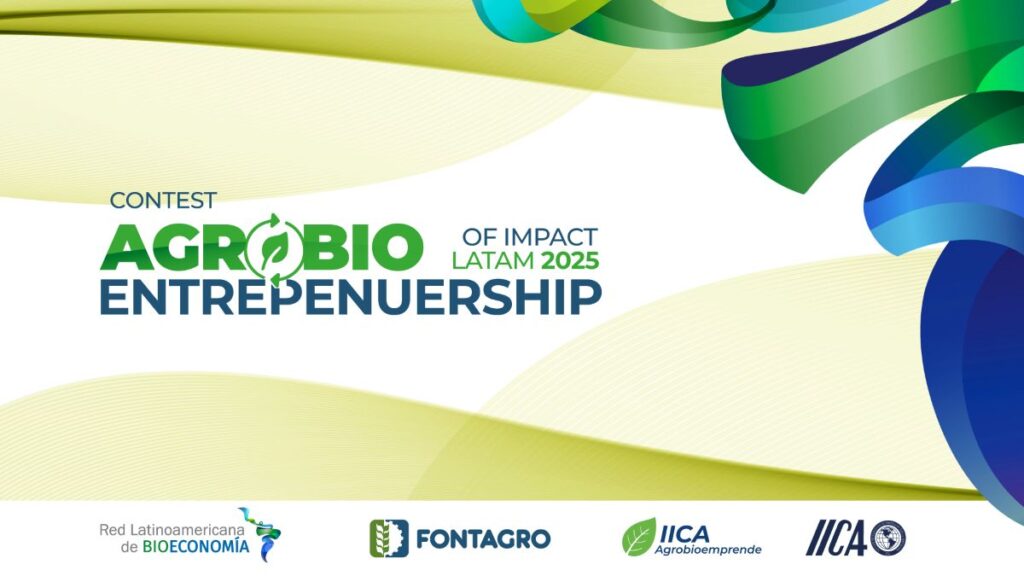
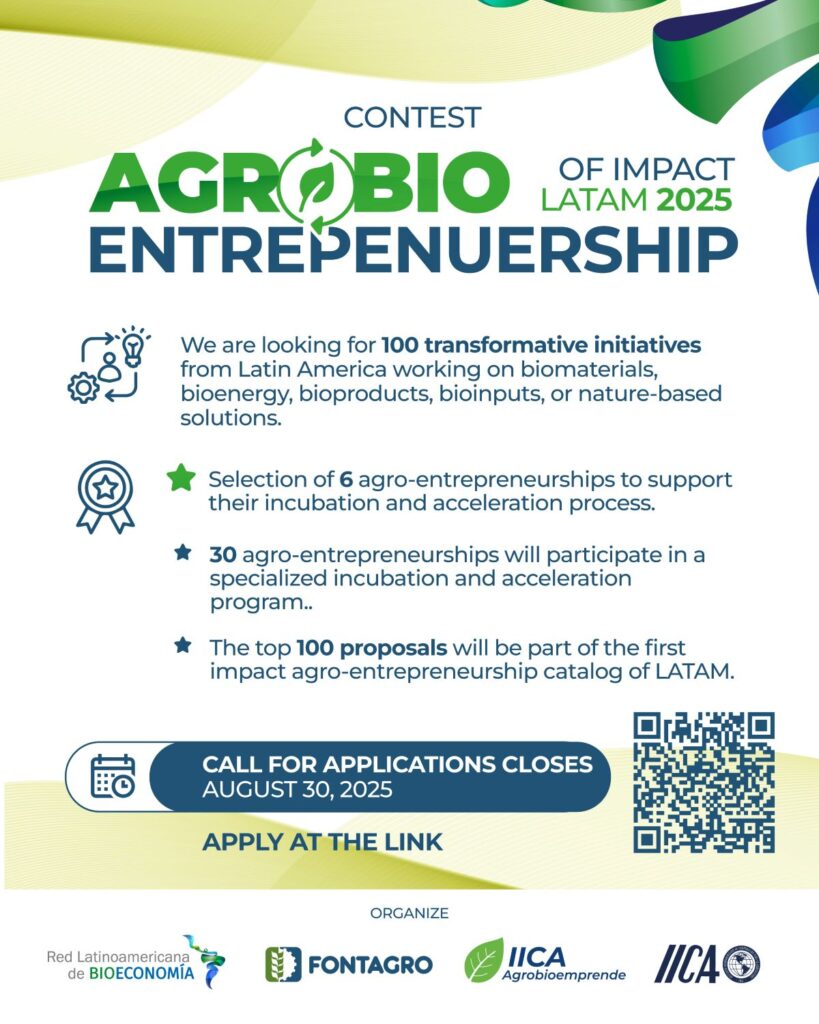
San José, 16 July 2025 (IICA–FONTAGRO). In an effort to boost innovation and sustainability in the agricultural sector, FONTAGRO, in collaboration with the Inter-American Institute for Cooperation on Agriculture (IICA) and members of the Latin American Bioeconomy Network, announces the launch of the “LATAM 2025 Agro-bioentrepreneurship with Impact” competition, designed to identify, incubate, and accelerate the 100 initiatives with the greatest impact in the region, in order to address crucial challenges such as climate variability, food security, and the transition toward more sustainable economic models.
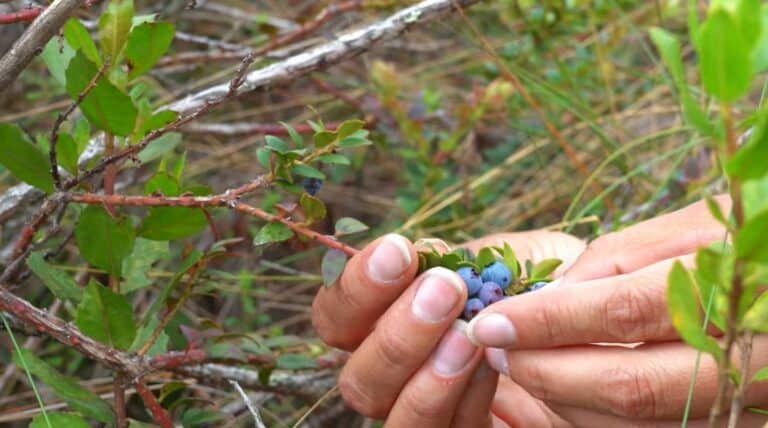
Applications may be submitted by agricultural producers, producer organizations, enterprises, and research and development institutions, including universities and NGOs, operating in any IDB borrowing member country in Latin America, or Spain. Participants’ projects should be focused on the development of products or services that sustainably utilize biodiversity and biomass through science, technology, and innovation in priority sectors of the bioeconomy, including biomaterials, bioproducts, and bioenergy.
The winners will receive up to USD 15,000 to support their incubation and acceleration process. Thirty outstanding initiatives will also take part in a specialized program starting in February 2026. The 100 best proposals will be included in the first catalog of impactful agricultural enterprises in Latin America, the digital version of which will be disseminated widely throughout the region.
The window for applications opened on July 15 and will close on August 30, 2025. The proposals will be evaluated in stages, applying the specific criteria of innovation, socioeconomic impact, and alignment with the Sustainable Development Goals (SDGs).
This competition is an opportunity for entrepreneurs to improve their projects, and is designed to strengthen the region’s bio-entrepreneurial ecosystem by promoting collaboration and knowledge sharing among the participants.
For more information about the competition and the application process, interested parties can visit the official website https://fontagro.org/es/iniciativas/concursos/concurso-de-casos-2025. All inquiries related to the competition should be sent, by email, to bioeconomia@iica.int.
The invitation is open to everyone interested in making a difference in the agro-industrial sector, and entrepreneurs are encouraged to submit their innovative and sustainable ideas.
More information:
Institutional Communication Division.
comunicacion.institucional@iica.int