
Quito, Ecuador, 23 March 2026 (IICA). The Andean blueberry, a small wild fruit that grows in Ecuador’s Andean páramo, is deeply connected to the country’s culture and biodiversity. Also known as the agraz, the fruit has become an example of the growing pressures on the páramo ecosystem, and growing commercial demand for the fruit.
The Inter-American Institute for Cooperation on Agriculture (IICA) has responded to the situation by promoting the Sacha Ñawi project, an initiative aimed at conserving edible wild species and their agricultural relatives, strengthening agrobiodiversity,and generating sustainable opportunities for rural communities.
The initiative is part of the project Conservation and sustainable use of crop wild relatives and edible wild species, under an institutional framework and the development of rural community initiatives in Ecuador, which is being promoted with the Ministry of Environment and Energy, and the National Agricultural Research Institute (INIAP).
Funded by the Global Environment Facility, it is beingimplemented by FAO/Ecuador in conjunction with universities, local governments and organizations within the territory.
The project’s objective is to strengthen institutional mechanisms for the conservation and sustainable use of crop wild relatives and edible wild species, integrating them into national and local plans and strategies to help protect agrobiodiversity and the development of rural livelihoods.
The Andean blueberry: an emblematic fruit under pressure
One of the emblematic cases that the Sacha Ñawi project is tackling is that of the Andean blueberry (Vaccinium Floribundum), an edible wild species related to better known North American blueberry. It is a shrub deeply connected to Andean culture. Its fruit, for example, is the main ingredient of the traditional colada morada, a drink characteristic of the Day of the Dead (All Souls’ Day).
The Andean blueberry grows in Ecuador’s highland páramo, a fragile ecosystem increasingly under pressure from agricultural expansion and growing commercial demand. Unlike other fruits, it has not yet been consistently domesticated, so its use depends on wild harvesting, primarily between September and October.
In recent years, the mass consumption of colada morada and the emergence of new byproducts —such as Andean blueberry wine and jams— have significantly increased harvesting in the páramo, generating risks to the sustainability of the species if adequate management mechanisms are not established.
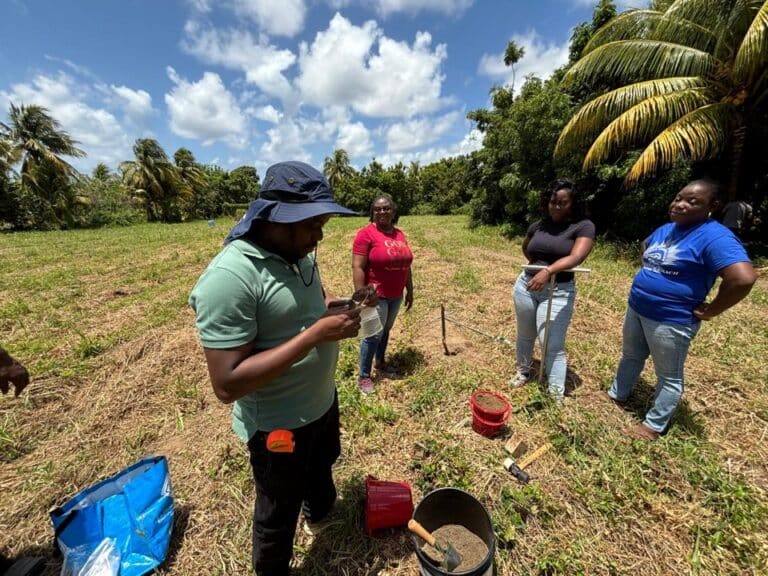
Against this worrying backdrop, the Sacha Ñawi projectis working in the canton of Cotacachi, in the Imbabura province of northern Ecuador, on concrete actions for the conservation and sustainable use of Andean blueberry. Working with the INIAP and the Universidad Técnica del Norte, an inventory of Andean blueberry diversity in the region has been carried out that will make it possible to identify priority conservation areas with greater genetic diversity.
Experts are also working on drafting regulations governing the use of the plant that do not affect community livelihoods,and on creating a strategic plan for the conservation of other edible wild species.
The project is also focusing on strengthening the Andean blueberry value chain, promoting incentives for the fruit’s conservation, access to differentiated markets, and better commercial organization of the communities that produce it.
Other cantons participating in the program along with Cotacachi are Archidona, Tena, and Arosemena Tola, in Napo province. All these areas form part of the Andean and Amazonian biomes, a region recognized as being of global importance and home to several protected areas and ecological reserves.
In these territories, where biodiversity and culture have been intertwined for centuries, the challenge is to find ways to protect species like the Andean blueberry without severing the connection between ecosystems and the communities whose livelihoods depend on them.
Video about this initiative (In Spanish only):
More information:
Institutional Communication Division.
comunicacion.institucional@iica.int