Asuncion, Paraguay, 25 March 2026 (IICA). Selection of new projects, a review of existing ones and the analysis of new cooperation opportunities to strengthen production resilience, technology innovation and sustainable development in the Latin American and Caribbean agrifood sector, were some of the activities featured in the most recent General Assembly of the Korea–Latin America Food and Agriculture Cooperation Initiative (KoLFACI). The event was organized by the Paraguayan Institute of Agricultural Technology (IPTA), with the support of the Paraguay Delegation of the Inter-American Institute for Cooperation on Agriculture (IICA).
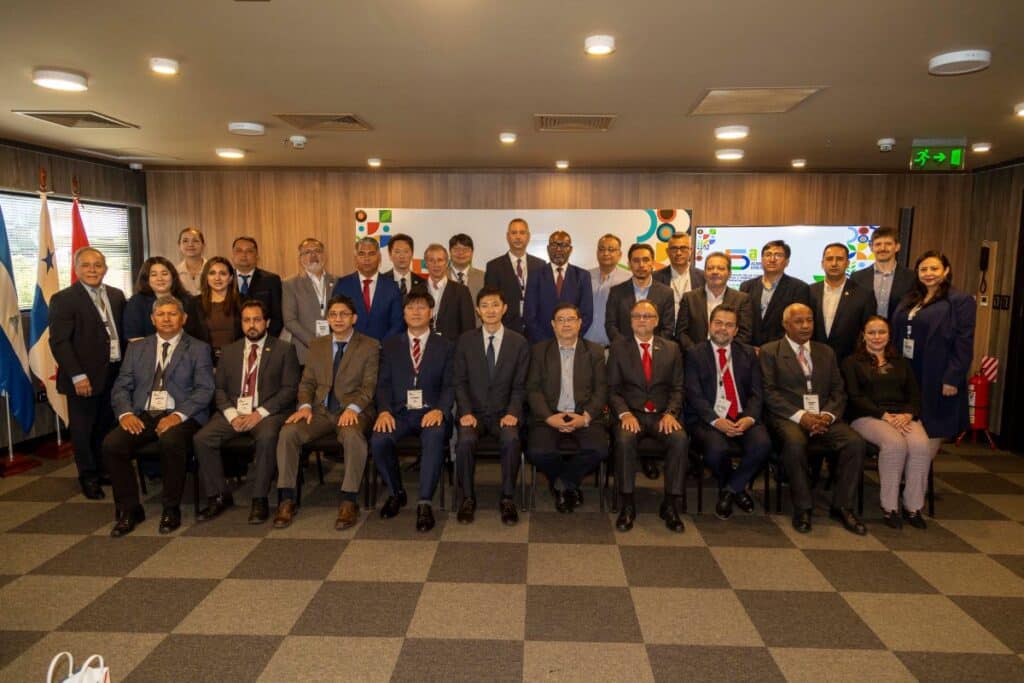
Representatives from fifteen member countries, agricultural research institutes and international organizations were in Asuncion attending the fifth KoLFACI General Assembly, a forum involving Latin American countries and the Republic of Korea, with a view to fostering research, innovation and capacity building in the agrifood sector.
The delegations shared information on the status of ongoing collaborative projects and discussed key issues, such as the selection of new projects for the sixth phase of KoLFACI, the signing of a Letter of Intent and the selection of the country that will host the next General Assembly.
IICA highlighted the value of this international cooperation forum that promotes knowledge exchange and coordination among countries and scientific institutions. José Arrúa, Agricultural Health and Food Safety (AHFS) Specialist at the Institute, noted that, “When science and technology cooperation initiatives come together with committed professionals from various countries, the main beneficiaries are the rural producers and agrifood systems of the region”.
IICA expressed its thanks, first to IPTA, for the confidence placed in the Institute, by inviting it to participate in the organization of this important international meeting, and then to the delegations and KoLFACI partners for their active participation.

The Rural Development Administration of Korea presented IICA with a token of recognition, in appreciation for its support in organizing and conducting the meeting.
The meeting participants were taken on a field trip to the Manduvirá Cooperative, in the city of Arroyos y Esteros. The cooperative is recognized for organic production and processing of sugar and sugarcane by-products, and the tour highlighted the research that it is spearheading to promote innovation in the sector.
Later, the group visited IPTA’s Hernando Bertoni Research Center in the city of Caacupé, where delegates were introduced to the latest advances in Phase Three of the “Organic Fertilizers” project, focusing on improving soil fertility through technologies that transform manure into organic fertilizer.
Paraguay’s hosting of the fifth KoLFACI General Assembly reaffirms the country’s commitment to research, international cooperation and regional integration,as fundamental tools to foster more productive, resilient and sustainable agriculture that benefits farmers and drives the development of the Latin American and Caribbean agrifood sector.

More information:
Institutional Communication Division.
comunicacion.institucional@iica.int