IICA, USDA, and FAO support research in 11 Latin American countries to update the maximum residual levels of pesticides in food for this region.

San Jose, Costa Rica, 16 June, 2014 (IICA). Institutions involved in pesticides registration in Latin America and the Caribbean (LAC) try to generate data that make it possible for them to promote maximum residue levels (MRL) for small scale crops in the region, adjusted to the consumption patterns of the inhabitants of each country.
The initiative, supported by the Inter-American Institute for Cooperation on Agriculture (IICA) and other agencies, is an attempt by these entities to harmonize their research criteria and procedures.
The lower or small-scale crops are those whose consumption is not significant among the population of a country, explained Lourdes Fonalleras, specialist in agricultural health and food safety at IICA.
The MRLs, she added, are the maximum concentrations of pesticide residues that the product can contain without implications for human health. They are established by the Codex Alimentarius, a set of international food standards that regulate food safety, quality and equity in international trade.
For Fonalleras, Codex does not have data that reflects the production characteristics or consumption patterns of the inhabitants of LAC. It is for this reason that generating one’s own information would enable lower MRLs to be defined, which would facilitate trade.
“In the case of soybeans, for example, the number of MRL applies both to products that are consumed in Asia and to those that are consumed in LAC; however, in LAC countries, consumption of soybeans is lower than in Asia”, explained Fonalleras.
Participating in the project are institutions from Costa Rica, El Salvador, Guatemala, Honduras, Panama, the Dominican Republic, Peru, Colombia, Bolivia, Paraguay and Ecuador, as well as IICA, the United States Department of Agriculture, through the Foreign Agricultural Service (USDA/FAS), and the United Nations Food and Agriculture Organization (FAO).
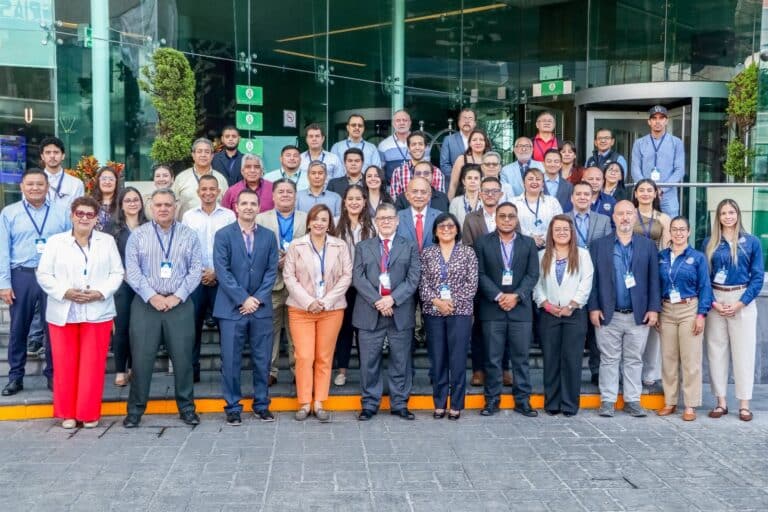
The initiative began in October 2013 and is expected to end in 2016. The most recent session of its Executive Committee was held in June in Costa Rica, at IICA Headquarters.
Más información:
lourdes.fonalleras@iica.int