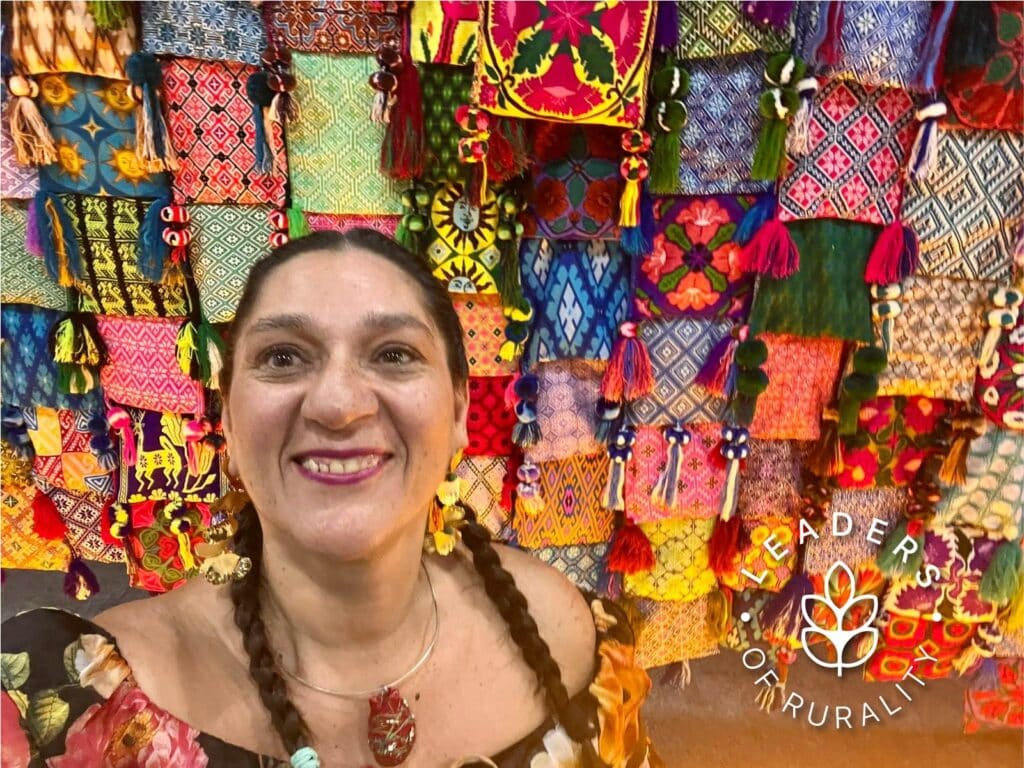
Mexico City, 2 March 2026 (IICA). Mexican educator, Liliana Riva Palacio España has a perpetual smile on her face when she speaks. Years ago, she said good-bye to life in the city and immersed herself in the fight to defend the rural communities of her country. Her life speaks to the power of collectiveness, humility and the power to reconnect with the land and its cycles.
For her work to foster environmental education, benefit rural communities and promote food security, Liliana has been recognized by the Inter-American Institute for Cooperation on Agriculture (IICA) as a Leader of Rurality of the Americas.
She will be bestowed with the Soul of Rurality award, which was created by the hemispheric organization to turn the spotlight on individuals whose efforts to ensure food and nutritional security, as well as the sustainability of the region and the planet, are making an impact.
Through her organization, ConcentrArte, which was founded in 2005, the psychologist, entrepreneur and activist has directly impacted close to half a million people throughout Mexico. Through her work, the pedagogue has demonstrated that innovation can stem from listening to the community, honoring ancestral wisdom and returning to the essence of life and the production of healthy food.
Liliana was born and educated in Mexico City, graduating as an educational psychologist from the National Pedagogical University. However, her profound calling and commitment to community welfare resulted from intense and transformative personal introspection.
“I can say that my story is one of resilience”, she tells us candidly. A complicated childhood “taught me the importance of learning to overcome anything, to be creative and to find solutions”.
Back in 1995, when she was 22 years old and living in the big city, she felt an emptiness that she could not ignore. “I felt very lonely; I was overwhelmed. My situation pushed me to make an impulsive decision. I enrolled as a volunteer with the Fray Bartolomé de las Casas Human Rights Center, or Frayba, in Chiapas”, she recalls. “So, off I went, but I had no idea what I was heading into, how I was going or even why”, she confesses so many years later.
With no rural experience whatsoever or knowledge of indigenous communities, she adventured into the unknown. The trip plunged her immediately into the reality of rural life.
“I sat down in a flatbed cargo truck, like a cow, without knowing what I was heading into… I arrived at the Biósfera Montes Azules Reserve and immersed myself in the world of local indigenous communities during the height of the Zapatista Movement”, she explains. There, what began as a three-month volunteer assignment became a two-and-half-year stay, a period of profound learning, which she confesses “marked my life and determined my vocation”.

Rediscovering the true essence of life
In living according to the pace of the jungle and communities such as La Unión, Nueva Estrella and Las Tacitas, in Chiapas, Liliana experienced a conceptual metamorphosis. Rural values taught her to completely rearrange her priorities. Money, for example, acquired another meaning”.
“Life was simple. You rose with the sun and went to sleep with the sun. You went out to get your food. You had to plant; you had to reap”, she explains.
“Some examples of the lessons I learned from the communities were humility, honesty, collectiveness. Competition and vanity were non-existent. It showed me another way of determining self-worth. I realized that if I was OK, my community was OK; and if my community was OK, so was I”, says the Mexican educator.
After that transformation, and with a mission to foster food security and to restore the social fabric of other remote and disadvantaged communities, Lilian founded ConcentrArte, an organization that works in rural areas plagued by multi-dimensional poverty, crop-related problems and lack of access to basic resources, such as electricity and water.
“The most effective approach in these initiatives is to listen to the community, not only what they tell us specifically, but what they tell us with their hearts and their body language. They have the ancestral knowledge, and we have access to resources and information”, she stresses.

When Lilian joined a Wixárika community, she was introduced to a new way of understanding life. “For me, it stems from a fascinating place, a very mysterious and very magical place. It speaks to an awareness of Mother Earth, a cosmovision, in which, we ourselves are an extension of the Earth and its products”.
The Wixárika or Huichol are an indigenous community who live primarily in the Sierra Madre Occidental mountains in Mexico, in the states of Nayarit, Jalisco, Durango and Zacatecas, and whose culture is steeped in ceremonial traditions.
Liliana’s work there focused on reviving ancestral practices. Liliana and her team helped the community members to resume planting local vegetables, such as tomato, chili pepper and cucumber, in community gardens and kitchen gardens, thus re-establishing their direct connection to their land and traditions.
This work centers around milpa, the Mesoamerican ancestral polyculture system, in which corn, beans and pumpkin, in addition to plants such as tomatoes, chili pepper, quelites greens and medicinal plants are grown together, creating a small, diverse and self-sufficient ecosystem. However, it is not just a planting system, says the educator, but a “cornerstone of the culture, nutrition and life”.
“For us, milpa is a vital component. It is the basis of our methodology: sowing sacred plants, plants that are uniquely ours, in order to preserve the community’s identity and its connection to the food that gives us life”, she explains.
The leadership of Liliana Riva Palacio mirrors the transformation that she is seeking in the communities: escaping adversity to become a change agent. For her work, she was awarded the 2023 Leaders of Social Impact distinction, by Mexico’s Chamber of Deputies.
Looking someone in the eyes – person to person
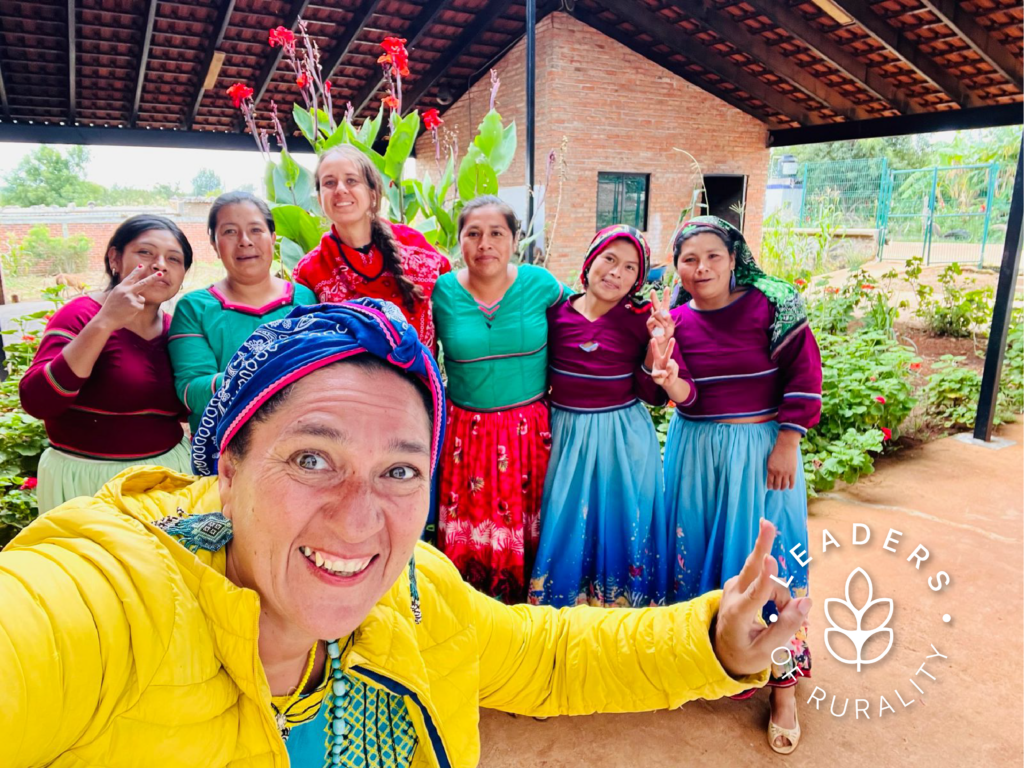
Although her journey has been forever marked by her exposure to numerous ancestral practices in Mexico, Liliana cannot overlook the fact that to be effective, any transformation must also be economically viable. She is proving this through the Tierra Fértil project in Chiapas, where along with twenty-five other women, she is developing a vegetable garden and work model.
They now have a greenhouse—an infrastructure that they fund with community get-togethers and traditional celebrations—and a system to sell their products. The local government agreed to give the women access to land for fifteen years, under a loan for use agreement.
“We held a party. It was the first time that these women had land”. It gave them an opportunity to no longer be seen as “insignificant” and to become individuals who dared to dream more and more”, says the Mexican advocate. Subsequently, the group managed to purchase the land and now has three vegetable gardens. Moreover, it now has plans to open a bakery, “offering unique breads made with cinnamon or sage, adding rosemary and all the medicinal herbs from the garden”.
The bakery is one element that in the future will provide a value-added component to the products grown in the region. As Liliana points out, “We know that in order to survive in the countryside, selling a kilo of peanuts for 25 pesos is not the same as making peanut butter and selling it for 200 pesos”.
Many young women involved in the project have confessed that Tierra Fértil has changed their lives. Liliana notes that, “They tell me: ‘My life would have meant completing primary school and staying here, doing nothing, or leaving. Instead, now I have a vegetable garden, and a bakery. I am earning money and have friends’”.
“We are making a difference”—continues Liliana—and although it is not a cure-all, it is a start. We have seen many women, young and older, who have been given at least an opportunity to have a better life, without leaving their hometown”.
“Small towns are scattered across the landscape, far removed from major routes and big cities, and often with no running water or electricity. However, we can “offer a spark of hope”. According to Liliana, “That is something I learned in Chiapas. When you look people in the eye, when you truly look at them, person to person, something stirs inside, something happens, don’t you think?

More information:
Institutional Communication Division.
comunicacion.institucional@iica.int