Delegations from 34 countries in the Americas will meet in San José, Costa Rica, from 29 to 31 October, to discuss agriculture’s future and the challenges to be overcome in order to guarantee food security for the planet.
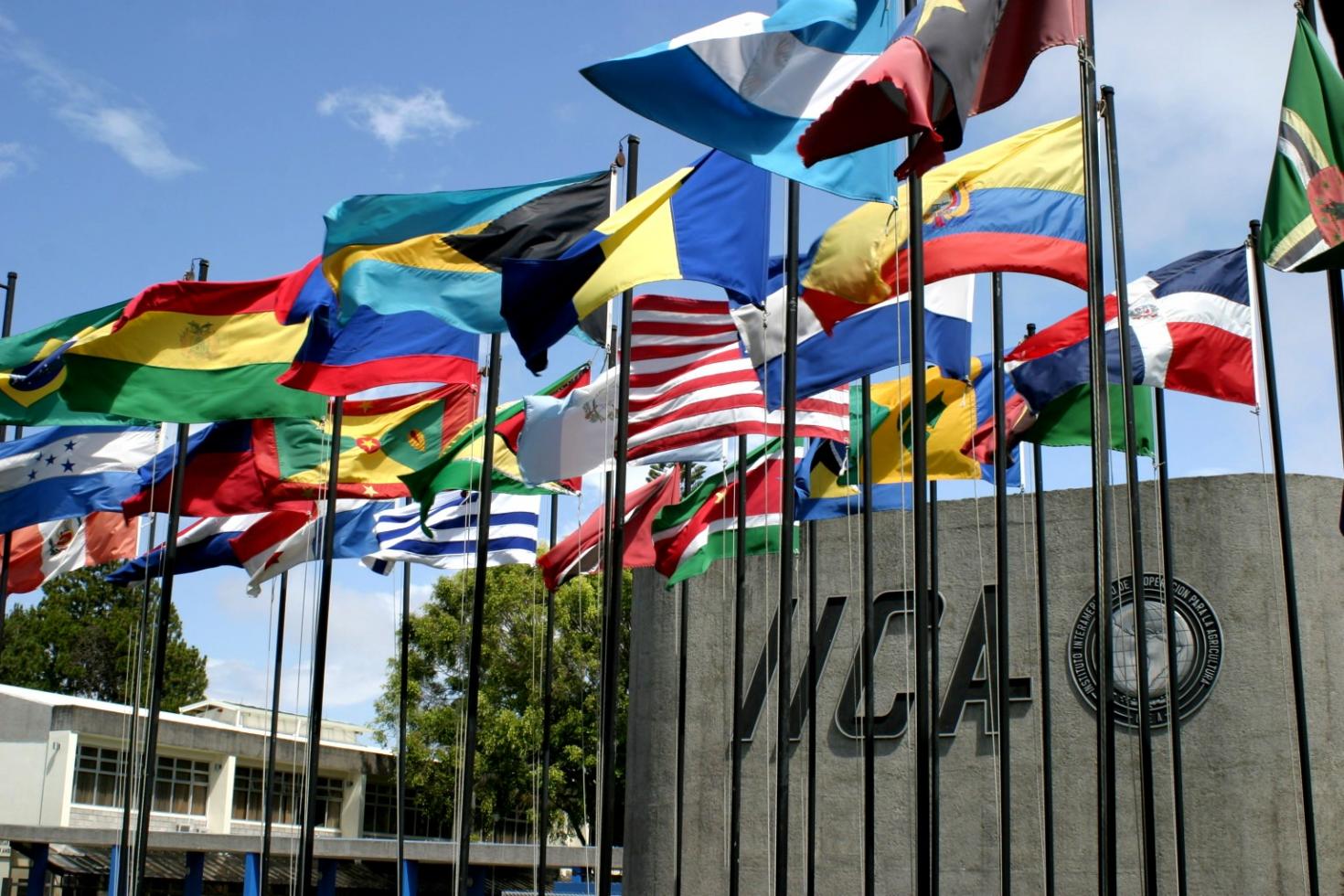
San José, 27 August 2019 (IICA) – The ministers of agriculture and livestock of 34 countries in the Americas will meet from 29 to 31 October in San José, Costa Rica, where they will discuss pivotal issues for a sector that is key to the world’s food supply, but which is facing serious economic, trade, environmental and demographic challenges, while attempting to fulfill its role as the guarantor of global food security.
The meeting will provide the framework for the meeting of the Inter-American Board of Agriculture (IABA), which comprises the 34 ministers of agriculture of the member countries of the Inter-American Institute for Cooperation on Agriculture (IICA). The IABA is also the supreme governing body of this specialized hemispheric agency for agricultural and rural development.
The debates and discussions of the ministers and secretaries of agriculture will serve to guide and spur the modernization of this sector in the Americas, and to provide decisive support for the institutional modernization efforts currently taking place at IICA.
The membership of the hemispheric organization includes leaders in world agricultural production, such as the United States, Brazil, Canada, Argentina, Mexico, Uruguay and Chile, as well as other nations that have not yet harnessed the extensive potential of their agriculture sectors, particularly in Central America and the Caribbean.
Manuel Otero, Director General of IICA, remarked that, “In the Americas, agriculture is subject to different social, economic, technological and trade realities, but all of the countries face the enormous challenge of producing in a more sustainable, inclusive and competitive way. The 2019 Meeting of Ministers of Agriculture of the Americas will provide a framework to address these differences; to connect countries, people, technology and expertise for the benefit of agriculture and rural dwellers”.
The 2019 Meeting of Ministers of Agriculture of the Americas will also promote dialogue and partnerships with the private sector. The Ministers will participate in forums along with representatives from global companies whose activities are closely linked to agricultural production, such as Microsoft and Bayer, among others.
Both the ministers and high-level executives will participate in three panel discussions to take place at the meeting: “Opportunities for rural inclusion in the digital era”, “Towards a new balance between productivity and sustainability” and “Health, safety and quality for the future of trade”.
Otero maintains that the topics of the 2019 Meeting of Ministers of Agriculture of the Americas reflect the most pressing concerns of a world that must increasingly discuss and prioritize the role of public policy in stimulating agricultural and rural development, in order to satisfy the population’s food needs during the coming decades, while safeguarding the environment.
The American hemisphere is in a favorable position to become the guarantor of the world’s food and nutrition security, thanks to its diversity and the relative abundance of its biological, water and land resources, as well as its expertise.
“It will require a climate smart, modern and high-tech agriculture sector”, said Otero, “but one that is also inclusive, by generating new opportunities for the advancement of traditionally marginalized groups such as rural women and youth”.
Federico Villarreal, IICA’s Director of Technical Cooperation, commented that “the economic, trade, environmental and social transformations that have shaped the world in which we live have made traditional policy responses impractical, and therefore the agriculture of the future will provide the Americas with one of its greatest opportunities, as it will reposition its actors and rurality itself.
The IABA has met every two years since 1981 and the October event will be the body’s first meeting since Manuel Otero assumed office as IICA’s Director General in January 2018.
More information:
Institutional Communication Division, IICA.
comunicacion.institucional@iica.int