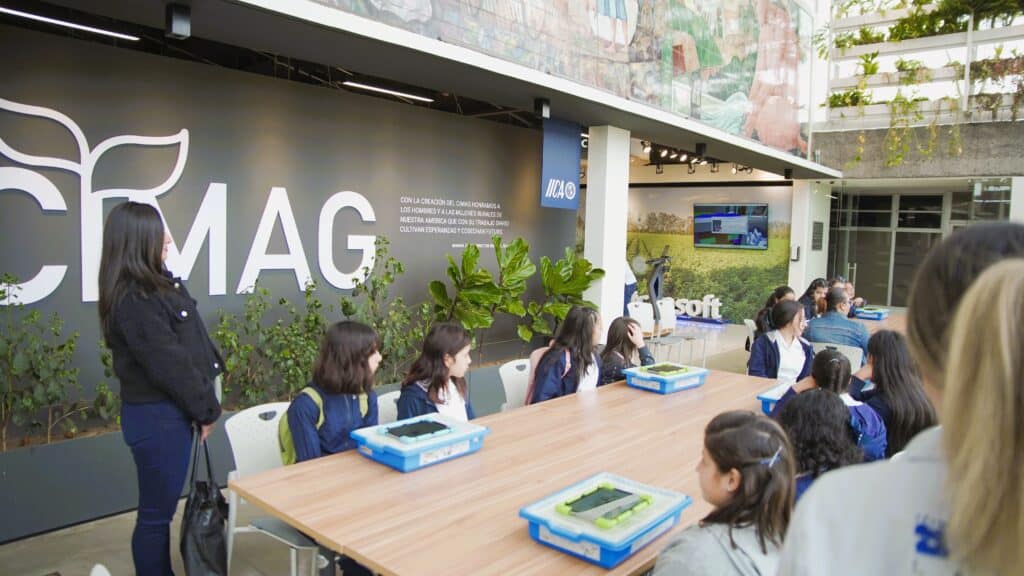
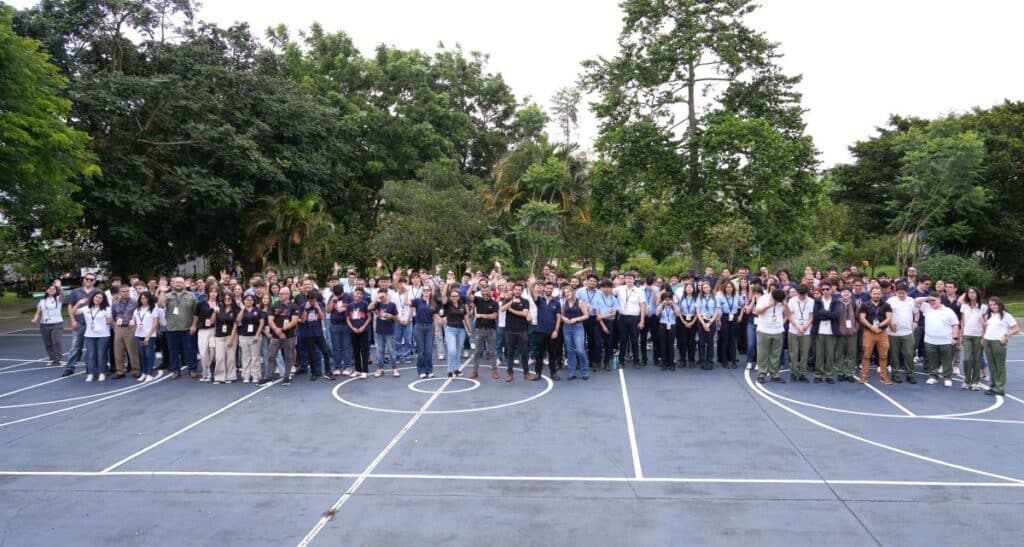
San José, 30 June 2025 (IICA). – More than one hundred high school and university students from Costa Rica took part in the IICA 2025 Robotics in Agriculture Challenge, an initiative by the Inter-American Institute for Cooperation on Agriculture (IICA) aimed at fostering creativity, hands-on learning, and technological innovation among young people through the development of solutions to promote sustainability and productivity in the agri-food sector.
The competition, which featured a total of 39 teams, was divided into three categories according to the participants’ experience and age levels, out of a total of 156 participants (97 male and 59 female): Junior (ages 12 to 15), Senior (ages 16 to 18), and Master (ages 18 and up).
The submitted projects were required to address real-world challenges in areas such as efficient use of agricultural resources and inputs, smart farming machinery, precision agriculture, urban farming systems, and the monitoring and management of natural resources.
The projects also had to incorporate tools such as robotics, automation, artificial intelligence, data science, modeling, software development, and the integration of Earth Observation (EO) data.
The different initiatives were evaluated by a panel of 25 experts in robotics, agricultural technology, and sustainability. Evaluation criteria included technological innovation and creativity, impact and relevance to agriculture, feasibility and applicability of the solution, technical complexity, and the quality of the presentation and documentation.
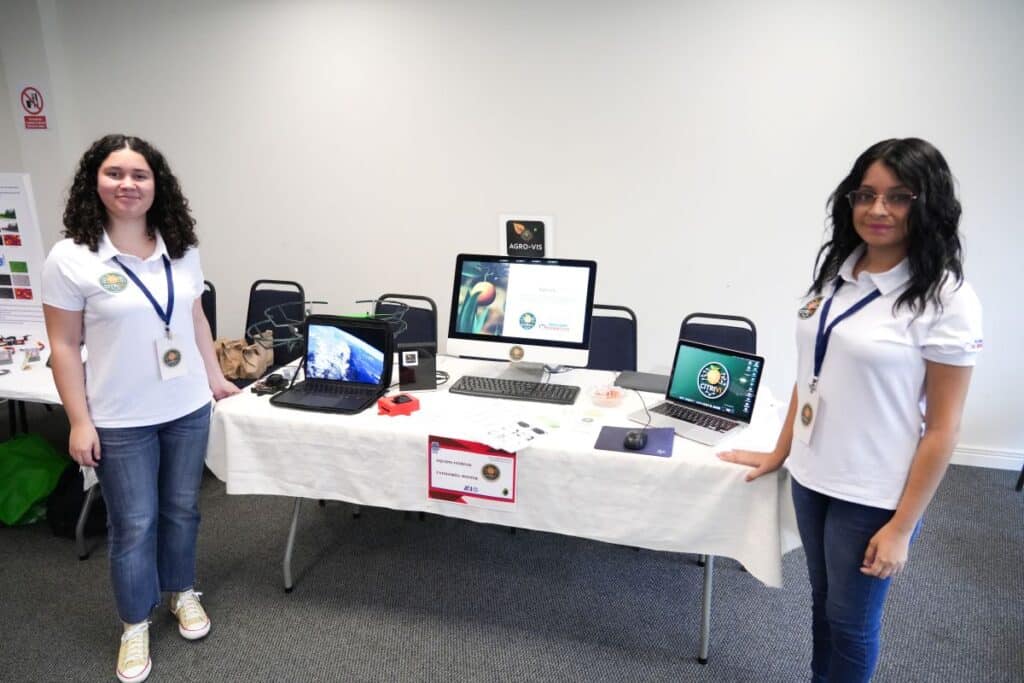
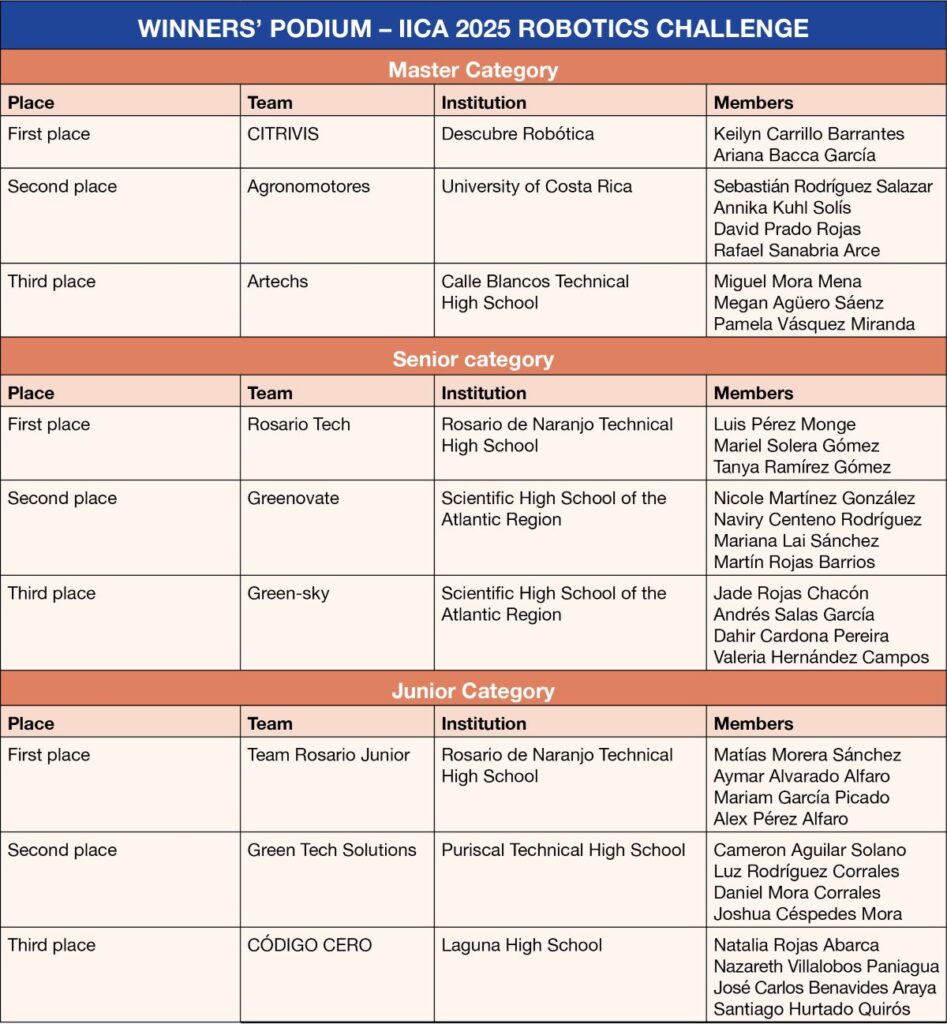
In the Master category, the winning team was CITRIVIS with their project AgroVis, an autonomous multisystem solution based on computer vision and artificial intelligence designed for the early and automated detection of Huanglongbing (HLB) bacterial disease in citrus crops.
“The system enables continuous, precise, and non-invasive monitoring of the trees’ phytosanitary status, contributing to timely and sustainable decision-making in the agricultural sector. Our goal is to support small, medium, and large citrus growers in the country who have been heavily impacted by this disease,” explained Keylin Arroyo, who, together with Ariana Bacca, represented Descubre Robótica, a community of professionals and university students focused on developing scientific robotics tools and applications for children and youth.
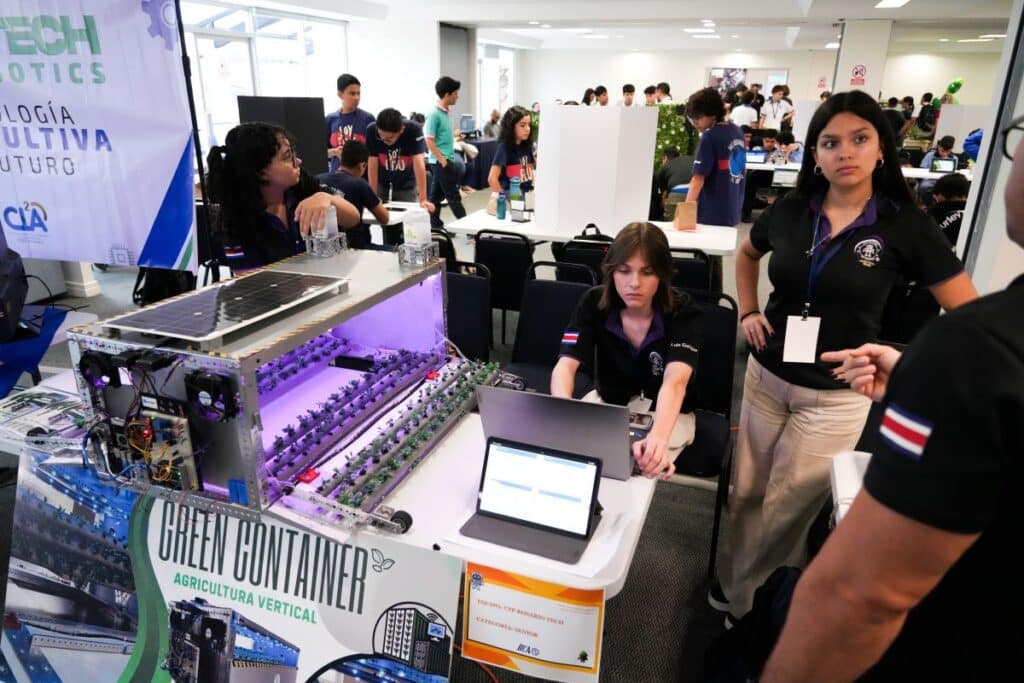
In the Senior level, the winning group was Rosario Tech, made up of Mariel Solera, Tanya Ramírez, and Luis Pérez, students in ninth, tenth, and twelfth grades respectively, at the Rosario de Naranjo Technical High School (CTP Rosario) in the province of Alajuela.
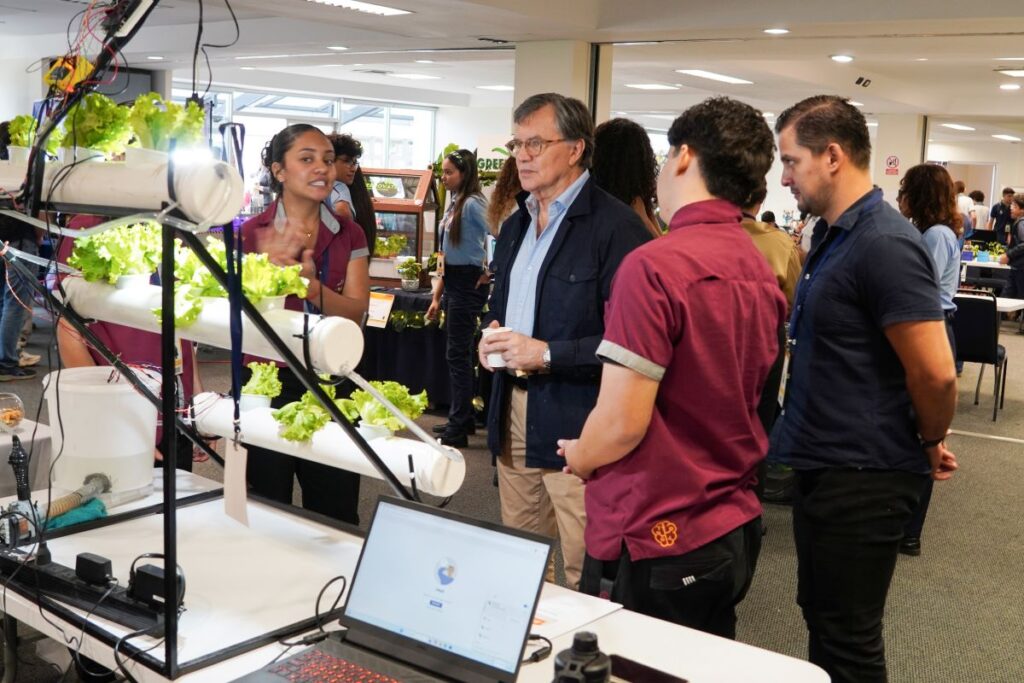
Their project consisted of an automated vertical farming system based on sustainability principles, optimizing the use of resources such as water and energy, and capable of operating efficiently in small spaces and under various climate and geographic conditions, with the aim of promoting sustainable and accessible farming practices.
“The challenge was an amazing experience. We learned so much about plants, the nutrients they need, and how to solve different problems that farmers face. We owe a lot to them for what they do. Their work is very hard, and through our project, we aim to simplify their processes with technology and innovation,” said an excited Tanya Ramírez at the end of the competition.
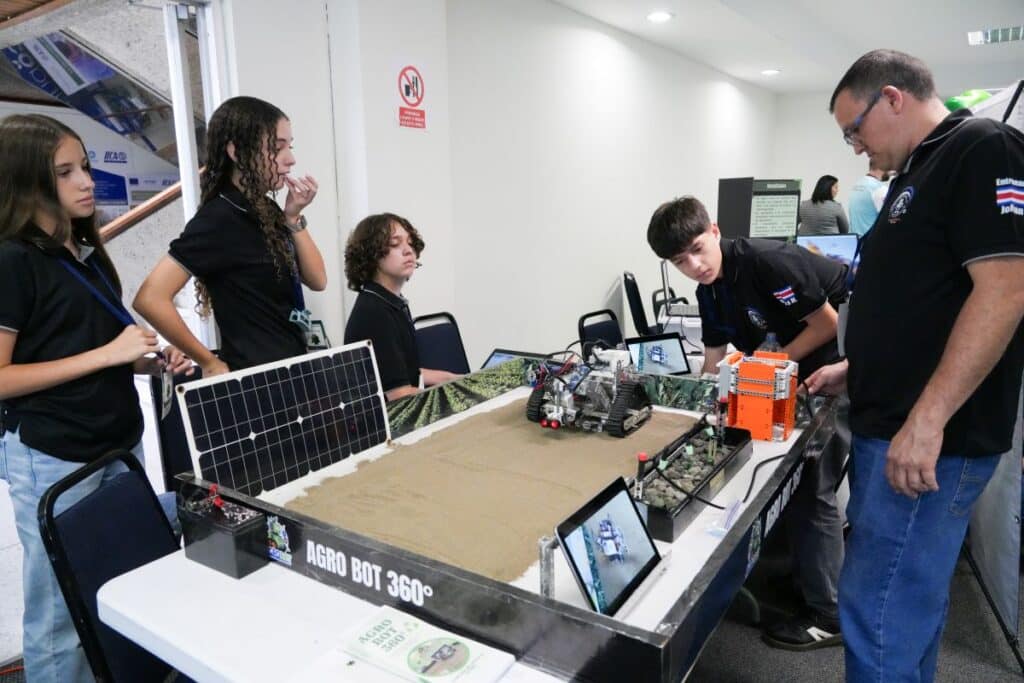
Meanwhile, in the Junior category, first place went to Team Rosario, composed of Matías Morera, Aymar Alvarado, Alex Pérez, and Mariam García, all eighth-grade students at CTP Rosario. They created Agrobot 360, a robot capable of sowing and caring for different types of plants throughout the entire production process.
“It’s a great dream and motivation for us. We’ve been preparing since the beginning of the year. With the challenge, we learned a lot about plants, how the farming system works, and the challenges many farmers face. One of my dreams is to study mechatronics,” said Morera.
As part of the challenge, which brought together 350 people, three workshops on technology applied to the agri-food sector were offered to interested students and their support team: drone technology in agriculture, IoT for agriculture, and use of satellite data in agriculture.
“In the next 25 years, agriculture will undergo enormous transformations that may have little to do with the traditional agriculture we’ve known so far. These kids embody that disruptive spirit; everything is based on programming, greater environmental care, cleaner production, and protecting farmers. Young people need to connect with agriculture and, with their talent and creativity, propose new ideas—there’s incredible human potential here,” said IICA Director General Manuel Otero during his visit to the various project exhibits.
“We must encourage them—this is the mission IICA is undertaking: to insist that there is a future linked to science, innovation, and knowledge, and if we fully leverage these advantages, we’ll have a guaranteed generational handover. We have to believe in these young people,” he concluded.
More information:
Andrés Sánchez, IICA Digital Agriculture Specialist.
andres.sanchez@iica.int