Latin American, Caribbean, and African countries strive to play a more active role in global discussions on food safety.
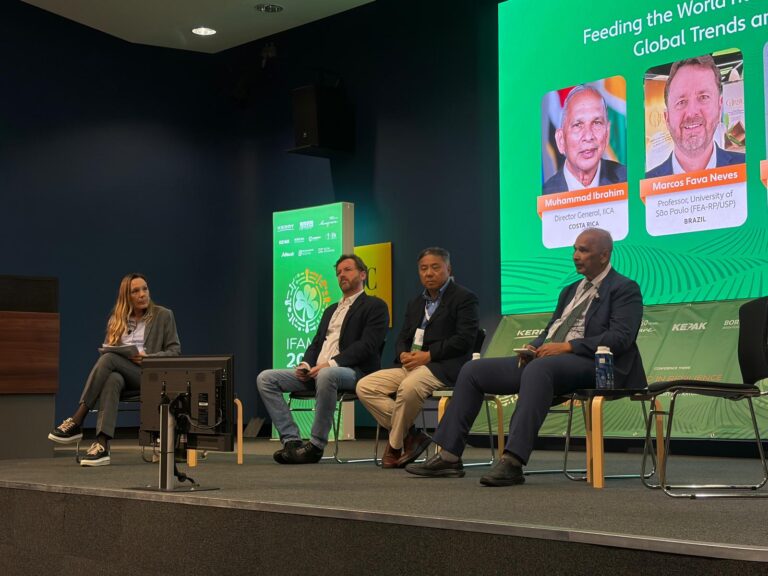
San Jose, June 8, 2015 (IICA). A group of 31 Latin American and Caribbean (LAC) countries and 15 African nations are currently meeting in Costa Rica to define joint positions on international food safety standards.
The Interregional Colloquium of Codex Alimentarius is held from June 8-9 with support from the Inter-American Institute for Cooperation on Agriculture (IICA). The objective is to prepare the countries for a global meeting that will be taking place in Switzerland in July, at which delegates will discuss and approve updates to certain standards.

Specialists from the Codex coordinating committees for Latin America and the Caribbean (CCLAC) and Africa (CCAFRICA), as well as specialists from the U.S., are participating in the activity in San Jose.
Participants seek to strengthen their negotiating capacity on issues that are vital for their countries, including Codex management procedure proposals and a large number of standards to be approved in different areas. The latter include a maximum residue limit for recombinant bovine somatotropin (a product that increases milk production in cattle), and new proposals such as a standard for quinoa. These and other matters will be addressed by the Codex Alimentarius Commission in July.
According to Erick Bolaños, Specialist in Agricultural Health and Food Safety, the meeting in Costa Rica will allow countries to play a more active role and defend shared opinions at the global forum.
Codex Alimentarius is the go-to organization for food safety standards, and recognized as such by the World Trade Organization (WTO). Its science-based standards contribute to safety, quality, and equity in international food trade.
“Over 98% of the world’s population live in Codex Alimentarius member countries. The decisions taken are therefore very important, because any approved standards have implications for international food trade,” Bolaños explained.
More information:
erick.bolanos@iica.int