Inter-American Institute for Cooperation on Agriculture

Agriculture Information and communication technologies

Panama to host conference on controlled-environment agriculture

Tiempo de lectura: 3 mins.

A total of 400 specialists and 40 companies will gather in Panama City to explore the future of agricultural trade and production.
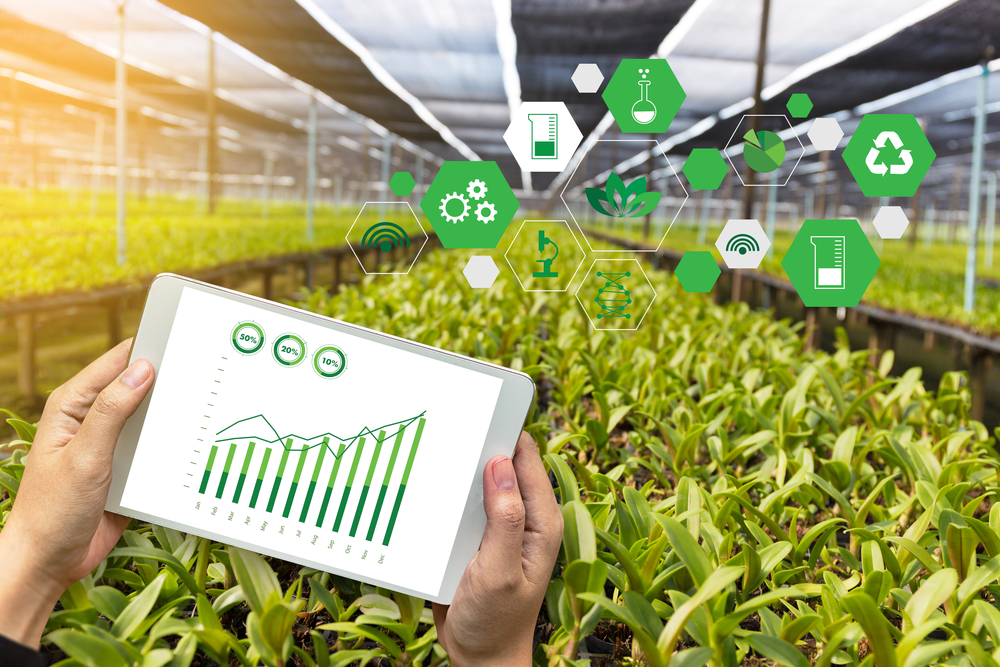
San Jose, 19 September 2019 (IICA) – Owners and operators of greenhouses and vertical farms, as well as agronomists, producers, entrepreneurs and professors will participate in the International Congress on Controlled-Environment Agriculture, to be held from November 6 to 9 in Panama.

The activity, which is sponsored by the Inter-American Institute for Cooperation on Agriculture (IICA), will focus on greenhouse horticulture, automation, hydroponics, lighting, vertical farms and blockchain, among other topics.

The conference will provide an opportunity to analyze technology and nutrients currently used, the latest research on controlled environment crops, the impact of LED lights on plant growth, business management, automation and robotics, as well as integrated pest management.

According to Gerardo Escudero, IICA Representative in Panama, “controlled-environment agriculture provides a hi-tech alternative for driving productivity and safety as well as reducing the use of water, soils, agrochemicals and inputs.”

“IICA promotes Agriculture 4.0 and the development of institutional and production capabilities to achieve an environmentally-friendly, sustainable and inclusive agriculture,” remarked Escudero.

Over a three-day period, 500 participants will be able to interact with experts from the National Aeronautics and Space Administration (NASA) of the United States, IICA, the National Secretariat of Science and Technology of Panama, the University of Arizona, North Carolina State University, the University of Florida, Wageningen University (Holland) and Chiba University (Japan).

Attendees will also have the opportunity to listen to renowned panelists and speakers who specialize in incorporating science and technology to produce safer, higher-quality food.


More information:

Gerardo Escudero, IICA Representative in Panama.

gerardo.escudero@iica.int


Share

Related news​

San José, Costa Rica

May 29, 2026

IICA Director General receives overwhelming support in presenting the key pillars of the Institute’s work for the next four years, with a focus on strengthening the agriculture sector of the Americas

Member countries of the Inter-American Institute for Cooperation on Agriculture (IICA) expressed support for a presentation by Director General Muhammad Ibrahim during a meeting of the Special Advisory Commission on Management Issues (SACMI), where he outlined the key areas of focus of the organization’s work from now until 2030.

Tiempo de lectura: 3mins

San José, Costa Rica

May 28, 2026

Latin America and the Caribbean develop shared agenda for sustainable dairy farming with support from IICA, CAF, and regional partners

Producers, technical specialists, and institutions in different areas of Latin America and the Caribbean are taking part in a coordinated effort to develop a regional agenda for sustainable dairy farming. The initiative is spearheaded by the Inter-American Institute for Cooperation on Agriculture (IICA), CAF-Development Bank of Latin America and the Caribbean, the Pan-American Dairy Farming Federation (FEPALE) and Chile’s Dairy Consortium.

Tiempo de lectura: 3mins

San José

May 27, 2026

IICA and CIRAD renew strategic partnership to promote agroecological innovation and more sustainable agrifood systems in Latin America and the Caribbean

The work will prioritize initiatives that form part of a comprehensive approach to agroecological transition and agricultural health in areas such as agroforestry and forest management, resilient and competitive tropical agriculture, science, technology and innovation, bioinputs that reduce dependence on agrochemicals, integrated crop management and regenerative agriculture, precision agriculture, animal and plant health, soils and ecosystems, public policies for sustainable agrifood systems, governance, and institutional coordination.

Tiempo de lectura: 3mins