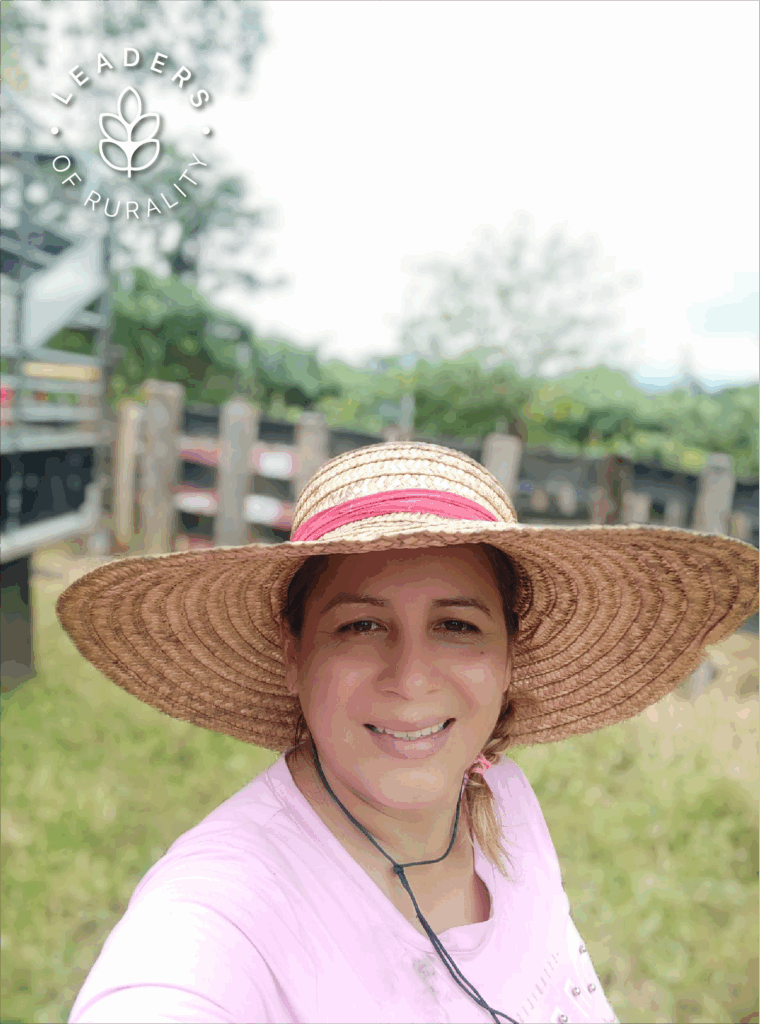
Panama City, 10 December 2025 (IICA). Dayra Montenegro was born and raised in San Lorenzo, in the province of Chiriquí, Panama, in a home where the countryside was everything. Her most vivid memories are of her childhood on the family farm, where each day began by visiting the barn. “My dad would wake us up really early to go milk the cows. We didn’t have to buy anything; we had everything right there. If we wanted to eat a banana, we just picked it”.
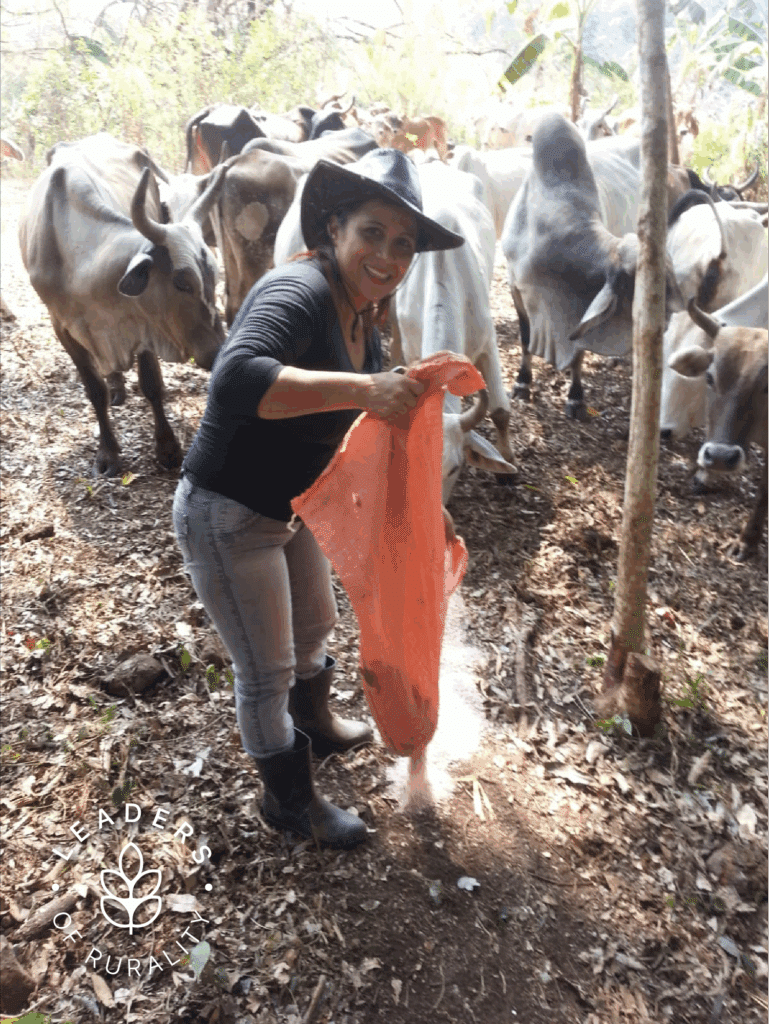
After several years abroad, Dayra has now returned to the farm, where she is leading a “revolution” of sorts with more efficient and sustainable methodologies that are also reaching neighboring producers.
The Inter-American Institute for Cooperation on Agriculture (IICA) has named Dayra a Leader of Rurality of the Americas in recognition of her efforts to revitalize agricultural production and implement initiatives to help farmers reach new heights.
Montenegro will receive the “Soul of Rurality” award, an initiative through which IICA seeks to give greater visibility to the men and women who are making a difference in the rural areas of the Americas and playing a key role in driving sustainability and enhancing food and nutritional security in the region and around the world.
From the university to cruise ships, and back to the farm
For Dayra, rural life represented a free and healthy world, with no technological distractions or external pressures. “We didn’t own phones or anything like that. We played with whatever we had, there was no malice. All children starting from the age of seven had chores, and after four in the afternoon it was time to play”.
When she was ten, however, her story took a turn. Her father decided to send her and her siblings to the city of David because her rural community only had one elementary school. “It was a radical change. I encountered things I wasn’t familiar with, and classmates who had lived in the city and were totally different from us”, she says.
She continued her studies until she graduated with a degree in Medical Records. Her dream had always been to become a lawyer, but various circumstances led her to pursue a career that offered more job opportunities.
After graduating college, she began working in her field. But she would soon get the opportunity to live an experience that shaped her worldview: she embarked on a cruise ship and worked on board for nine years, traveling through Europe, Brazil, Argentina and Asia. “I realized I’m not someone who likes to be cooped up inside four walls”, she reflects.
That nomadic lifestyle broadened her horizons, but it also confirmed that her true calling was back on the family farm. Upon returning to Panama, she gave urban life another try, but the call of the land was stronger.
She decided to take over the farm in San Lorenzo with her father, who was already 76 years old. It wasn’t easy: like many rural men of his generation, he was skeptical about his daughter’s innovative ideas. “I told him, ‘Rather than cut down trees, let’s plant them’”. Dayra’s perseverance paid off: little by little, with arguments and hard work, she managed to convince him, and together they launched a transformation process.
This led to the creation of a silvopastoral model that combined the planting of trees and forage with sustainable resource management. They introduced the Cuba 22 and Marandú grasses, which became an essential supplement for livestock.
They also installed water harvesting and simple irrigation systems to take advantage of rainfall. “For me, the most important thing is water. Without water, there are no fruits. Without water, there is no life”, she explains with conviction. They also implemented ecological practices such as the use of bocashi—an organic fertilizer of Japanese origin prepared with manure and dry leaves—and the restoration of living fences.
At this point, Dayra pauses and passionately explains what these practices mean: “Living fences are living trees, not dry posts. They bring life to the farm because they provide shade for animals and keep pastures green”. She describes planting trees as the best technology for the countryside: it is simple, accessible and offers a wealth of benefits. “Rather than deforest, we must forest the land: trees give life to water and land”, remarks the Panamanian producer.
It was not an easy road. Dayra’s neighbors initially doubted her projects. “They said it was something that couldn’t be done, that water couldn’t be ‘harvested,’ that only products could be harvested. But I showed them that it could be done”. Over time, her farm became a benchmark: nowadays, neighbors take seeds to replicate the practices on their own plots. Thanks to these changes, she no longer needs to rent additional land to feed her livestock during the dry season, because fodder is available on her farm year-round.
Montenegro emphasizes that IICA’s technical support played a key role in this process. Through various projects and training sessions, Dayra and her community acquired new knowledge and implemented more efficient production systems. “IICA was like our school”. Practical sessions carried out on the farm “taught us how to plant and how to make the most of a small plot of land”, she says, with her cell phone resting on her truck, a tree in the background (as you would expect) and under the warm morning sun in Chiriquí.
Those visits from experts, as well as training and exchange sessions with other producers, opened up new perspectives and allowed for multiplying good practices in the community. But the transformation process was not just limited to production: Dayra also took on a community leadership role and is now the President of the San Lorenzo Agricultural Producers’ Association.
In that capacity, she shares what she has learned and helps other farmers adopt sustainable techniques. “It’s important for farms to have trees, to avoid the use of chemicals, to learn how to organize a vegetable garden”, she explains. “I’m not stingy with my knowledge; I share it with others”.
A banana from the farm tastes different
Regarding the contrast between the countryside and the city, Dayra says that it is most noticeable at the table. She sums it up with a simple example: “You buy a banana in the city and it has no flavor. You eat a banana from my farm and it is sweet, totally sweet. The rice you buy at the supermarket doesn’t taste the same as the rice you harvest and stack yourself”. The most common dishes in her home are rice and beans, stewed chicken, plantain slices, and sancocho with vegetables from the farm. “In the countryside, we eat healthy, without any chemicals”, she points out.
For Montenegro, the countryside is not just a place where production occurs, it is also a place that fosters values. She finds it concerning that so many young people are abandoning rural life, lured by the city and excessive technology. “Most young people today are far removed from the practice of waking up at five in the morning to milk a cow, for instance”.
“Preparing a vegetable garden is not easy, neither is getting up and working under the sun”, she acknowledges. “But the land gives back”. Any advice for parents concerned about their children’s future? “Teach them about the value of the farm, teach them to plant, even if it’s just in a pot. If we get used to buying everything, this will all be lost”, regrets the Panamanian entrepreneur. Parents, she adds, “should tell their children that the countryside is an ally, it affords a future”.
As a woman, she also had to overcome prejudice. In a historically male-dominated environment, Dayra has proven that gender is not a limitation. “I am proud to be an empowered woman in agriculture. I know how to plant, make a garden, vaccinate a cow, but also wear heels to go out in the city. For me, being a woman in the countryside is not a problem”. Today, she combines her daily work on the farm with her role as a mother and community leader, setting a powerful example of perseverance and commitment.
She imagines her future on the same farm where she grew up, with more trees, more applied knowledge, and more life. “Twenty years from now, I see myself working, learning and sharing what I know. I imagine everything around me looking clean, with grass and trees, while putting everything I’ve learned into practice”, Dayra concludes under Chiriquí’s early morning sun.
More information:
Institutional Communication Division.
comunicacion.institucional@iica.int