
Brasilia, 5 March 2026 (IICA). In Brasilia, the ministers of agriculture of Argentina, Bolivia, Brazil, Chile, Paraguay and Uruguay, the countries that make up the Southern Agricultural Council (CAS), held the 51st Regular Meeting of the regional consultation and cooperation forum to discuss health and trade challenges and reach agreement on new collaborative initiatives.
Brazil’s Minister of Agriculture and Livestock, Carlos Fávaro, and Deputy Minister Cleber Soares, hosted their CAS counterparts in Brasilia. The forum’s Technical Secretary and IICA’s Representative in Brazil, Gabriel Delgado, chaired the start of the meeting.
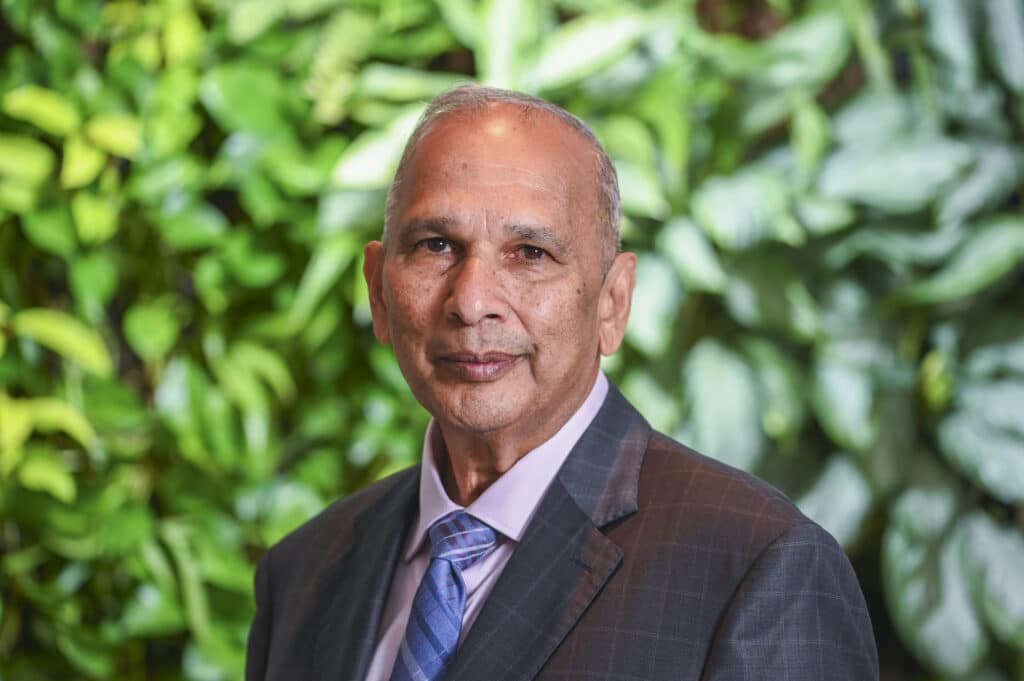
The Director General of IICA, Muhammad Ibrahim, also took part in the meeting, the first to be held since he took office on 15 January.
“This meeting reaffirms the importance of the CAS as a strategic space that, for 23 years, has promoted coordination and the high-level exchange of information and experiences among our countries. We have countless challenges in common and the possibility of sharing lessons learned, building joint solutions and expanding opportunities”, Minister Fávaro emphasized.
Bolivia took over the chairmanship pro tempore of the CAS from Argentina, and Bolivia’s minister Óscar Mario Justiniano then led the discussions.
“Bolivia assumes this responsibility at a crucial moment for the entire region. The international context calls for unity, coherence and a strategic vision. The CAS is not just a forum for dialogue; it is a fundamental mechanism for defending the agricultural interests of the Southern Cone on the global stage”, Minister Justiniano said.
The meeting also formalized the International Technical Cooperation Agreement for the implementation of the Cacao Brazil Agroforestry Project, signed between the Ministry of Agriculture and Livestock of Brazil through CEPLAC (Executive Commission for Cacao Cultivation Planning) and IICA, with a contribution of USD 23 million from the Green Climate Fund.
The initiative aims to promote climate variability mitigation and adaptation through the implementation and consolidation of cacao-based agroforestry systems.
The CAS ministers then discussed the participation of the continent’s agriculture sector in COP 30, which took place last November in the Brazilian Amazon.
They also considered the implications for the agriculture sector of the Mercosur-European Union Agreement,as well as the progress of the EU negotiations on the entry into force of Regulation 1115 governing trade in agricultural products as it relates to deforestation.
The IICA Director General informed the ministers of the progress being made with the Medium-term Plan (MTP), the hemispheric organization’s institutional roadmap for the period 2026-2030, which is currently being prepared with the participation of the Member States (further details here).
Other topics discussed at the CAS meeting included the World Bank’s study on collective insurance for climate events for countries in the region and various agricultural health issues of concern to the countries due to the transboundary nature of pests and diseases.
Minister Fávaro stressed that the Mercosur-European Union agreement is a strategic opportunity to expand trade and diversify markets. “We are at a historic moment with the conclusion of the Mercosur-European Union Agreement negotiations, which will undoubtedly bring many benefits, but also significant challenges for agriculture in our countries”, he observed.
Turning to the animal health situation, the minister expressed his solidarity with Uruguay and Argentina, in light of the recent cases of avian flu, and said Brazil stood ready to use its infrastructure to support measures to combat the disease.
The implementation of a regional project to combat the fruit fly, which will cover Brazil, Guyana and Suriname, was also discussed.
Other participants’ included the Minister of Livestock, Agriculture and Fisheries of Uruguay, Alfredo Fratti; the Minister of Productive, Rural and Water Development of Bolivia, Óscar Mario Justiniano;the Deputy Minister of Agriculture and Livestock of Paraguay, Marcelo González;the President of the National Animal Health and Quality Service (SENACSA) of Paraguay, José Carlos Martin; the Undersecretary of Agri-food Markets and International Insertion of the Secretariat of Agriculture, Livestock and Fisheries of Argentina, Agustín Tejeda; and the outgoing Minister of Agriculture of Chile, Ignacia Fernández.

More information:
Institutional Communication Division.
comunicacion.institucional@iica.int