
Tapachula, Mexico, 30 April 2026 (IICA) – Together with other leading institutions from the public and private sectors in Mexico and across the Americas, the Inter-American Institute for Cooperation on Agriculture (IICA) agreed on a set of concrete initiatives aimed at strengthening tropical agriculture and livestock production, focused on science, technology, innovation, territorial cooperation, and scale-up.
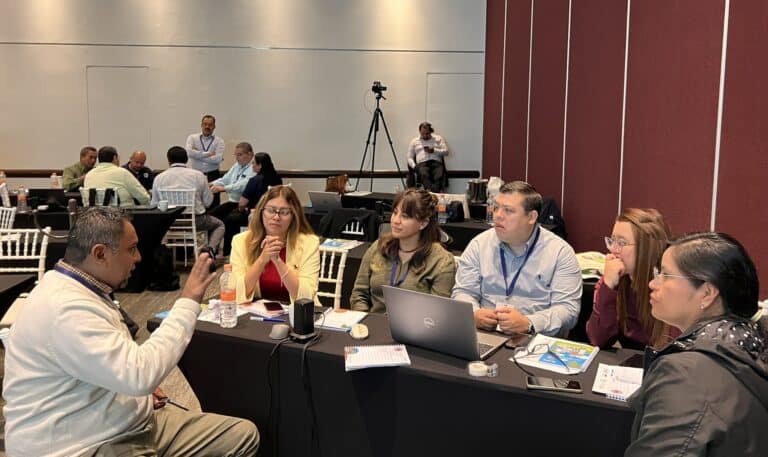
During a three-day working meeting in the southern Mexican state of Chiapas—a territory of extraordinary natural, cultural, and productive wealth—key actors from the agriculture sector advanced in defining an agenda for the 2026–2030 period that integrates sustainable productivity, climate resilience, technological innovation, and financing mechanisms, under a vision of hemispheric cooperation.
The objective is to accelerate the transition of tropical agriculture—an irreplaceable driver of food security for the continent and the world—to make it more sustainable, inclusive, and competitive.
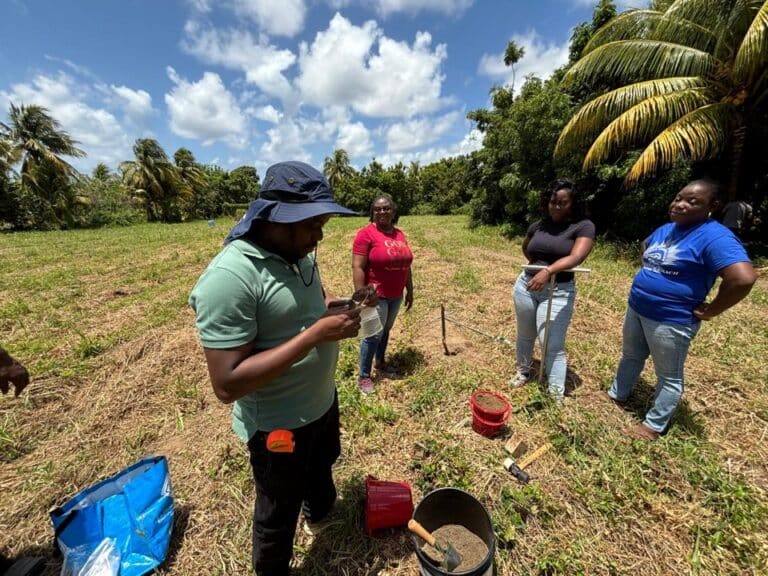
The shared strategy includes nearly 200 projects in areas such as soil restoration, regenerative production and bioinputs; water, watershed, and landscape management; genetic breeding; nature-based solutions and bioeconomy; traceability and value addition; institutional frameworks and financing; and education and extension. During the event, held in the city of Tapachula, 27 initiatives were submitted and another 160 are being developed under the Hemispheric Platform for Tropical Agriculture.
This platform was launched in 2025 by IICA and the Tropical Agricultural Research and Higher Education Center (CATIE), which share a long-standing relationship, together with other institutions that are global references in agricultural innovation, such as the Brazilian Agricultural Research Corporation (EMBRAPA), the Caribbean Agricultural Research and Development Institute (CARDI), the International Maize and Wheat Improvement Center (CIMMYT), and the Bioversity International–CIAT Alliance.
Participating institutions committed to establishing a regional monitoring framework with indicators and metrics on issues such as productivity, resilience, functional biodiversity, water, well-being, and inclusion, enabling continuous improvement and the publication of periodic progress reports, as well as evidence, lessons learned, and technical tools.
At the meeting, the experience and progress of the state of Chiapas were recognized as an initial benchmark for hemispheric cooperation in sustainable, inclusive, and competitive tropical agriculture, with a model that can be replicated in other regions and countries, positioning it as a leading producer of cocoa, coffee, banana, mango, and other agricultural products.
IICA Director General Muhammad Ibrahim participated in the discussions and warned that the sustainable transformation of the tropics cannot wait. He highlighted the value of working in partnership with key actors to establish an agenda to strengthen tropical agriculture that can influence public policies, promote investment, and connect scientific knowledge with local knowledge and territorial impact.
Ibrahim delivered a detailed presentation on the pathways to accelerate the implementation of new frontiers in science, technology, and innovation to improve the realities of agrifood systems in the tropics. He referred to the need to increase public spending to finance the innovation ecosystem, strengthen agricultural extension systems, and enhance seed systems as foundations for food security and climate resilience.
The IICA Director General also addressed the characteristics that incentive systems must have to foster nature-positive innovation, materialized in financial mechanisms that reward producers for measurable positive outcomes for biodiversity and ecosystems.
“Achieving positive outcomes,” he said, “requires gradually eliminating financing for activities that drive nature loss and scaling up financing for those that support it.”
New capacities and resources
The Government of the State of Chiapas and its Ministry of Agriculture, together with IICA and CATIE, organized the meeting, convened under the title “Sustainable, Inclusive, and Competitive Tropical Agriculture: Critical Pathway for Mexico and the Americas.”
The final declaration included the participation of the Government of Mexico, through the Ministry of Agriculture and Rural Development, as well as public, private, academic, and producer organizations and stakeholders from Latin America and the Caribbean, who expressed their willingness to combine knowledge and resources to advance a strategic agenda for tropical agriculture.
During the meeting, emphasis was placed on the fact that the tropical regions of Mexico and Latin America and the Caribbean constitute one of the most biologically and culturally diverse areas on the planet, and that their agrifood systems face increasing pressures stemming from climate change, soil degradation, biodiversity loss, sanitary challenges, and the socioeconomic vulnerability of rural communities.
In the final document, family and small-scale agriculture was recognized as key for food security and in the management of tropical landscapes. It was noted that their well-being, access to services, financing, and markets are essential conditions for the sustainability of the transformation.
Participants also agreed that IICA, given its hemispheric coverage, multidisciplinary technical capacity, and role as a facilitator of policy, cooperation, and intergovernmental dialogue in the Americas, is a fundamental pillar for advancing a strategic agenda for tropical agriculture. They also highlighted the value of CATIE as a leading technical-scientific, educational, and territorial platform, with experience in applied research, knowledge management, innovation, and sustainable development in the tropics.
More information:
Institutional Communication Division.
comunicacion.institucional@iica.int