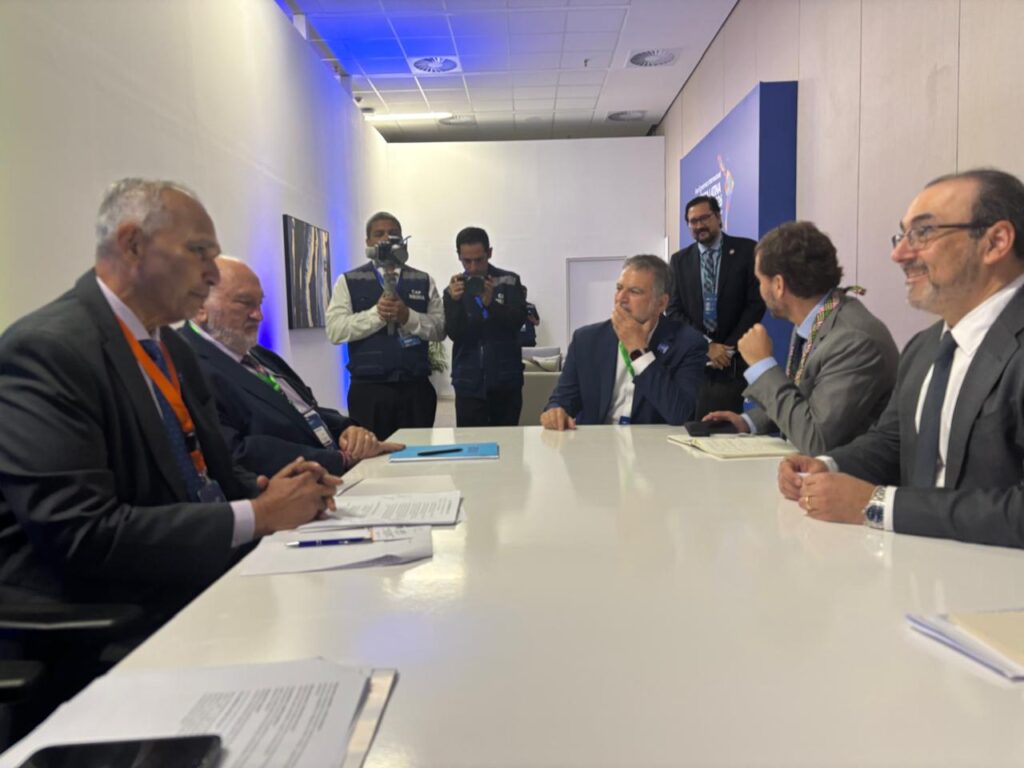
Panama City, 2 February 2026 (IICA) – Muhammad Ibrahim, Director General of the Inter-American Institute for Cooperation on Agriculture (IICA); Sergio Díaz Granados, Executive President of CAF – Development Bank of Latin America and the Caribbean; and Christian Asinelli, Vice President of the multilateral organization, highlighted the partnership between both institutions, while advocating for increased financial support to expand the scientific and technological revolution in agriculture in the Americas.
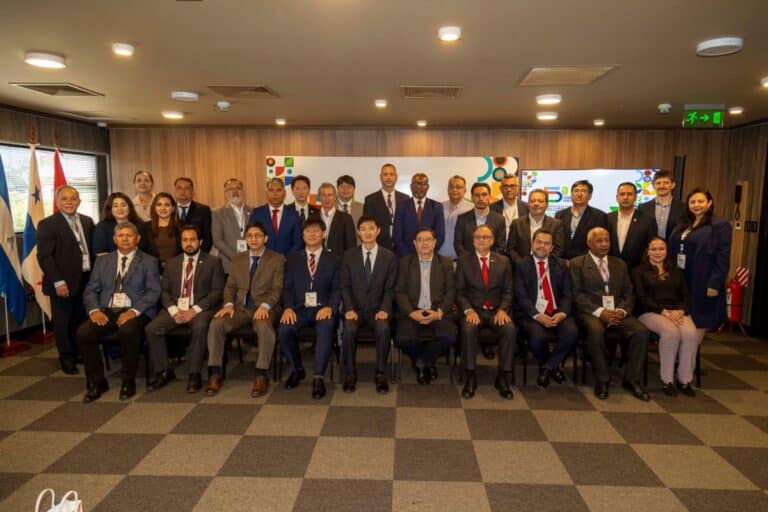
Ibrahim, Díaz-Granados and Asinelli met during the International Economic Forum for Latin America and the Caribbean 2026, hosted by CAF in Panama City and attended by Heads of State and Government, ministers, representatives of the private sector and international organizations, and authorities in science, public policy and finance.
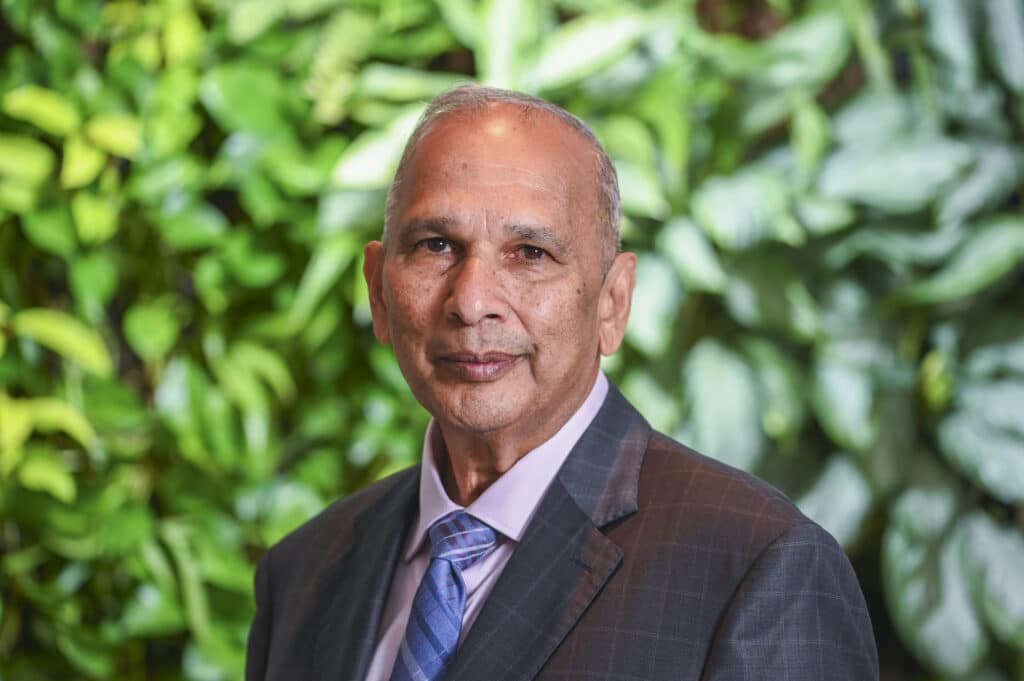
Díaz-Granados welcomed the new IICA Director General, an agronomist of Guyanese nationality, who took up his appointment on 15 January. The CAF President outlined CAF’s ambitious program to support agroindustrial development. Last year the Bank launched its Agricultural Prosperity Strategy, setting a target to provide 8.5 billion in financing by 2030, with a focus on social and territorial inclusion.
In meeting, they analyzed new and better synergies between the development bank and the specialized agency in agricultural and rural development, specifically in issues such as health, soil health and restoration, water resources and specific crops.

Alicia Montalvo, CAF’s Manager of Climate Action and Positive Biodiversity, as well as other officers from the credit organization, were also present.
The CAF forum brought together approximately 5,000 participants, including the Presidents of Panama, Brazil, Bolivia, Colombia, Ecuador and Guatemala; the Prime Minister of Jamaica; and the President-elect of Chile. Ibrahim’s participation focused on the need to facilitate connections with public and private funding sources, on a large scale, to ensure that the current scientific and technological revolution will spread throughout agriculture in Latin America and the Caribbean, thereby boosting productivity, improving resilience and driving development in rural areas.
While in Panama, Ibrahim was accompanied by the IICA Panama and Honduras representatives, Miguel Ángel Arvelo and Santiago Vélez, as well as his Senior Advisor, Jorge Werthein. He was a speaker in two sessions during the forum, focusing on financing in agriculture and improved food security in the region.
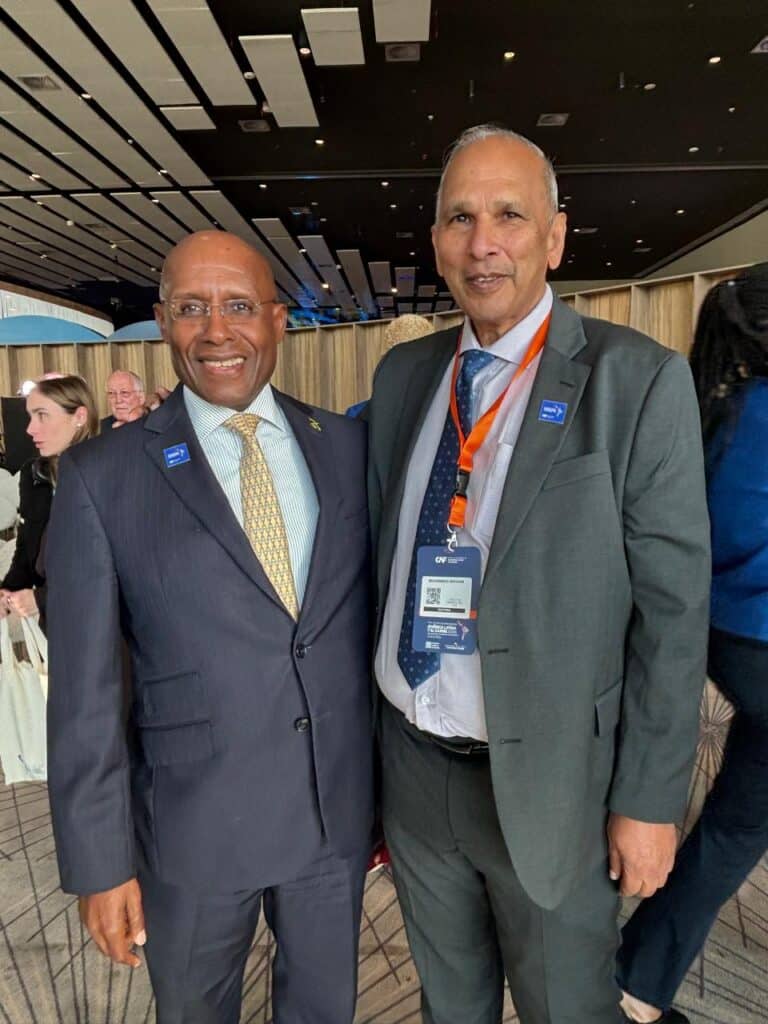
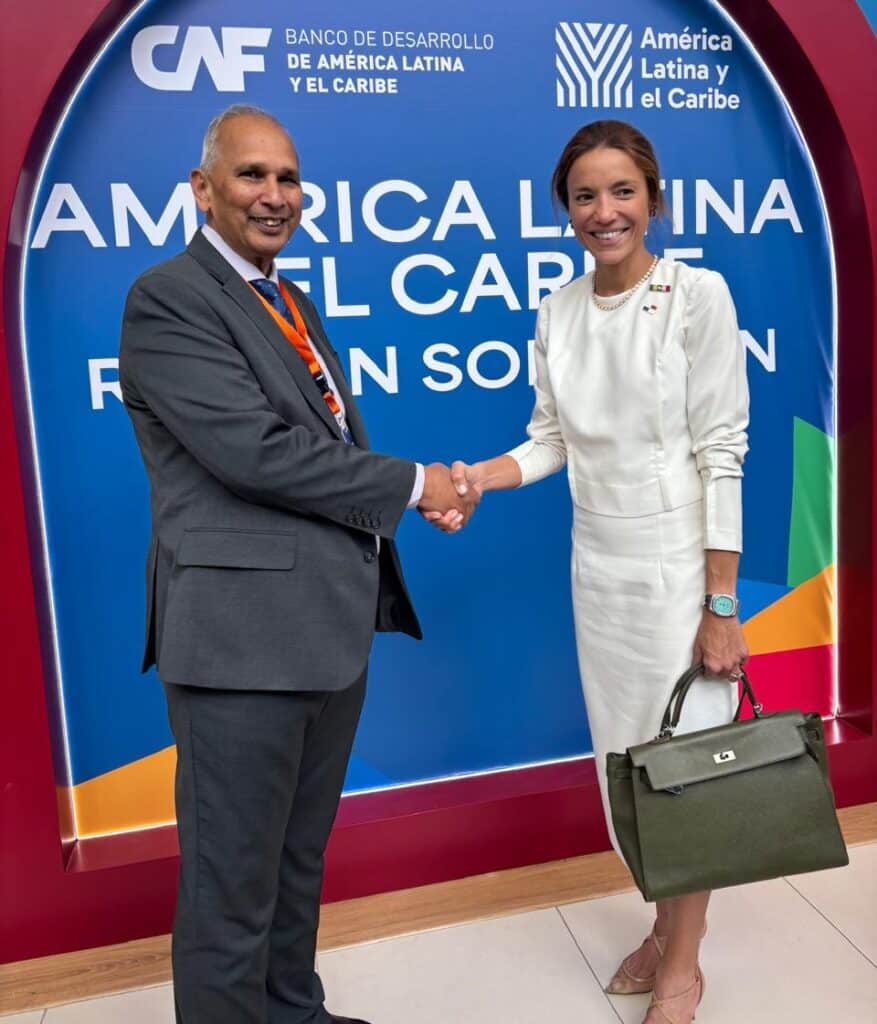
In addition to meeting with the CAF Executive President and Vice President, Ibrahim also held discussions with Jamaica’s Minister of Industry, Investment and Commerce, Aubyn Hill; Panama Ambassador to the OAS (Organization of American States), Ana Irene Delgado; and Portuguese Member of Parliament Paulo Neves, who is also the President and Founder of IPDAL, the Institute for the Promotion of Latin America and the Caribbean in Portugal.

In addressing the high-level sessions, the IICA Director General discussed the financing challenges faced by an agroindustry sector that is compelled to increase productivity in the context of limited natural resources. Thus, the incorporation of new technologies and innovations is a matter of necessity.
Ibraham noted that, “Clearly, input costs are rising, and this affects competitiveness. Financial considerations must be a central component of any strategy aimed at transforming food systems to satisfy increasing demands”.
The IICA Director General explained that the organization has been developing various innovative programs, providing guarantees to assist small farmers to overcome credit access barriers. It has also been working with various entities to identify and validate more promising technological packages and then determining how to integrate them into viable projects and investment mechanisms, thereby mobilizing the financial resources needed for appropriate technological scaling up.
He also noted that science and technology already offer a range of solutions that can boost productivity, improve resilience and drive economic and rural development.
Yet, in the same breath, he warned that many solutions cannot move beyond the initial stages, due to lack of financing, inadequate regulatory frameworks, insufficient infrastructure and a weak connection to demand.
In his view, “They must be adapted locally and then expanded until they reach the level where they can make a systemic impact, even as we continue to develop new technological options”.
In one session, Asinelli stressed that IICA plays “a key role in reinforcing the position of the Latin American and Caribbean region as a solution to global problems”. He also stressed that agriculture continues to be a structural mainstay of economies in the region, although the financial gap is an obstacle that affects its productivity and competitiveness.
Ibrahim explained that IICA is working with public and private sector partners to remove barriers to access financing. As such, he stressed that institutions like IICA and CAF have a central role to play in tackling the structural problems that affect the financial ecosystem throughout the production chain. He also spoke about other challenges arising from new consumer demands, such as the demand for more sustainable and responsible food production, and for healthy diets that are accessible to the majority.
The IICA Director General also participated in the panel discussion, “Agriculture and Food for the Sustainable Transformation of Latin America and the Caribbean”, along with other panelists, such as the Minister of Agriculture of Ecuador, Juan Carlos Vega.
In that forum, he called for “an association of stakeholders in science and technology, and the mobilization of financial stakeholders to ensure adequate risk management, by developing a range of financial mechanisms that take into account the reality of small farmers”.

Portuguese Member of Parliament, Paulo Neves (to his left), who is also the President and Founder of IPDAL.
More information:
Institutional Communication Division.
comunicacion.institucional@iica.int