Uruguay’s Minister of Livestock, Agriculture and Fisheries, Fernando Mattos, made the announcement in a videoconference with Saint Vincent and the Grenadines’ Minister of Agriculture, Saboto Caesar. The donation will include seeds for chard, broccoli, pumpkin, onion, cauliflower, lettuce, corn, melon, pepper, tomato, cucumber, and other vegetables, aiming to strengthen food security in the Caribbean nation.
San José, 26 August 2024 (IICA) – Uruguay’s Minister of Livestock, Agriculture and Fisheries, Fernando Mattos, announced the donation of seeds and offered technical cooperation to Saint Vincent and the Grenadines, the small Caribbean nation whose agricultural sector was devastated when Hurricane Beryl struck the island nation in July.
Beryl hit Saint Vincent and the Grenadines as a Category 5 hurricane, considered potentially catastrophic, with winds reaching up to 260 kilometers per hour and strong storm surges, causing significant destruction on the islands of Union, Mayreau, and Canouan. In addition to destroying around 1,000 homes and other infrastructure, Beryl wiped out crops and decimated livestock.
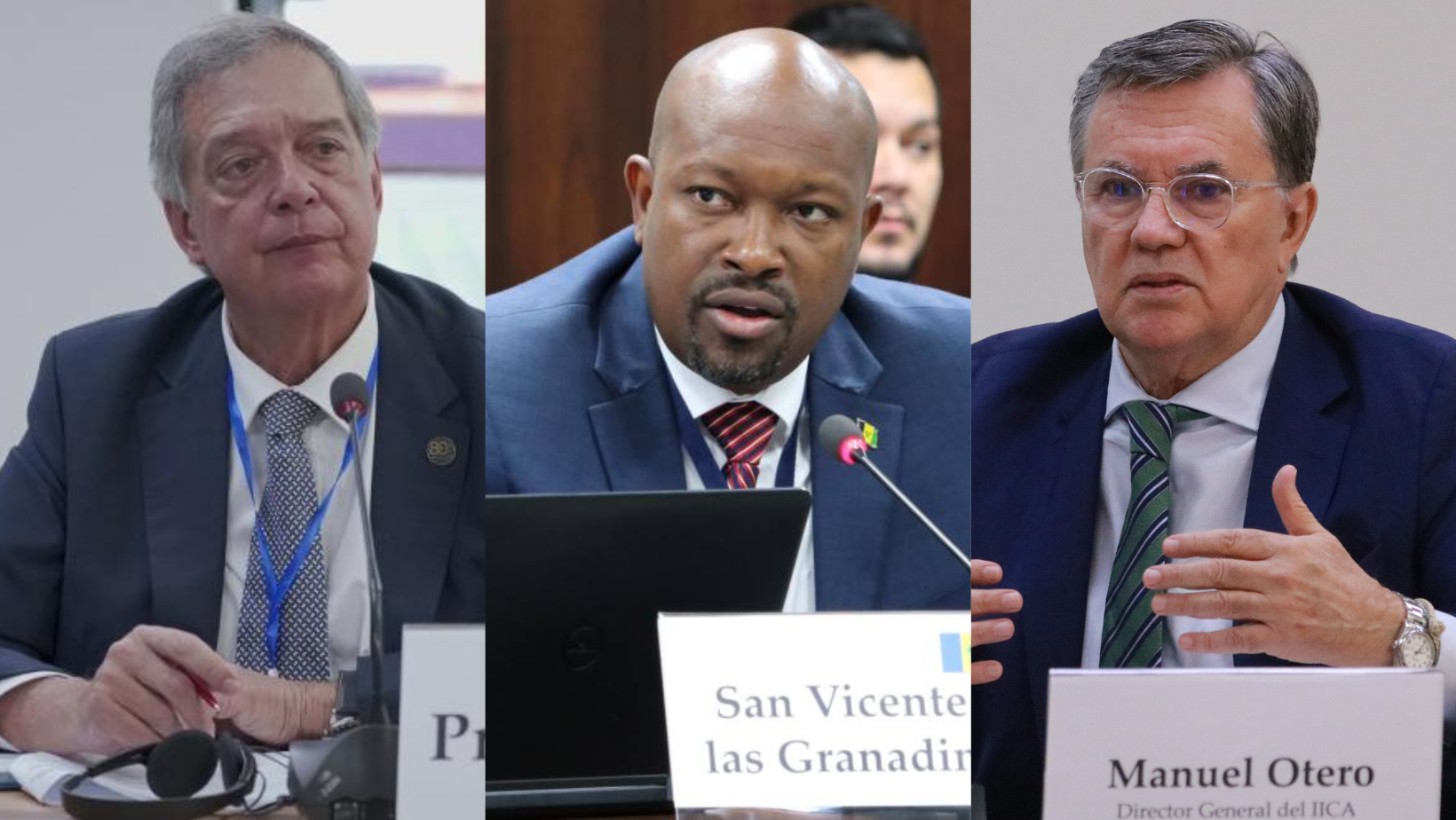
Mattos, currently serving as President of the Inter-American Board of Agriculture (IABA), the highest governing body of the Inter-American Institute for Cooperation on Agriculture (IICA), made the announcement and offer during a videoconference with Saboto Caesar, the Minister responsible for the agricultural sector in Saint Vincent and the Grenadines.
The virtual meeting was attended by IICA Director General Manuel Otero, Deputy Director General Lloyd Day, Director of Technical Cooperation Muhammad Ibrahim, Special Advisor Jorge Werthein, and IICA Representative in Uruguay, Rodrigo Saldías.
“After learning about the reports of, once again, extreme weather events in the Caribbean and the consequent destruction of the productive system, we discussed with Director General Manuel Otero and the IICA team how to address this situation together. The donation of seeds can help, and Uruguay is open to receiving requests from Saint Vincent and the Grenadines and other affected Caribbean countries, as well as contributing technical cooperation, for example, in livestock and genetic material. We are deeply moved by this event that occurred at the very start of the hurricane season”, said Mattos.
The donation will include seeds for chard, broccoli, pumpkin, onion, cauliflower, lettuce, corn, melon, pepper, tomato, cucumber, and other vegetables, aiming to strengthen food security in the Caribbean nation.
“On behalf of the government and people of Saint Vincent and the Grenadines, and the Caribbean Community (CARICOM), I would like to express my gratitude for the contribution made by the government and people of Uruguay, and I will be working closely with IICA to further strengthen this much-needed cooperation. Thank you for making it possible. We are proud and grateful to be part of IICA”, said Minister Saboto.
Meanwhile, IICA Director General Manuel Otero indicated that more Latin American countries are expected to announce donations to help strengthen the agri-food sector in the Caribbean.
“This is IICA’s mission—to build bridges, seeking in this case to be closer to the Caribbean, its countries, governments, and people, as it is perhaps the most vulnerable region in the world. IICA does not hesitate when it comes to promoting these donations to support farmers and the entire population, in order to contribute to generating resilience and sustainability”, said Otero.
This is the second time in three years that the agricultural sector of the Caribbean nation has been ravaged by a natural disaster.
In 2021, a series of volcanic eruptions struck the agricultural sector and jeopardized the country’s food security, forcing around 20,000 people to evacuate their homes, most of them farmers, as the lands near the La Soufrière volcano were used for agricultural production. The eruptions resulted in the loss of 100% of the vegetable crops.
The provision of seeds will support the recovery of the country’s agriculture, as it did in 2021.
More information:
Institutional Communication Division.
comunicacion.institucional@iica.int