The «dragon fruit» is an organic and resistant crop to many pests and diseases, low production costs, and can resist the seasonal drought of some areas of the country
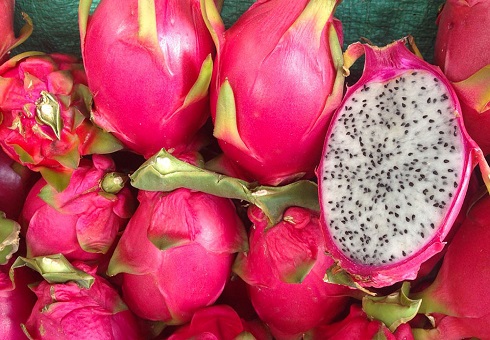
Santo Domingo, Dominican Republic, July 30, 2018 (IICA). The cultivation of pitaya has been significantly promoted by the authorities of the agricultural sector in the Dominican Republic in recent years, with the aim of increasing exports through diversification.
Currently, this tropical fruit of Asian origin is highly competitive, of great demand in international markets, and, according to the country´s authorities, the farming of this fruit has been diversified and distributed in different provinces and could generate around RD$19.8 million of income each year.
Last year, the country exported the Dragon fruit product to Spain. However, in the United States the demand for this fruit is only sixty containers per month, a quota that the country cannot currently supply, therefore; there is a dissatisfied market waiting to receive the fruit.
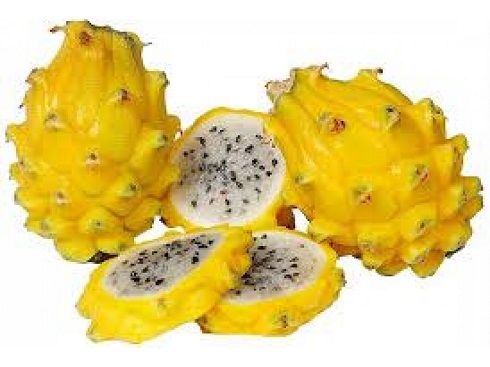
The Hylocereus type is native to tropical America, mainly from Central America and the Caribbean. Hylocereus undatus is among the most cultivated type. It is a perennial plant of epiphytic or terrestrial character and abundant branching. It can reach from 0.5 to 2m in length. According to its edaphoclimatic requirements, the pitaya prefers temperatures of sub-humid warm climate. However, it also grows well in dry climates. The perfect temperature for the plant development oscillates around 16-25ºC.
The cultivation of pitaya requires high luminosity for the development of different physiological processes. Proper lighting stimulates the sprouting of the flower buds. It is a plant that, due to its hardiness, adapts to dry, poor and stony soils. However, it prefers sandy-loam soils, humid, with good drainage due to their sensitivity to ponding, rich in organic material and slightly acidic pH (5,5-6,5).

It does not require abundant water and irrigation should be given during the first two planting years in order to stimulate an adequate vegetative growth. The following years, water should only be applied during the flowering period, because if it is watered during the dry season, it can cause a decrease in the flowering process.
 The most usual proliferation of the pitaya is conducted by vegetative propagation by means of stakes. The propagation by seeds is not advisable, since it is a very slow process, with an estimated time of seven years to be a productive plant.
The vegetative propagation by cuttings consists of cutting stems of about 25-30cm in length from mother plants. Selected stems must be at least two years old. Next, the stems should be left to heal for 3-7 days in the shade to later proceed to sow them in 20x30cm bags. Before this process, it is recommended to disinfect the pods with fungicides and bactericides and ensure that the substrate used has a good drainage capacity and be rich in organic matter.
More information: Hector Garibaldis Perez, Specialist in Agribusiness, hector.perez@iica.int
http://www.infoagro.com/documentos/el_cultivo_pitahaya.asp