IICA supports process for strengthening registration and post-registration control of commercial agricultural bio-inputs used in Dominican Republic.
IICA supports process for strengthening registration and post-registration control of commercial agricultural bio-inputs used in Dominican Republic.
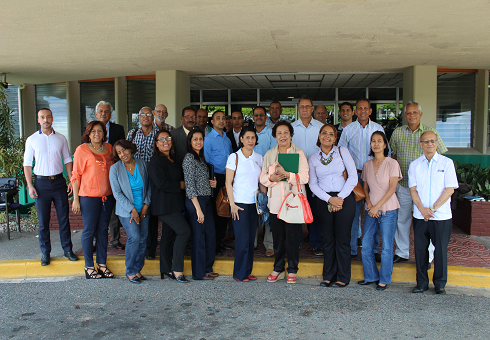
As part of the programming of the Project «Development of the Institution Framework of the Subsector of Commercial Bio-inputs for Agricultural Use (bio-inoculants and biological pesticides) to Promote Less Contaminant Agriculture in Paraguay, Dominican Republic and Guyana», was held the second «Workshop on Registration and Post-registration Control of Agricultural Commercial Bio-inputs in the Dominican Republic at the location of the Institute for Innovation in Biotechnology and Industry (IIBI, by its Spanish acronym) on March 23 and 24, 2017, with the participation of 48 officials and technical experts from the official and private sectors involved with this theme in the country.
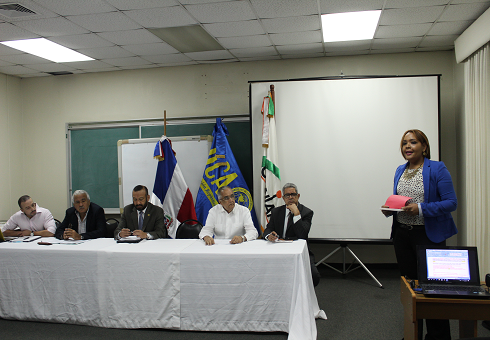
of Agricultural Bio-inputs in the Dominican Republic
The project is implemented with the support of IICA and the National Council for Agricultural and Forest Research (CONIAF, by its Spanish acronym), and the active representation of a Technical Working Group, headed by representatives of the Department of Plant Protection of the Ministry of Agriculture and the main institutions of the officials and private sector of the country involved with the theme. It is expected that the proposed manual of regulation and operation procedure for registration and post-registration control will be submitted to the Ministry of Agriculture before the fourth quarter of 2017 for the ministry to complete the process for final official approval in the country.
During the workshop, the participation of technicians from the Division of Pesticides Registration and the Department of Organic Agriculture of the Ministry of Agriculture, as well as the active participation of representatives of the Ministry of Public Health, the Ministry of Environment and Natural Resources, The Dominican Institute of Quality (INDOCAL), the Central Veterinary Laboratory (LAVECEN) and its Food Analysis Laboratory; representatives and technicians of the National Council of Agricultural and Forest Research (CONIAF); the Autonomous University of Santo Domingo (UASD); members of the Association of Manufacturers and Representatives of Importers for Crop Protection (AFIPA, by its spanish acronym ); representatives of the National Association of Agricultural Importers (ANIMPA, by its Spanish acronym), IIBI; the Regional International Organization for Plant Protection an Agricultural Health (OIRSA, by its spanish acronym), and the Inter-American Institute for Cooperation on Agriculture (IICA), among other participants interested in the subject, such as private companies involved with the commercialization of pesticides and biotechnology, as Syngenta, among representatives of other private companies.
The workshop was aimed at reviewing the final version of the proposal of the regulation and the manual of procedures for the registration and post-registration and control of agricultural bio-inputs in the country. The subject of control of the registration and official post-registration control of bio-inputs is considered as a new need requirement for the commercialization of this type of products that must be properly regulated and to take into account within the program to strengthen the Ministry’s official monitoring and control system, given the importance for the Dominican Republic of maintaining the export levels of agricultural products and its plans to increase the export of agricultural products in general and, particularly, the production and export of organic agricultural products such as bananas and organic cocoa, among others. Such is the importance of this issue for the Ministry of Agriculture actually, that on December 5, 2016, through the Ministerial Resolution, “RES-MA 35-2016 on Botanic Pesticides”, the official entity included several requirements regarding the registration and control of agricultural bio-inputs in their efforts to begin immediately the process of response to control the marketing of this type of products in the domestic market.