
In 2016, the amount of exports of fruit reached 17 million kilos exported, which translates into a value of US $ 20 million, unlike years ago that was less
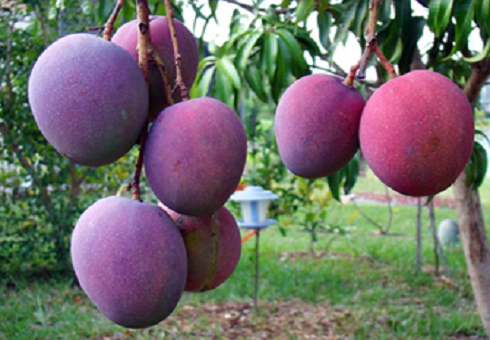
Santo Domingo, Dominican Republic, October 2017 (IICA). The mango (Mangifera indica) belongs to the Anacardiáceas family. It is one of the most commercialized tropical fruits in the world after banana. It is native to tropical Asia. The mango tree can grow up to 30 meters tall, its trunk is sturdy with thick and rough bark and its leaves are dark green. The fruit is fleshy with fibers and is commonly oval, although it may be round. The shell is soft, waxy and cool to the touch; It can be green, orange or reddish. The pulp, when ripe, is yellow or orange; It is juicy and smooth, with a delicate and sweet flavor. The size of the fruit varies from 5 to 25 cm. long, generally, and the weight ranges from 50 grams to more than 2 kilograms, depending on the variety.
 The production of mango in the Dominican Republic can be differentiated between the Creole variety, which grows spontaneously and is spread throughout the national territory; and organized production, recently implemented with export varieties. Mango criollo is used almost entirely for domestic consumption. Among the best known are Banilejo, Guerrero, Mameyito and Fabricó. Lately, varieties from other countries have been introduced, which have been developed in commercial plantations and whose production is destined to both the domestic and export markets. The harvest has grown dramatically in recent years and with it the export volume, for which the country seeks to be a leader in the Central American and Caribbean markets in exports to the United States and Europe.
The most exported variety from the Dominican Republic is Keith, since it is the one that is most sown because it is prolific, late, and it can thrive in any area of the country and produce many units per year. Also the variety known as the Mingolo is another that has a lot of participation in the international market; as well as the famous banilejo.
Among the main challenges facing mango production in the Dominican Republic, we can mention:
1. Strengthen competitiveness within producers,
2. Intensify technical assistance,
3. Develop fruit fly management programs to reduce losses with respect to damage
4. Establish capacities so that producers can handle the production, packaging and processing of the fruit.
5. Link producers to export markets so that they can increase their income, improve competitiveness and manage the quality and safety of the fruit.
Más Información: Héctor Garibaldis Pérez, Agribusiness Specialist