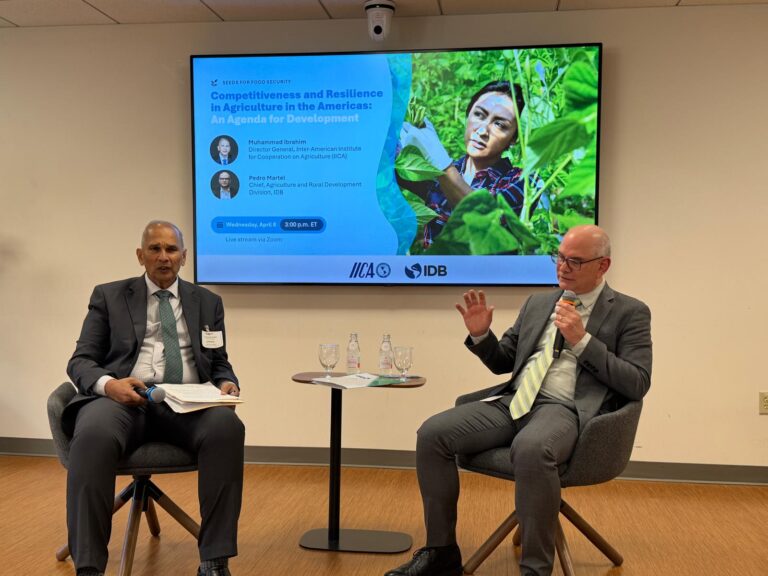
During the 2018 USDA Agricultural Outlook, speakers on the Outlook for Organic Agriculture panel examined the rise in U.S. organic food demand, organic export markets, and organic production-sector opportunities.
One of the panels that IICA specialists attended during the 2018 USDA Agricultural Outlook discussed the Outlook for Organic Agriculture. Speakers examined the rise in U.S. organic food demand, organic export markets, and organic production-sector opportunities.
The United States market continues to be the largest market for organic products in the world representing approximately 48% of the total, followed by Germany and France with 12% and 8% respectively. During 2016, organic products exceeded 5% of total food sales for the first time; on the other hand, the sales of organic commodities grew 23% with respect to the previous year. The main products marketed continue to be fruits and vegetables, followed by dairy products. Among the products that showed the greatest growth during 2016 were chickens.
A motivating factor for producers and exporters of organic products in Latin America and the Caribbean (LAC) is that the demand for organic products grows faster than the domestic supply and that increases in local production; the importation of organic products grew by 21.4% in 2017. The main imported products and their percentage of total organic products were coffee (17%), olive oil (14%), soy (13%), bananas (11%), avocados (6.5%), honey (6.2%) and yellow corn (5.9%).
As the growing demand for organic chicken, beef and dairy products continues to increase, this has resulted in an annual increases in organic corn and soybean imports around of 33% per year. This trend favors countries such as Argentina and Canada, which are among the main suppliers or organic corn.
Information about this panel can be found here.
More information: Daniel Rodríguez, leader of the IICA Flagship Project on Competitiveness and Sustainability of Agricultural Chains, daniel.rodriguez@iica.int
Related post: IICA attends the 2018 USDA Agricultural Outlook
*The opinions expressed in this newsletter are those of the authors and they do not reflect the position of the Institute on the topics presented.
*This post appears in the IICA Delegation in the USA Newsletter – January – February 2018