
Comayagua, Honduras, 26 May 2026 (IICA) – Honduran President Nasry Asfura highlighted the central role of the Inter-American Institute for Cooperation on Agriculture (IICA) in ensuring that farming families and rural communities affected by the drought plaguing rural areas in the Central American country have access to inputs, which is impacting food production.
IICA is assisting with the procurement of inputs to sustain productivity in the cultivation of staple grains and coffee, as well as in livestock farming, which contributes to the effectiveness and transparency of the assistance, the President stated.
The Honduran government has begun distributing agricultural production incentives, which will be rolled out gradually to municipalities and localities where rural communities have been suffering fromwater shortages, which have led to crop losses and difficulties for livestock farming.
The drought has been caused by the El Niño phenomenon in a country where part of its territory lies within the so-called Central American Dry Corridor, an area that suffers from recurring droughts and extreme rainfall, the impact of which is exacerbated by poverty and the degradation of natural resources.
During the launch of the Production Incentives Program in the city of Comayagua, the President highlighted the importance of technical assistance from IICA, whose Director General, Muhammad Ibrahim, visited Honduras last month to reaffirm the agency’s commitment to transforming agriculture in the country and was received by Asfura at the Presidential Palace.
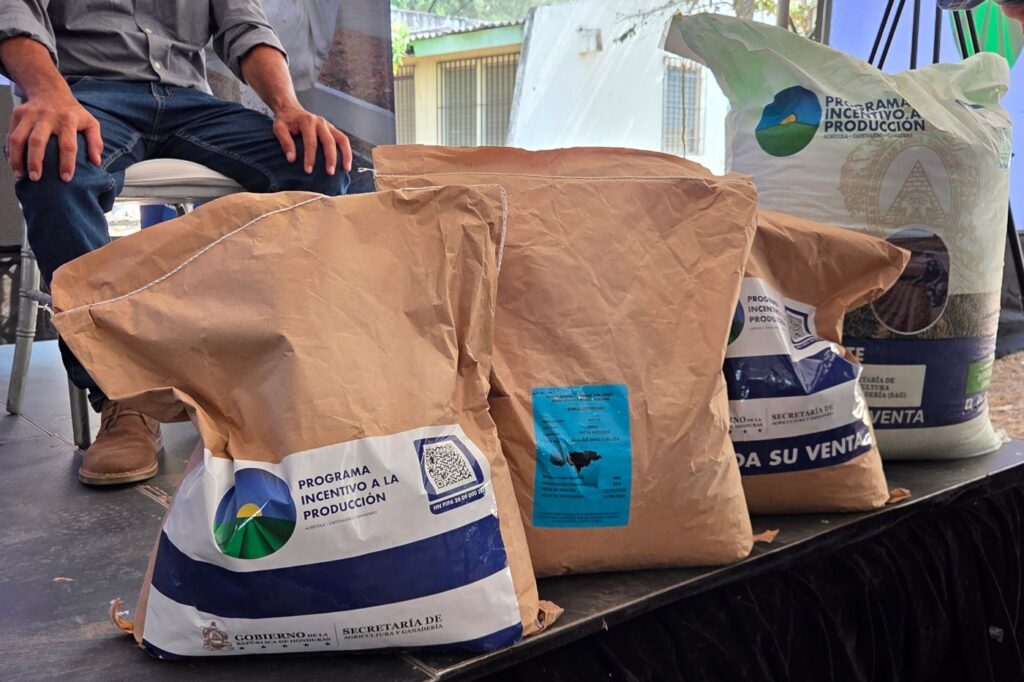
Through the Incentives Program, the government aims to assist some 200,000 families living in rural areas, reportedly through subsidies and the distribution of supplies, including fertilizers, plant protection kits, and improved seeds for corn, beans, rice, sorghum, and grass, in addition to providing technical assistance for livestock farming and coffee cultivation. The Incentive Program involves an investment of 1.5 billion lempiras (about $56 million), the government reported.
The goal is to increase the productive capacity of family farmers with financial and technical tools that promote better harvests and strengthen the rural economy in different regions of the country.
“Farmers are heroes for working in the fields and getting by amid so many difficulties. That is admirable,” Asfura said during the event in Comayagua.
Technical support
During his visit last April, at the president’s invitation, Ibrahim pledged IICA’s full technical support for Honduras’ agricultural transformation, while Asfura expressed great interest in continuing and deepening IICA’s cooperation to address the drought.
The work that the specialized agency is carrying out to contribute to food security under conditions of environmental stress includes actions related to irrigation, the supply of seeds and fertilizers, and training in best practices for planning the planting season.
President Asfura told Ibrahim that the Honduran government considers agriculture to be a key sector for economic growth and for the eradication of poverty in rural areas. Ibrahim, for his part, briefed the Central American leader on IICA’s work to promote the incorporation and use of science, technology, and innovation in building resilient food systems in Latin America and the Caribbean, and reported on the agency’s efforts to contribute to food and nutritional security in Honduras.
More information:
Institutional Communication Division.
comunicacion.institucional@iica.int