Many youth cannot access the physical resources to make their business projects a success.
Many youth cannot access the physical resources to make their business projects a success. As a pilot project to find collaborative ways of overcoming this challenge, the Saint Lucia Agricultural Forum for Youth (SLAFY) has designed the Hive-minded project as a communal apiary. Apiculture was chosen as the focus for the project given that it has been proven to be a very profitable enterprise for rural stakeholders in the agriculture community in Saint Lucia because of the high levels of return on investment, low maintenance costs and its suitability for a range of locations that would otherwise be unsuitable for conventional crops or other livestock production systems.
The project, being supported with funds from the Australian Embassy’s Direct Assistance Programme (DAP), is creating a space where 10 young entrepreneurs from the community of Laborie have access to training and equipment at no cost to them, in a safe environment for learning and business start-up to take place. The participants will contribute new hives to the apiary as their own hives expand to allow for new participants to benefit similarly. The communal apiary will also serve as a demonstration station to promote the use of sustainable practices such as rainwater harvesting and the development of a forage bank to ensure that the hives are always able to access climate smart nectar sources.
Hive-minded Project
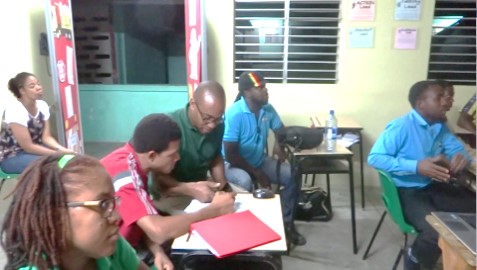
The Hive-Minded project will create skilled youth, capable of managing a commercially sustainable apiary and a replicable collaborative entrepreneurship model for apiculture. Training is geared toward knowledge development in practical and technical aspects of honey production as well as the development of other honey by-products.
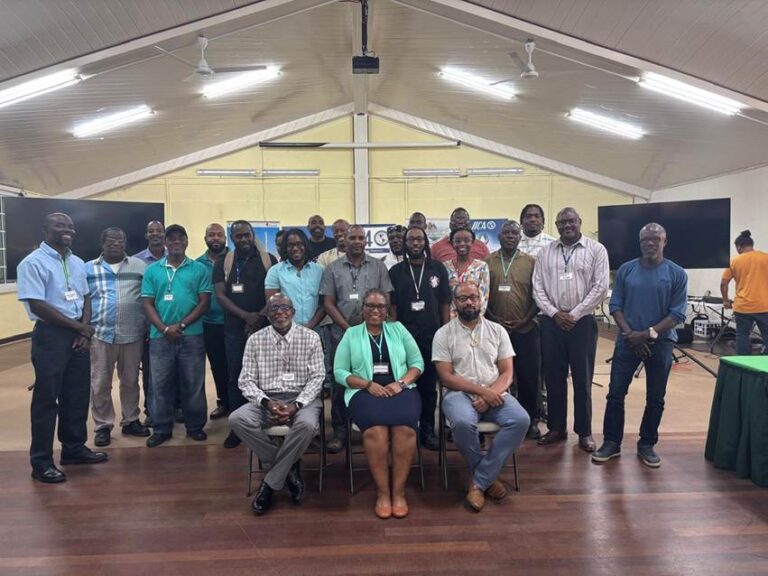
To date the project has started its capacity building programme and is in the process of operationalizing the target site for receiving populated hives.
This project is being supported by the IICA Delegation in Saint Lucia and members of the Mille Fleur Honey Producers Cooperative.
For more information contact: Brent Theophile (brent.theophile@iica.int) or Cadley Peterson (slafy101@gmail.com)
See short video on the project here:
https://www.facebook.com/richard.matthias.56/videos/1326347620712882/