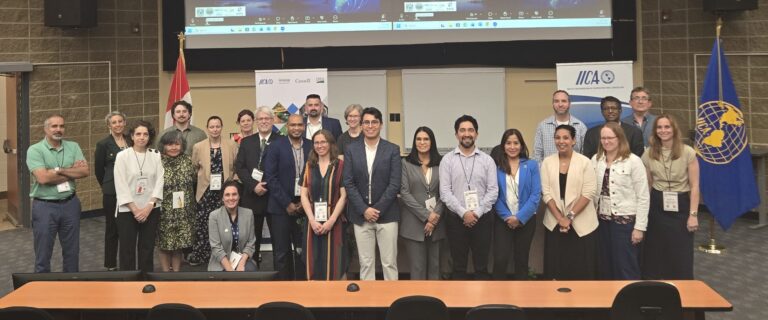
The Canadian Agriculture and AGriFood Workforce Summit organized by the Canadian Agricultural Human Resource Council (CAHRC) in Winnipeg, Manitoba was billed as a “not be missed event”.
Ottawa, ON. It attracted participants from the cross-section of agriculture and food industry ranging from farm employers to agri-food processing decision makers and government officials. The format and scope of the presentations allowed participants to more fully appreciate the contribution of the agri-food sector to the Canadian economy as well as share perspectives on some of the challenges being faced. The approach was towards identifying collaborative solutions to the issues.

Among the highlights of the summit were:
- The release of final results of CAHRC’s Labour Market Information project which included forecasts of agricultural labour demand and supply. It was indicated that agriculture’s current labour gap is approximately 59,000 workers and 1 out of 12 jobs in agriculture are unfilled. These unfilled vacancies cost the industry $1.5 billion in sales in 2014, 2.7 % of the sector’s total.
- Studies showing the causes of the labour gap in Agriculture and how seasonality, rural location and wages had an influence on this gap
- Noting that worker shortages were said to result in Decreased Value-Added, Decreased Innovation and Decreased Investment among others
- Evidence that foreign workers account for a significant share of the total agriculture workforce in Canada.
- Demonstration of new labour support tools, such as an online job matching tool and training programs to facilitate farm employers finding and keeping workers.
Overall, the summit was considered an absolute success as it provided concrete sector-aligned data to equip businesses to project and implement strategies for meeting the human resource needs over the next 10 years. It also allowed IICA’s delegation in Canada to connect and share information with new potential partners.
Partial support for participation of the Delegation’s Technical Cooperation Specialist, Pedro Chacon at the Summit was provided by CAHRC.