Leading experts participated in an academic conference and shared experiences and best practices, in the presence of agricultural producers and researchers from the public and private sectors.
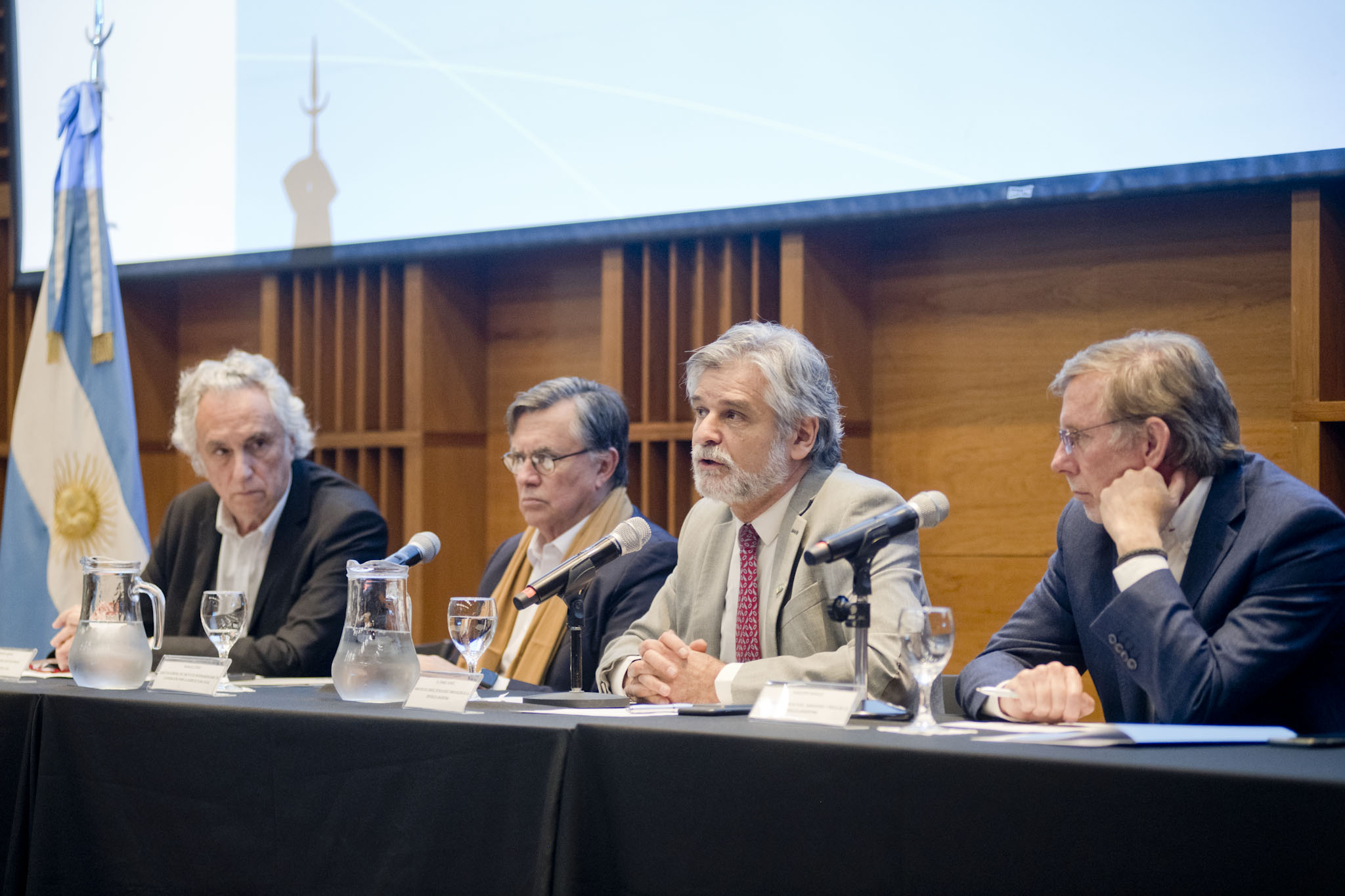
Buenos Aires, 21 September 2022 (IICA) – Argentina’s Ministry of Science, Technology and Innovation (MinCyT) and the Inter-American Institute for Cooperation on Agriculture (IICA) took the first formal step in their collaborative effort to strengthen bioeconomy development and the digitalization of the rural and agrifood sector in the country and in the wider hemisphere.
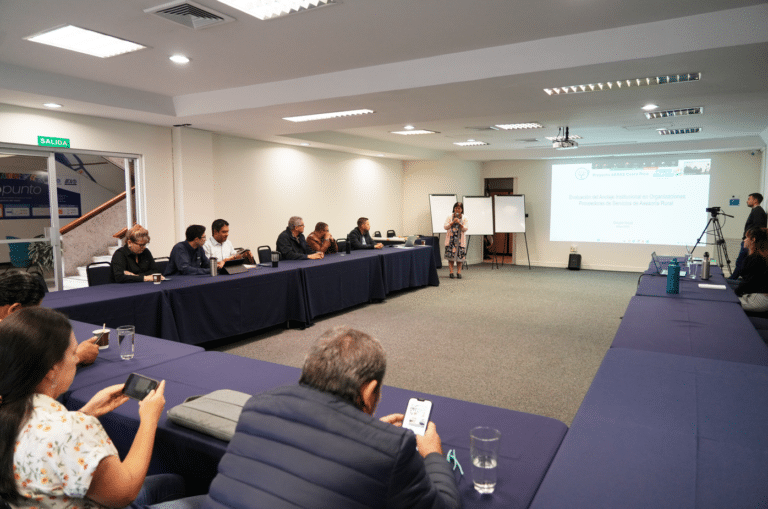
Leading experts participated in an academic conference and shared experiences and best practices, in the presence of agricultural producers and researchers from the public and private sectors.
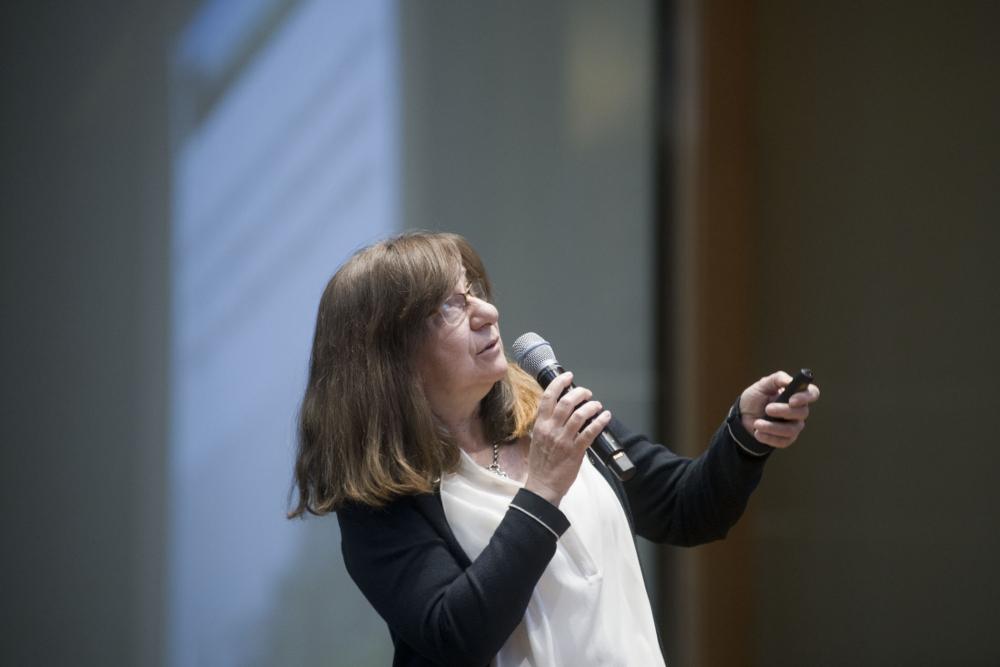
The event was staged in the modern auditorium of the Cultural Center of Science in Buenos Aires and featured a presentation by renowned Argentinian scientist, Raquel Chan, who led the development of the HB4 gene, which confers drought tolerance to wheat and soybeans.
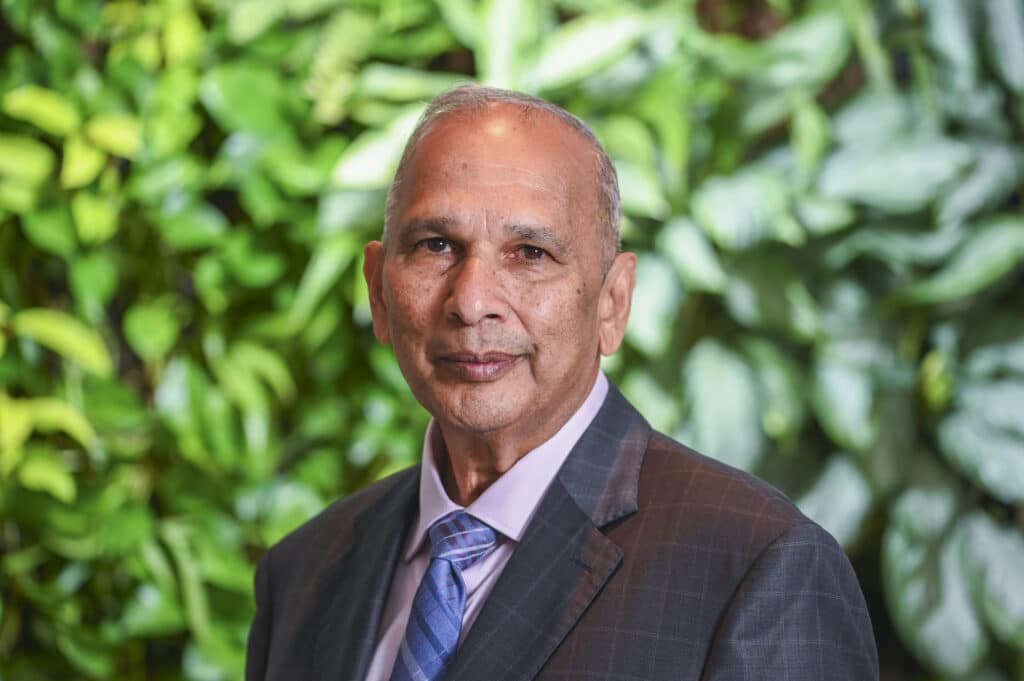
This year Dr. Chan was named as “IICA Chair in Biotechnology and Sustainable Development” for her contribution to strengthening national science and technology systems. The scientist delivered a presentation on “The Ongoing Relationship between Science and Technology as Illustrated by the Example of the Development of the HB4 Technology until the Launch of the Argentina against Hunger Program”, and provided a detailed account of the work that had led up to this important development, aimed at improving crop productivity under adverse conditions.
The session was opened by Daniel Filmus, Argentina’s Minister of Science, Technology and Innovation, along with the Secretary of Agriculture, Livestock and Fisheries of the Nation, Juan José Bahillo, and the Director General of the Inter-American Institute for Cooperation on Agriculture (IICA), Manuel Otero.
The activity was one of the outcomes of an agreement that MinCyT and IICA signed in March, which focuses not only on technical cooperation actions, but also the identification and analysis of potential bioeconomy-related opportunities and business, based on scientific and technological developments in the chains and territories.
The need to spur the development of the bioeconomy in Argentina was identified through a series of workshops over the last few months, in which professionals from MinCyT and IICA developed a work agenda.
The bioeconomy is the intensive and knowledge-based use of biological resources, processes, technologies, and principles, for the sustainable provision of goods and services in all sectors of the economy, and in harmony with the environment.
Argentina and other countries in Latin America and the Caribbean have achieved substantial gains in bioeconomy applications in agroindustry, but have significant untapped potential, given their abundant supply of natural resources.
Science and technology for transformation
Speaking of the importance of developing state policies focusing on this field, Filmus remarked that, “Let us imagine an Argentina in the future that harnesses science and technology as fundamental tools to satisfy the needs of our people”.
He insisted that, “Science and technology should enable people to live in dignity and to access the food to which they are entitled. Argentina produces much more food than it needs for its own population and our production may continue to grow. However, we must also make the proper political decisions to ensure that food reaches everyone and is distributed equally”.
On the other hand, Secretary Bahillo commented that science, technology and knowledge are strategic elements in addressing the challenges currently affecting production systems.
“Of course, we will have to produce more and reduce the impact on ecosystems. We must ensure not only environmental, but also economic and social sustainability. Biotechnology and the development of science will be decisive in this process. Let us refrain from these unproductive discussions that are crippling us”, said Bahillo.
Manuel Otero focused on the issue of food security, which is currently a top priority in the global agenda, given the multidimensional crisis that has fueled hunger and malnutrition in some countries.
“As such, science, technology and innovation are acquiring a decisive role in the new agriculture. At the Summit of the Americas in Los Angeles this year, we proposed that we should join forces. Today, it is critical that we work together”, said Otero.
The IICA Director General remarked that the bioeconomy provides a bridge between production and the environment and offers countries in Latin America and the Caribbean the possibility of gaining access to new value chains and transforming the abundant supply of biomass in the region to generate employment and improve the standard of living in these societies.
More information:
Institutional Communication Division
comunicacion.institucional@iica.int