The ministers argued that biotech issues must be addressed within their specific area and within the scope of the Convention on Biological Diversity, adopted in 1992, in which the international community acknowledges the benefits of biotechnologies. The ministers also pointed out that safe management is possible with risk analysis.
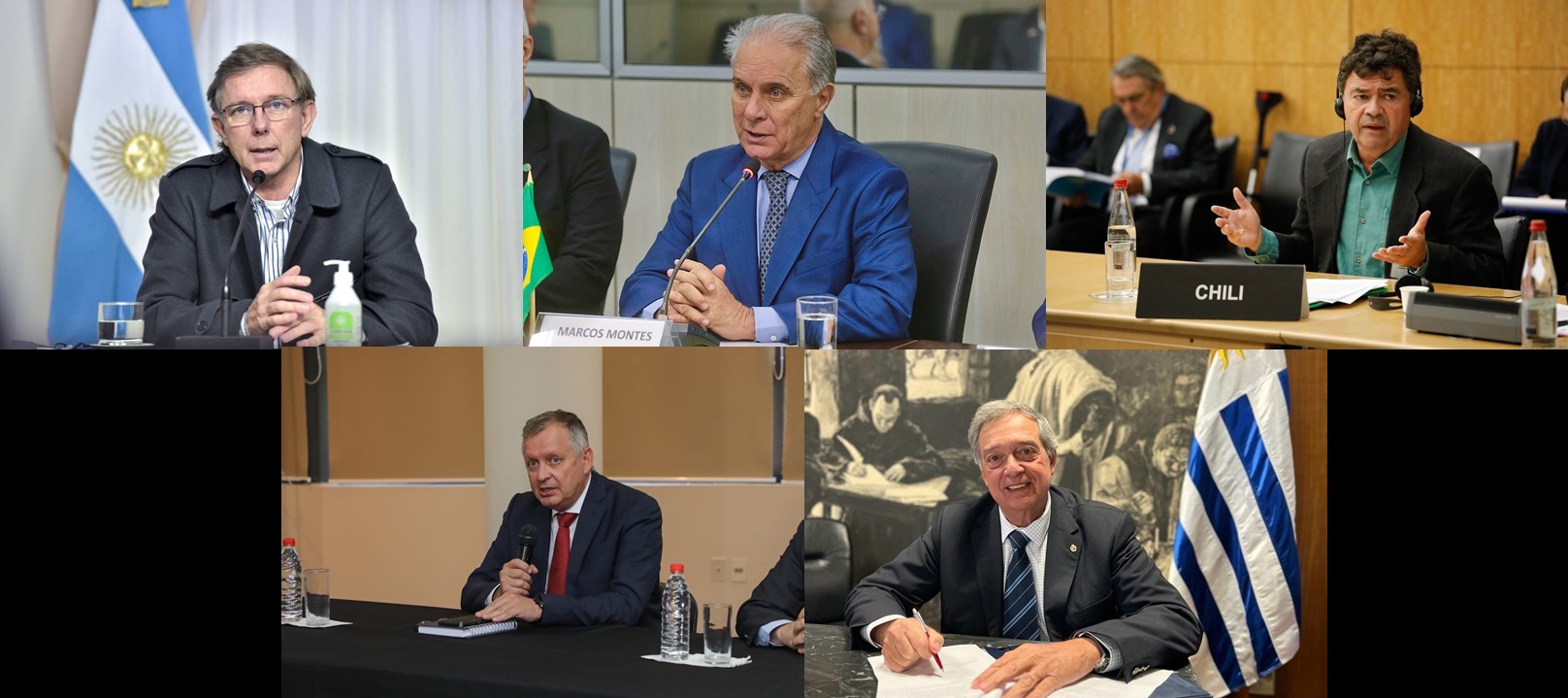
Montevideo, 15 December 2022 (IICA). A science-based approach must be adopted to the biotechnologies used in the agriculture sector, to avoid the implementation of policies that unjustifiably or arbitrarily affect international trade in agrifood products. This was the position advocated by the ministers of agriculture of Argentina, Brazil, Chile, Paraguay and Uruguay, members of the Southern Agricultural Council (CAS), at the key United Nations Biodiversity Conference (COP 15) taking place in Montreal, Canada, until 19 December.
The CAS is a ministerial forum of major food-producing and exporting countries that serves as a platform for consultations and the coordination of regional-level actions. The member countries, which have a responsibility to continue making a decisive contribution to global food security, issued a statement in which they emphasized the need to achieve sustainable and competitive agricultural development by making safe use of the latest scientific and technological advances.
The statement was signed by Juan José Bahillo, Secretary of Agriculture, Livestock and Fisheries of Argentina; Marcos Montes, Minister of Agriculture, Livestock and Supply of Brazil; Esteban Valenzuela, Minister of Agriculture of Chile; Santiago Bertoni, Minister of Agriculture and Livestock of Paraguay; and Fernando Mattos, Minister of Livestock, Agriculture and Fisheries of Uruguay and President pro tempore of CAS.
The ministers maintained that biotech issues should be addressed within their specific area and within the scope of the Convention on Biological Diversity, adopted in 1992, in which the international community acknowledges the benefits of biotechnologies. They also pointed out that safe management is possible with risk analysis, which is essential “to avoid policies or regulations that may unjustifiably or arbitrarily affect international trade in agri-food products and harm producing and exporting countries, especially developing countries, such as those of our region.”
The mission of the CAS, which has its headquarters in Montevideo, is to establish the priorities of the agricultural agenda and adopt common positions on issues of regional interest. The Inter-American Institute for Cooperation on Agriculture (IICA) operates the organization’s executive secretariat.
Experience in the use of biotechnology
In their statement, the minsters explained that the CAS countries have more than 25 years of experience in risk analysis of genetically modified organisms (GMOs), and regulatory frameworks in place that ensure the safe use of new technologies based on solid scientific principles that ensure the biosafety of their products.
These same nations are currently promoting the adoption of new genetic improvement technologies, collectively known as new breeding techniques (NBT), which include gene editing but do not necessarily result in genetically modified products.
NBT are new tools for contributing to agri-food production. They facilitate more efficient use of resources, improve the quality of products, and help achieve sustainable development, both in environmental and socioeconomic terms. The development of these technologies is more democratic, since both the public sector and small and medium-sized enterprises utilize them.
The ministers expressed concern about the negative connotations of the use of modern biotechnology due to the biased interpretation of certain concepts contained in COP 15 working documents that do not take into account the opportunities for improved biosafety that these technologies offer.
“We urge international organizations to provide technical cooperation and financial support for the development of agrobiotechnologies, in accordance with the needs and priorities of our CAS countries,” the ministers said.
They also pledged to continue working to implement appropriate financing mechanisms, investments in new technologies, and innovations aimed at raising productivity in a sustainable manner in order to obtain safe quality food.
Finally, the CAS countries reiterated their commitment to work together to help reduce food insecurity and ensure the sustainability of food production systems for the benefit of current and future generations.
More information:
Institutional Communication Division.
comunicacion.institucional@iica.int