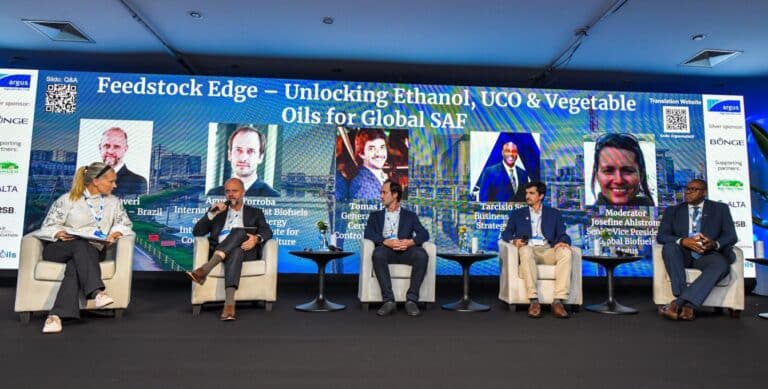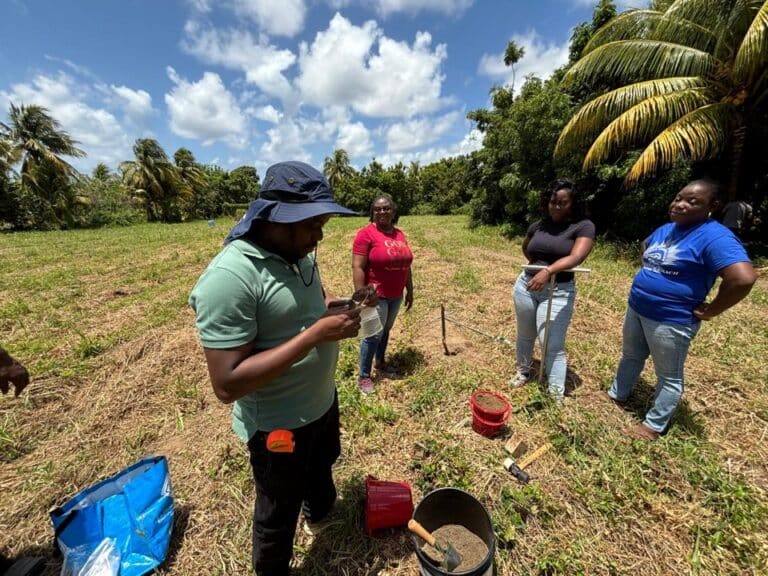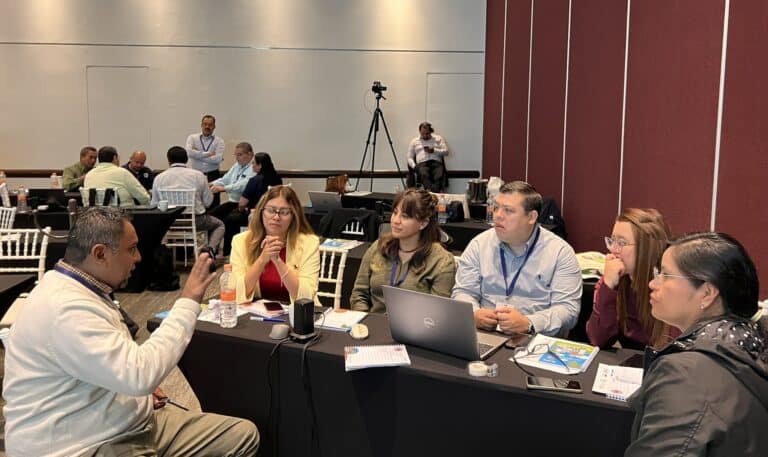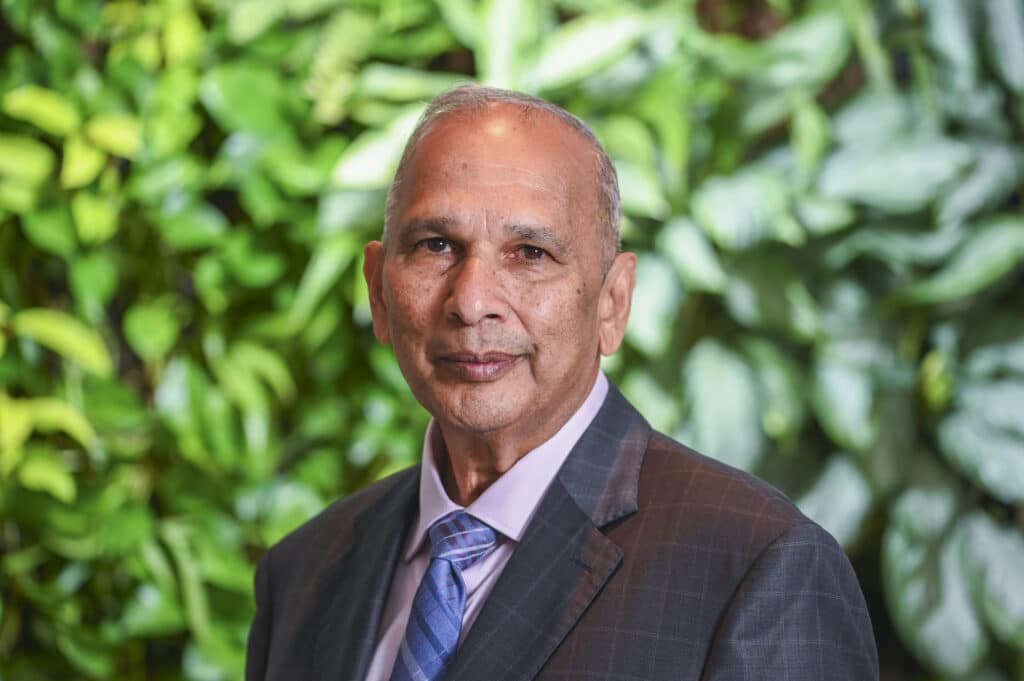

Presenters and Some Participants of the CCRAF Africa-Caribbean Connect Webinar.
Roseau, Dominica, July 1, 2026 (IICA). A powerful new chapter in Climate Responsive Agricultural Dialogue was launched as the Caribbean Climate Responsive Agriculture Forum (CCRAF) and the Inter-American Institute for Cooperation on Agriculture (IICA) in collaboration with The Allure of Soil, successfully hosted the inaugural Africa-Caribbean Connect Knowledge Exchange Initiative with the first webinar titled “Why Soil Changes Everything: Reframing Soil as the Foundation of Climate, Food and Water Systems and Development.”.
The high impact virtual session brought together more than 355 live participants across the Caribbean, Africa, and beyond, creating a dynamic platform for cross-regional exchange to reframe soil not merely as dirt beneath our feet, but as the living infrastructure underpinning climate regulation, biodiversity, water management, food systems, sustainable development, and livelihoods. Hosted through the CCRAF platform, the session featured leading voices in soil science, agroforestry, climate policy, and sustainable land management from both regions.
The session reinforced the strategic leadership role of IICA, the CCRAF, and The Allure of the Soil, in advancing innovation, technical cooperation, climate responsive agricultural development, and practical solutions across Small Island Developing States (SIDS) and vulnerable agricultural regions. By convening experts, farmers, policymakers, researchers, and development practitioners across continents, the initiative positions both the Caribbean and Africa as emerging leaders in regenerative agriculture, sustainable food systems, and climate adaptation.
Opening the session, Nekelia Gregoire Carai, Technical Specialist in Soil and Water Management and Coordinator of the CCRAF at IICA, emphasized the importance of collaborative action: “The launch of the CCRAF Africa-Caribbean Connect Initiative represents an important milestone in building stronger bridges between Africa and the Caribbean. Both regions are rich in agricultural knowledge, innovation, and resilience. Through collaboration and practical knowledge exchange, we can strengthen food systems, empower communities, and accelerate climate action across both regions.”
The CCRAF is a regional knowledge-sharing and action platform coordinated through IICA. Established in 2015, CCRAF promotes climate-resilient agriculture, innovation, sustainable food systems, and practical capacity building across the Caribbean. CCRAF connects farmers, youth, researchers, entrepreneurs, policymakers, and development practitioners through Regional webinars and technical dialogues; In-country training initiatives; Youth engagement programmes; Knowledge-to-action platforms; Strategic international partnerships; and the newly launched Africa-Caribbean Connect Series.
Founder of The Allure of the Soil, Marete Selvin, emphasized the broader importance of reframing soil in global conversations: “Soil is often invisible in many climate and development conversations, yet it sustains every major system we depend on. This session challenged participants to rethink soil not as dirt, but as living infrastructure essential to climate resilience, food security, water systems, biodiversity, and economic development. The Africa-Caribbean dialogue demonstrated the incredible opportunity we have when communities and regions learn from one another.”
Expressing the Caribbean context of soil health and climate resilience, Chaney St Martin, International Specialist in Water and Soil Management at IICA, delivered a compelling scientific overview of how soil functions as the foundation connecting climate systems, water cycles, biodiversity, and food production.
He explained that healthy soil acts as a living system capable of storing carbon, regulating water, supporting microorganisms, and strengthening ecosystem resilience. Through practical examples, he demonstrated how degraded soils weaken the effectiveness of irrigation systems, fertilizers, and climate adaptation strategies. St. Martin underscored the interconnected role of soil in sustaining life and regulating natural systems emphasizing that: “Soil is not simply a growing medium; it is living infrastructure that underpins climate stability, water systems, food production, and ultimately human survival.”
Representing East African experiences in regenerative agriculture and agroforestry, Mercy Karunditu, Director of External Relations & Advocacy at Trees for the Future, shared powerful real-world examples of how restoring soil health transforms livelihoods, increases yields, and strengthens climate resilience among smallholder farmers. She highlighted Trees for the Future’s Forest Garden Approach, which integrates trees, crops, composting, and regenerative farming practices to restore degraded lands while improving food security and income generation.
Karunditu shared a compelling case study from Tanzania where a farmer transformed degraded land into a thriving productive ecosystem through tree planting, composting, and integrated soil management practices. She noted that “Healthy soils are not just environmental assets, they are economic assets that improve livelihoods, stabilize communities, and strengthen long-term food security.”
Providing a global policy and systems perspective, Rico Rau, Policy and Research Consultant for Save Soil, focused on the economic, political, and cultural dimensions required to scale regenerative agriculture worldwide. He highlighted how soil restoration simultaneously addresses food security, biodiversity loss and water scarcity, while creating long-term economic opportunities for farmers and communities.
Rau emphasized that transitioning toward sustainable agriculture requires coordinated action across governments, communities, financial systems, and educational institutions. He explained that “restoring soil is not only an environmental necessity, it is one of the most practical and scalable solutions available for climate adaptation and strengthening global food systems.”
Interactive audience polls revealed that participants overwhelmingly viewed food systems and water systems as the sectors most vulnerable if soil degradation continues unchecked. Participants from across the Caribbean, Africa, and other regions actively engaged through the chat, Q&A sessions, and discussions, describing the session as a timely and necessary conversation that bridged science, storytelling, indigenous knowledge, and practical solutions across regions facing shared climate challenges reinforcing the growing global interest in regenerative agriculture and soil restoration.
Healthy Soil Changes Everything: Webinar Recording
CCRAF Website: https://ccraf.iica.int/
comunicacion.institucional@iica.int
The Allure of the Soil:
https://www.theallureofsoil.com/